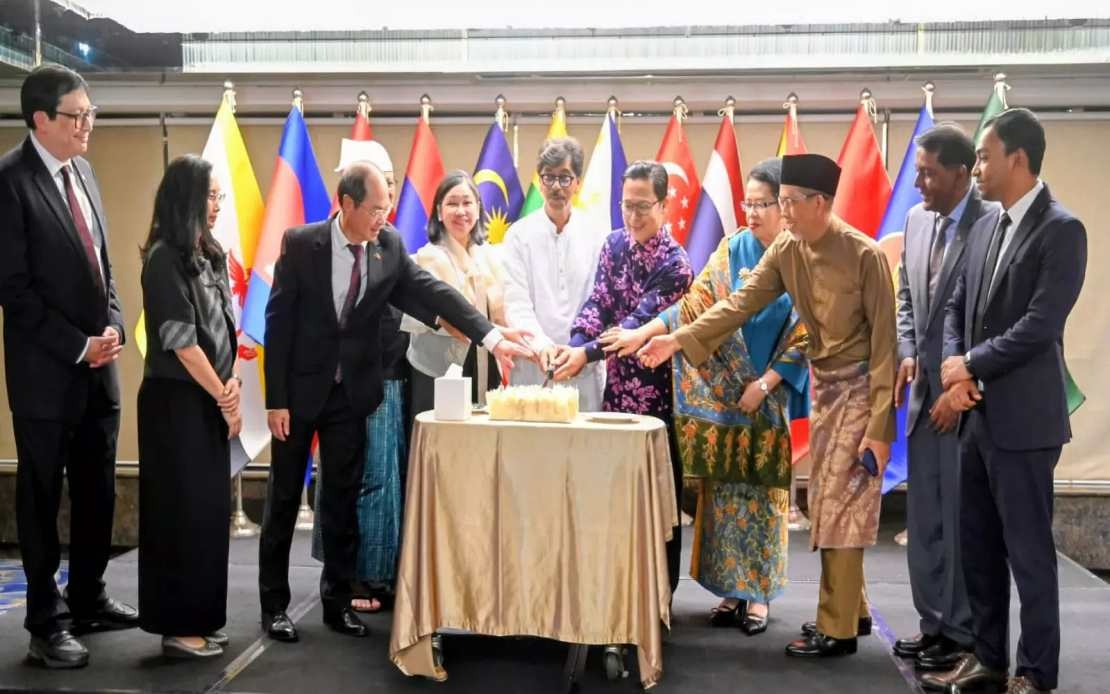
Bangladesh is signalling its determination to deepen engagement with ASEAN through institutional mechanisms and tangible sectoral cooperation, marking a renewed diplomatic push under Prime Minister Tarique Rahman's administration. Speaking at a reception organised by the ASEAN Dhaka Committee to commemorate the bloc's 59th anniversary, Fisheries, Livestock and Agriculture Minister Mohammed Aminur Rashid underscored the government's commitment to transforming long-standing historical and cultural bonds into a more structured and comprehensive partnership framework.
The country's formal application for Sectoral Dialogue Partner status represents a strategic escalation in Bangladesh's regional integration efforts. This designation would provide Bangladesh with institutionalised mechanisms for engagement across multiple policy domains, moving beyond the looser consultation frameworks that currently define its relationship with the ten-member bloc. The timing of this bid reflects the new government's prioritisation of regional diplomacy and signals confidence in advancing Bangladesh's position within Southeast Asian affairs.
Minister Aminur outlined the government's broader strategic vision by emphasising that the administration, led by Prime Minister Tarique Rahman, treats relations with all eleven ASEAN member states as a paramount foreign policy objective. The Prime Minister's decision to select Malaysia for his first official foreign visit carries symbolic weight, indicating that deepening ASEAN partnerships sits at the apex of Bangladesh's immediate diplomatic agenda. This choice signals to regional capitals that Bangladesh views ASEAN engagement not as peripheral but as central to its development and security strategy.
Beyond diplomatic symbolism, Bangladesh is advancing concrete sectoral initiatives that could reshape bilateral and multilateral cooperation patterns across Southeast Asia. A major cornerstone is the ongoing Bangladesh-ASEAN Cooperation Project on Fisheries and Aquaculture, funded at US$1 million and implemented through the agriculture ministry. Given the region's shared maritime resources and overlapping economic interests in fisheries, this initiative addresses practical concerns that affect multiple ASEAN member states and offers opportunities for technology transfer and regulatory harmonisation.
The agricultural sector represents a particular avenue for Bangladesh-ASEAN collaboration. The minister deliberately highlighted Bangladesh's rich agricultural heritage during the reception by serving traditional dishes prepared with Kalijira rice and featuring Black Bengal Goat, a product with internationally recognised Geographical Indication status. These culinary choices underscored Bangladesh's agricultural competitiveness and signalled potential export opportunities that could benefit from enhanced ASEAN market access and supply chain integration.
Beyond the agricultural domain, the government is pursuing a diversified engagement strategy spanning tourism, information and communications technology, and cultural exchange. These initiatives acknowledge that sustainable regional integration requires engagement across multiple sectors rather than concentration in traditional trade and security domains. Tourism collaboration, for instance, could unlock mutual benefits through enhanced visitor flows and shared promotion of Southeast Asian destinations to global markets, while ICT partnerships could facilitate technology diffusion and digital economy development across the region.
The cultural dimension of Bangladesh's ASEAN engagement reflects an understanding that regional integration succeeds when buttressed by people-to-people connections and shared appreciation of diverse heritage. By emphasising cultural initiatives alongside economic and technical cooperation, Bangladesh positions itself as a contributor to ASEAN's soft power and cultural vibrancy, strengthening bonds that transcend official diplomatic channels and create constituencies within each country supportive of deeper regional cooperation.
The reception itself, attended by Malaysian High Commissioner Mohammad Shuhada Othman in his capacity as Chair of the ASEAN Dhaka Committee, Philippine Ambassador Neena Padilla Cinglet, and other ASEAN diplomatic heads, provided a platform for Bangladesh to mobilise support for its SDP aspirations. By explicitly requesting active backing from ASEAN envoys present, the government demonstrated recognition that institutional advancement within regional blocs typically requires consensus-building among existing members and sustained diplomatic advocacy.
Bangladesh's characterisation of ASEAN as "one of the world's most successful regional blocs" reflects pragmatic acknowledgment of the organisation's demonstrated capacity to manage interstate relations, facilitate economic cooperation, and provide platforms for addressing transnational challenges. For Bangladesh, formalising closer association through SDP status offers potential access to ASEAN's institutional structures for addressing shared concerns ranging from maritime security and climate change to labour migration and cultural preservation.
For Malaysian readers and broader Southeast Asian audiences, Bangladesh's intensified engagement efforts merit attention given implications for regional trade patterns, supply chain integration, and diplomatic equilibrium. Bangladesh's pursuit of closer ASEAN ties could reshape regional economic dynamics, particularly in sectors where complementarities exist—such as fisheries, agriculture, and manufacturing. Enhanced Bangladesh-ASEAN cooperation might also create new frameworks for addressing transnational challenges including disaster management, climate resilience, and irregular migration.
The ambassador-level participation and senior government attendance at the reception underscores the seriousness with which both Bangladesh and ASEAN member states regard this engagement momentum. The government's investment in demonstrating commitment through high-level diplomatic events and concrete project initiation suggests sustained effort rather than episodic outreach, potentially reshaping Bangladesh's trajectory within Southeast Asian affairs over the coming years.

