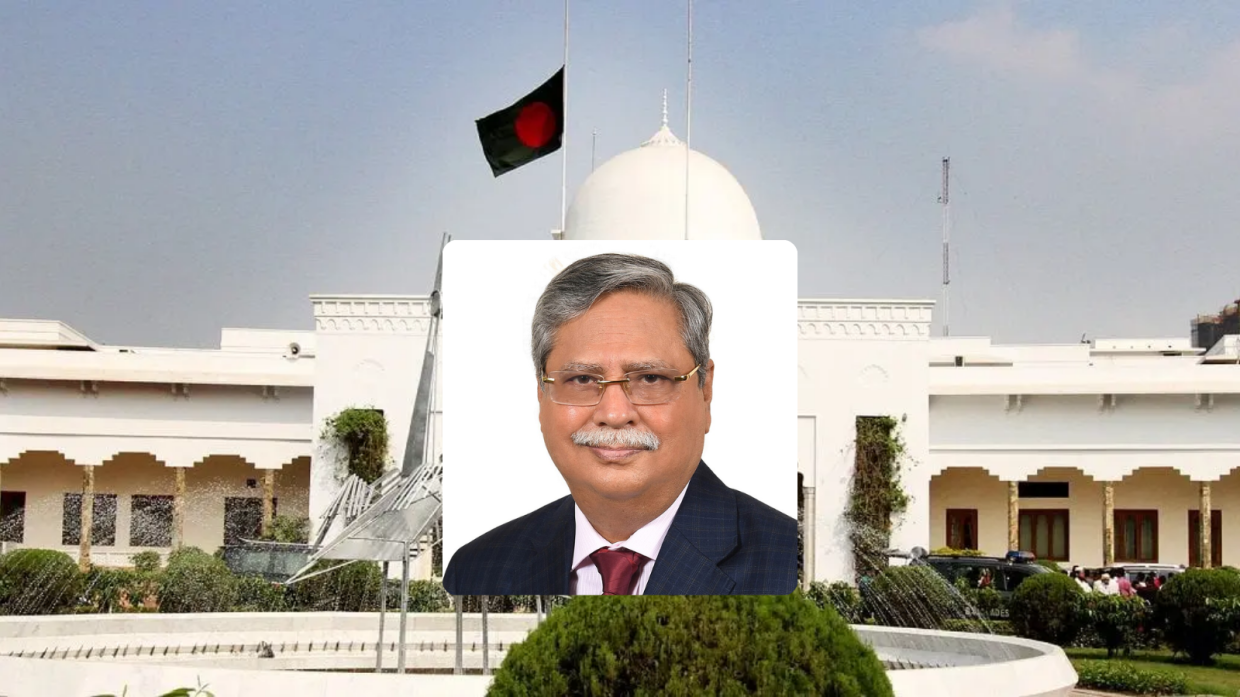
Bangladesh's President Mohammed Shahabuddin appears poised to step down following weeks of intensifying political pressure, according to multiple government sources with knowledge of the unfolding situation. The president, who has held office since April 2023, stands as the sole remaining figure from the constitutional hierarchy that preceded the tumultuous July 2024 mass uprising. His imminent resignation would cement a complete generational shift in Bangladesh's highest offices and signal the government's determination to reshape the state apparatus entirely.
The resignation momentum has accelerated significantly in recent weeks, particularly following revelations about a confidential phone conversation between Shahabuddin and exiled former Prime Minister Sheikh Hasina during a medical visit to London in mid-May. According to sources briefed on the matter, intelligence agencies monitored this exchange between the president and Hasina, who has remained in India since fleeing Bangladesh during the July uprising. The discovery of this contact prompted government officials to deliver a message to Shahabuddin suggesting his departure from office. Government circles now view any lingering connection to the pre-uprising administration as potentially destabilizing to the nation's current political trajectory.
However, intelligence officials and senior Bangladesh Nationalist Party leaders characterise the situation as considerably more intricate than a single phone call. The political landscape has become considerably more volatile following Sheikh Hasina's recent declaration that she intends to return to Bangladesh in December alongside senior Awami League figures to face judicial proceedings. Hasina currently faces a death sentence in her absence and the Bangladesh government has proscribed all activities of her Awami League party. The prospect of her return and potential legal proceedings has created significant uncertainty within the interim political establishment, with hardliners advocating for stricter measures against any perceived remnants of the former regime.
Government sources have expressed particular displeasure at reports suggesting Shahabuddin has been attempting to reestablish dormant political contacts, viewing such activities as potentially problematic given his pre-uprising tenure. Officials have stressed that retaining a figure from the pre-uprising constitutional hierarchy in the nation's highest ceremonial office no longer serves the government's interests or the nation's stability objectives. A senior government official told local media that Shahabuddin's continued presence in Bangabhaban, the presidential residence, represents an incongruity with the broader political transformation the country is undergoing. The calculation appears to be that maintaining symbolic continuity with the old order could undermine the perceived legitimacy of changes implemented since July 2024.
The timing of these developments cannot be separated from the government's intensifying crackdown on Awami League structures. Prime Minister Tarique Rahman convened a Cabinet meeting on July 17 where he explicitly directed authorities to strengthen enforcement actions against the Awami League, the student wing Bangladesh Chhatra League, the youth organization Jubo League, and affiliated entities. This coordinated administrative pressure reflects the government's broader strategy to systematically dismantle the institutional apparatus that sustained Hasina's political dominance for over a decade. Shahabuddin's position as a surviving figure from that era appears increasingly untenable within this enforcement framework.
Shahabuddin himself had already indicated willingness to depart, though his stated reasons have evolved over time. During the tenure of the Muhammad Yunus-led interim government, he publicly stated his intention to step down after the February parliamentary election, describing himself as humiliated by his treatment. Following the installation of the BNP-led administration, he adopted a more equivocal position during a February newspaper interview, declaring he would remain if the government preferred his continued tenure but would resign voluntarily if officials desired his departure. This accommodation has evidently failed to assuage government concerns about his presence.
For Malaysian and Southeast Asian observers, the Bangladeshi situation underscores the fragility of institutional continuity following mass political upheaval. Unlike transitions engineered through electoral mechanisms or constitutional amendment, regime change catalyzed by mass uprising often produces pressure for complete institutional renewal, even of technically neutral offices. The political imperative to demonstrate comprehensive change can override institutional stability considerations. This has particular relevance across Southeast Asia, where several nations have experienced or remain vulnerable to mass movements challenging established power structures.
The constitutional mechanics of succession are clear: should Shahabuddin formally resign, Parliament's speaker will assume the presidential role pending election of a permanent replacement. Government sources have not publicly disclosed potential successor candidates, maintaining strategic ambiguity about the selection process. A source close to the presidential residence indicated that a formal decision could materialize within days, with Shahabuddin's scheduled meeting with non-resident ambassadors from four countries on July 29 potentially providing an inflection point.
The broader implications extend beyond individual personnel change. Shahabuddin's anticipated departure represents the final institutional severance from the pre-July 2024 order, completing the administrative transformation the government has pursued since taking office. It reflects a political calculation that Bangladesh's credibility and stability now require complete leadership renewal, uncontaminated by any association with the previous establishment. Whether this comprehensive institutional turnover ultimately strengthens or weakens the nation's democratic foundations remains a central question for Bangladesh's political future and a cautionary case study for other developing democracies navigating post-uprising reconstruction.

