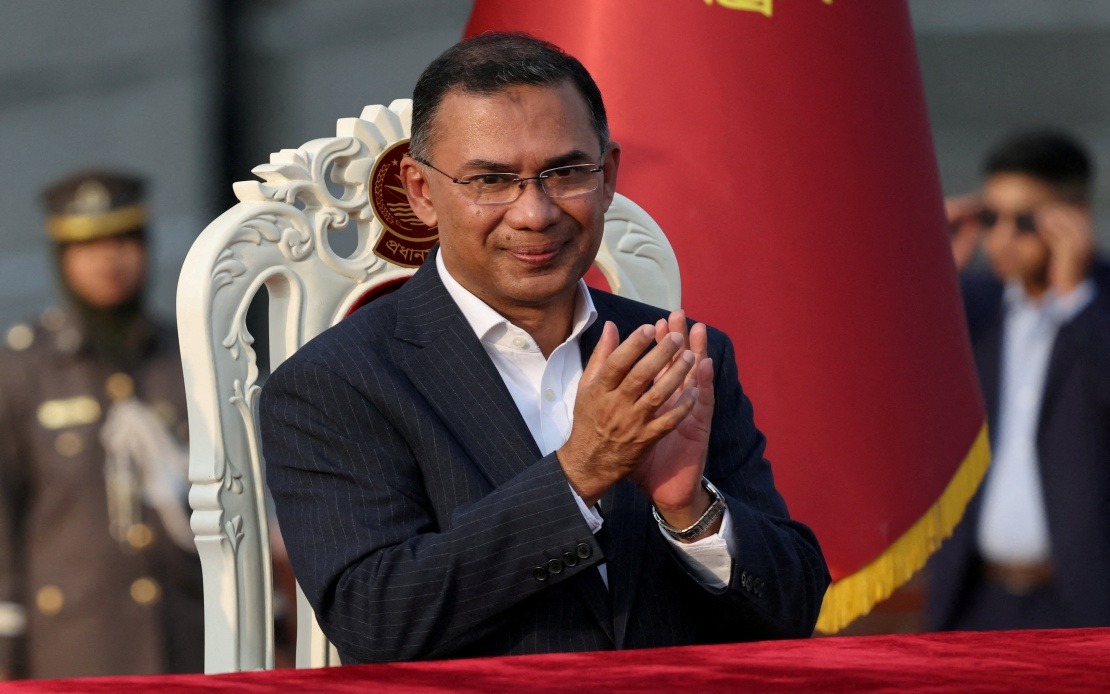
Bangladesh Prime Minister Tarique Rahman will arrive in Malaysia on June 22 for an official state visit that marks his first bilateral trip abroad since assuming the premiership in February 2026. The visit, undertaken at the invitation of Prime Minister Datuk Seri Anwar Ibrahim, reflects the deepening strategic partnership between Kuala Lumpur and Dhaka and represents a significant moment for both nations' diplomatic engagement in the region.
The choice of Malaysia as the destination for Rahman's inaugural bilateral journey underscores the importance both countries place on their relationship. Upon arrival, the Bangladesh leader will be received with full ceremonial honours at the Perdana Putra Complex, where he and Anwar will hold formal talks to assess the trajectory of their bilateral engagement and identify new avenues for expanded cooperation.
Trade and investment feature prominently in the visit's agenda, particularly given the substantial commercial relationship already established between the two nations. In 2025, bilateral trade reached RM12.18 billion (US$2.84 billion), positioning Bangladesh as Malaysia's 28th largest trading partner globally and its second most significant economic partner within South Asia after India. This trading foundation provides considerable scope for growth across multiple sectors.
Malaysia's export portfolio to Bangladesh reveals the complementary nature of their economies. Malaysian exports totalled RM10.08 billion (US$2.35 billion) in 2025, with petroleum products dominating the shipment profile. This heavy reliance on energy exports reflects Bangladesh's substantial demand for fossil fuels to power its industrial and domestic sectors, creating a sustained market opportunity for Malaysian suppliers and highlighting the importance of stable bilateral energy relations.
Bangladeshi imports into Malaysia tell a different story, centred on labour-intensive manufacturing sectors where Bangladesh maintains competitive advantages. Goods worth RM2.10 billion (US$500 million) entered Malaysia in 2025, predominantly comprising textiles, apparel, and footwear. These categories underscore Bangladesh's established manufacturing ecosystem and the cross-border supply chain integration that already exists between the two economies, representing opportunities for deeper value-chain cooperation.
During their meeting, both leaders are expected to examine expansion possibilities in several strategic sectors beyond traditional trade flows. Semiconductor manufacturing, energy transition initiatives, agricultural development, human resource management, and educational partnerships will feature in discussions as both countries pursue economic diversification. For Malaysia, collaboration with Bangladesh on semiconductors could leverage complementary capabilities, while energy cooperation offers opportunities for renewable technology deployment and expertise exchange.
Several formal agreements are scheduled for signature during the visit, reflecting the structured approach both governments are taking to institutionalise their cooperation. A memorandum of understanding on cultural cooperation will establish frameworks for people-to-people exchanges, while two exchanges of notes will address counter-terrorism research collaboration and investment promotion and facilitation. These instruments signal both nations' commitment to addressing shared security challenges and reducing barriers to cross-border commerce and investment.
Rahman will be accompanied by his spouse Dr Zubaida Rahman, Foreign Minister Dr Khalilur Rahman, and a delegation of senior officials, indicating the high-level political commitment Bangladesh is bringing to the engagement. This substantial entourage reflects the significance both nations attribute to the visit and suggests that detailed negotiations on substantive matters will occur across multiple ministerial channels during the three-day mission.
Anwar's hosting of an official state luncheon provides an additional opportunity for informal diplomatic engagement beyond the formal bilateral meeting setting. Such ceremonies serve important functions in regional diplomacy, enabling candid discussions on sensitive topics and building personal rapport between leaders. For Rahman, this careful ceremonial treatment signals Malaysia's recognition of his leadership and commitment to the Bangladesh-Malaysia partnership.
From a Southeast Asian perspective, the visit carries broader implications for regional connectivity and cooperation. Bangladesh, with its strategic location on the Bay of Bengal and its 170 million population, represents a crucial partner for ASEAN-affiliated nations seeking to engage with South Asian markets. Malaysia's proactive engagement with Dhaka under Rahman's leadership demonstrates how ASEAN nations can deepen South Asian connections while advancing their own economic interests through expanded bilateral frameworks.
The timing of Rahman's visit also reflects Bangladesh's evolving geopolitical positioning following recent domestic political changes. His maiden bilateral journey to Malaysia suggests a strategic orientation towards Southeast Asian partnerships as Bangladesh calibrates its international relationships. For Malaysia, positioning itself as a preferred destination for Bangladesh's inaugural foreign bilateral visit indicates successful diplomatic courting and positions the country advantageously for future engagements with Dhaka across multiple fields.
Looking forward, the outcomes of this visit will likely establish templates for deeper institutional cooperation. The formalisation of frameworks around counter-terrorism, investment facilitation, and cultural exchange suggests both governments envision sustained engagement extending beyond immediate trade transactions. This structural approach to bilateral relations, combined with the substantial trade foundation already in place, creates potential for the relationship to evolve into a more comprehensive strategic partnership encompassing security, economic, and cultural dimensions.
For Malaysian businesses and investors, Rahman's visit signals an opening for expanded commercial engagement with Bangladesh. The scheduled discussions on investment promotion and facilitation suggest governments are working to remove obstacles to business expansion. Similarly, Bangladeshi companies may find enhanced opportunities in Malaysia's market, particularly in sectors where Bangladesh possesses manufacturing expertise. The visit, therefore, carries implications not just for government relations but for private sector dynamics across both economies.