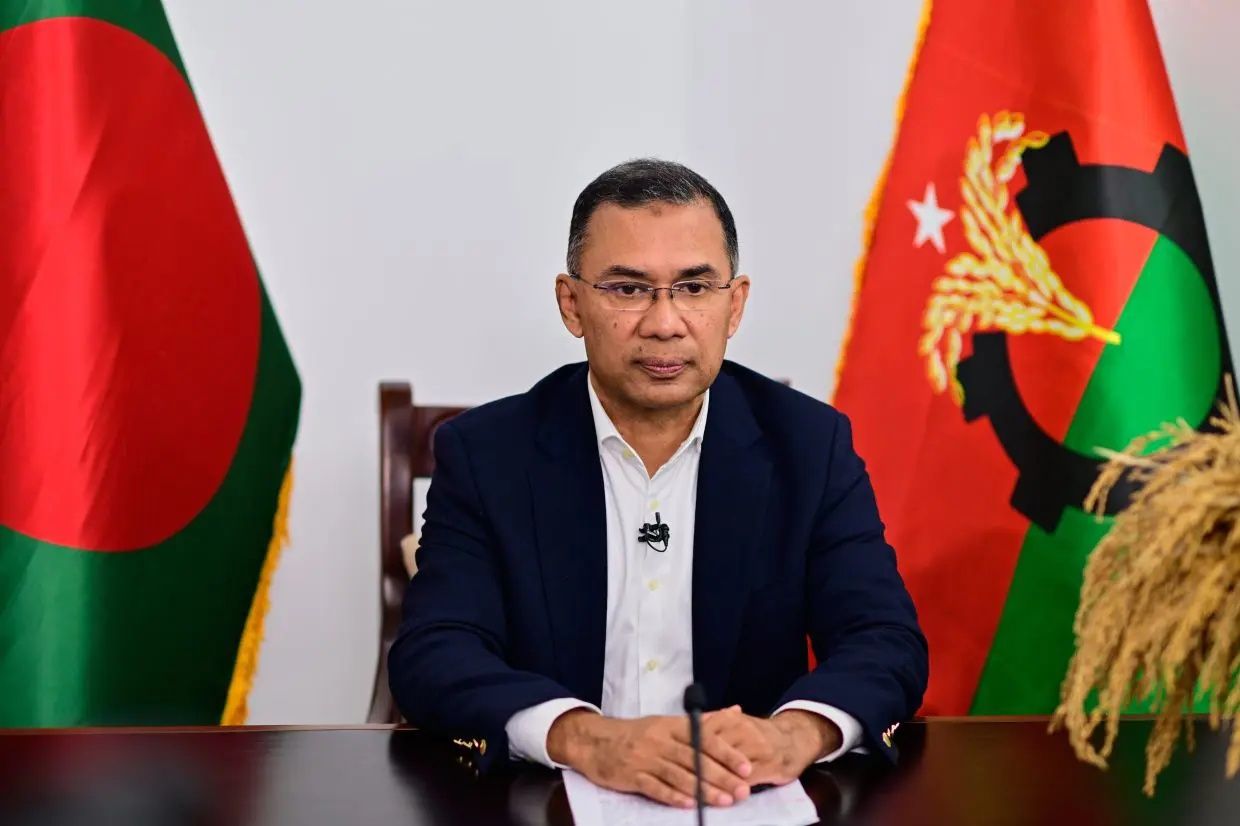
Bangladesh's newly elected Prime Minister Tarique Rahman is venturing abroad for the first time since taking office, with visits to Malaysia and China scheduled for this weekend. The choice of destinations for his inaugural foreign tour carries significant diplomatic weight, particularly given the decision to bypass neighbouring India—a move that underscores shifting regional alignments and unresolved tensions stemming from last year's political upheaval that unseated the previous administration.
Rahman will touch down in Malaysia on Sunday before proceeding to Beijing on Monday, according to Bangladesh's state-run BSS news agency, which cited officials from the foreign ministry. The sequential nature of these visits appears strategically calculated, beginning with a stop in Southeast Asia before moving to East Asia. Malaysia represents a crucial economic partner and labour destination for Bangladesh, making it a natural first port of call for a leader seeking to reinforce bilateral ties and demonstrate commitment to regional engagement.
The Malaysian leg of the journey holds particular significance given the substantial Bangladeshi diaspora already established there. Approximately 800,000 Bangladeshi workers are currently employed in Malaysia, constituting more than a third of the country's entire foreign workforce. This population represents not merely an economic asset but also a vital bridge for diplomatic and cultural exchange between the two nations. Rahman's visit sends a clear message that his administration prioritises maintaining and strengthening these labour and trade relationships, which form a cornerstone of Bangladesh's overseas economic strategy.
China's role on the diplomatic itinerary reflects Bangladesh's broader strategic interests in infrastructure development and economic modernisation. Officials have indicated that trade discussions and infrastructure projects will dominate the Beijing agenda, with particular emphasis on initiatives that could unlock long-stalled development plans. Among these is the Teesta project, an ambitious undertaking to rehabilitate and manage one of Bangladesh's most significant rivers through comprehensive dredging, embankment reinforcement, and irrigation infrastructure. This scheme has languished in the planning stages for years, and potential Chinese financial and technical backing could prove transformative for Bangladesh's agricultural productivity and water management capabilities.
The timing of Rahman's foreign outreach underscores a deliberate recalibration of Bangladesh's diplomatic positioning in South Asia. Since assuming the presidency in February following elections, he has inherited a geopolitical situation markedly different from that which confronted his predecessor. The previous government, led by Sheikh Hasina, enjoyed considerably warmer relations with India and benefited from New Delhi's political patronage. However, the 2024 uprising that toppled that administration and forced Hasina to seek refuge across the border fundamentally altered the regional dynamic.
Relations between Dhaka and New Delhi have deteriorated on multiple fronts since Hasina's departure. Bangladesh has repeatedly demanded India's assistance in extraditing the former prime minister to face domestic legal proceedings, a request that New Delhi has resisted. Additionally, border tensions have intensified as India transfers individuals it classifies as undocumented migrants across the frontier into Bangladeshi territory, a practice that has strained bilateral relations and created humanitarian complications. These friction points represent residual tensions that Rahman's government must navigate carefully while pursuing its own national interests.
The diplomatic pathway Rahman has chosen reflects an attempt to diversify Bangladesh's strategic partnerships and reduce what some observers view as excessive dependence on India. For a nation of 170 million people bordered almost entirely by Indian territory, managing this relationship requires considerable diplomatic finesse. However, Rahman's initial foreign engagements suggest his administration is willing to strengthen ties with other regional and global powers to assert greater autonomy in determining Bangladesh's developmental trajectory and international positioning.
China's interest in Bangladesh extends beyond the Teesta project to encompass broader infrastructure ambitions and trade expansion. As Beijing pursues its regional connectivity objectives through mechanisms like the Belt and Road Initiative, Bangladesh represents both a strategic partner and a potential leverage point in China's broader competition with India for regional influence. This dynamic, wherein India and China compete for primacy across South Asia, inevitably shapes how smaller nations like Bangladesh navigate their foreign relations. Rahman's early pivot towards Beijing signals that his government intends to play a more assertive role in these strategic calculations.
The framing of these visits as major diplomatic initiatives aimed at strengthening Bangladesh's economic partnerships reflects official expectations that the tours will yield tangible outcomes. Beyond symbolic value, both governments will presumably discuss mechanisms for expanding trade, facilitating labour mobility, and accelerating infrastructure projects. For Malaysian employers, improved diplomatic relations may translate to smoother recruitment and management of the large Bangladeshi workforce. For Bangladesh, enhanced Malaysian investment and technical cooperation could supplement the substantial remittances already flowing from its diaspora.
Rahman's inaugural foreign journey ultimately represents more than ceremonial protocol. It constitutes a strategic statement about the direction his administration intends to pursue as it consolidates power and implements its domestic agenda. By prioritising Malaysia and China while maintaining studied distance from India—at least in terms of first diplomatic courtesy—he signals confidence in his ability to manage a complex regional environment where economic necessity and political autonomy must be carefully balanced. The success of these visits will likely set the tone for how Bangladesh positions itself in regional affairs throughout his administration.
%22%2F%3E%3C%2Fpattern%3E%3C%2Fdefs%3E%3Crect%20width%3D%22100%25%22%20height%3D%22100%25%22%20fill%3D%22url(%23ph4yvpqg)%22%2F%3E%3Crect%20width%3D%22100%25%22%20height%3D%22100%25%22%20fill%3D%22url(%23ph4yvpqp)%22%2F%3E%3Ctext%20x%3D%2250%25%22%20y%3D%2250%25%22%20text-anchor%3D%22middle%22%20dominant-baseline%3D%22central%22%20fill%3D%22rgba(255%2C255%2C255%2C0.95)%22%20font-family%3D%22Georgia%2C%20'Times%20New%20Roman'%2C%20serif%22%20font-weight%3D%22700%22%20font-size%3D%22226%22%20letter-spacing%3D%22-0.02em%22%3EHAWANA%3C%2Ftext%3E%3C%2Fsvg%3E)
%22%2F%3E%3C%2Fpattern%3E%3C%2Fdefs%3E%3Crect%20width%3D%22100%25%22%20height%3D%22100%25%22%20fill%3D%22url(%23ph3x48ug)%22%2F%3E%3Crect%20width%3D%22100%25%22%20height%3D%22100%25%22%20fill%3D%22url(%23ph3x48up)%22%2F%3E%3Ctext%20x%3D%2250%25%22%20y%3D%2250%25%22%20text-anchor%3D%22middle%22%20dominant-baseline%3D%22central%22%20fill%3D%22rgba(255%2C255%2C255%2C0.95)%22%20font-family%3D%22Georgia%2C%20'Times%20New%20Roman'%2C%20serif%22%20font-weight%3D%22700%22%20font-size%3D%22272%22%20letter-spacing%3D%22-0.02em%22%3EMedia%3C%2Ftext%3E%3C%2Fsvg%3E)
%22%2F%3E%3C%2Fpattern%3E%3C%2Fdefs%3E%3Crect%20width%3D%22100%25%22%20height%3D%22100%25%22%20fill%3D%22url(%23ph4o0rkg)%22%2F%3E%3Crect%20width%3D%22100%25%22%20height%3D%22100%25%22%20fill%3D%22url(%23ph4o0rkp)%22%2F%3E%3Ctext%20x%3D%2250%25%22%20y%3D%2250%25%22%20text-anchor%3D%22middle%22%20dominant-baseline%3D%22central%22%20fill%3D%22rgba(255%2C255%2C255%2C0.95)%22%20font-family%3D%22Georgia%2C%20'Times%20New%20Roman'%2C%20serif%22%20font-weight%3D%22700%22%20font-size%3D%22320%22%20letter-spacing%3D%22-0.02em%22%3E95%3C%2Ftext%3E%3C%2Fsvg%3E)