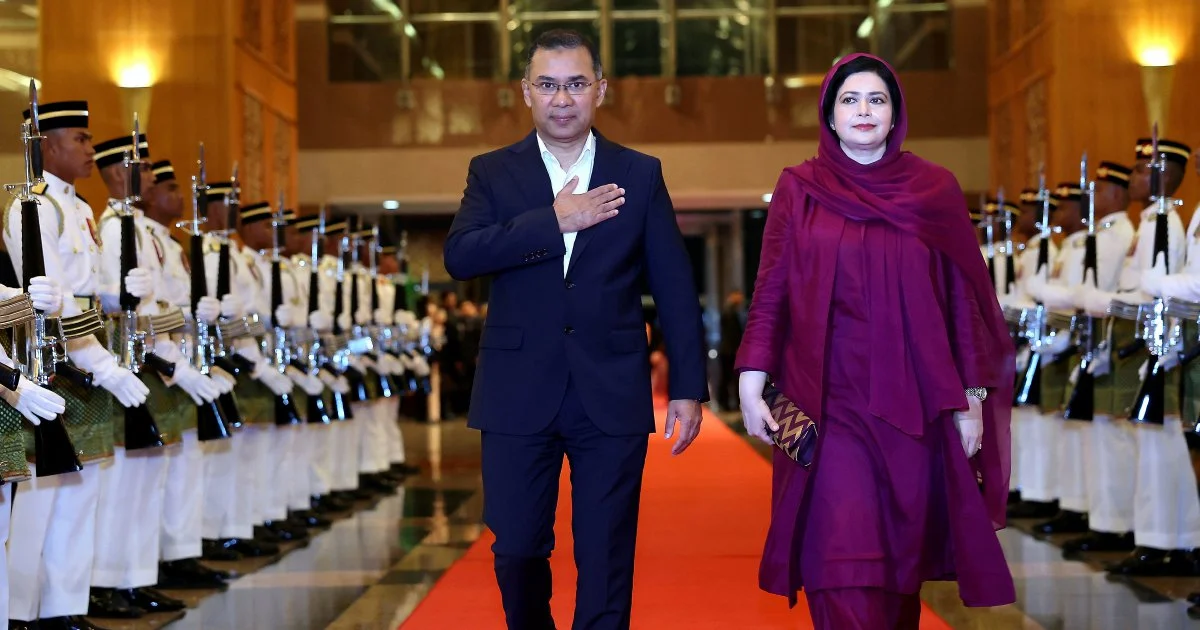
Bangladesh Prime Minister Tarique Rahman has extended a direct appeal to Malaysian investors to reassess Bangladesh as a destination for capital deployment, positioning the nation as an emerging opportunity within South Asia's evolving investment landscape. The overture comes as Bangladesh undergoes significant structural economic reforms aimed at creating a more transparent and efficient operating environment for both domestic and international enterprises.
The invitation reflects broader efforts by Bangladesh's government to rebuild investor confidence following recent political turbulence. Rahman's administration has prioritised institutional reform and regulatory modernisation to demonstrate stability and predictability—factors that weigh heavily on Malaysian firms evaluating regional expansion strategies. For Malaysian conglomerates and mid-sized businesses contemplating regional diversification, Bangladesh's large population of over 170 million and growing middle class present compelling market fundamentals that few Southeast Asian economies can match.
Malaysia and Bangladesh share historical ties rooted in Islam, trade, and regional cooperation through SAARC and broader Asian forums. Yet bilateral investment flows have remained modest compared to Bangladesh's engagement with China, India, and Western investors. The Rahman administration's push to strengthen Malaysian business ties suggests an attempt to broaden Bangladesh's investor base and reduce dependency on any single source of foreign capital. This strategic recalibration aligns with contemporary geopolitical balancing acts across South Asia, where nations seek diversified economic partnerships.
Bangladesh's manufacturing sector, particularly in apparel and textiles, has long attracted international investors seeking labour-cost advantages. However, the government's reform agenda extends beyond traditional export sectors. Digital infrastructure investment, pharmaceutical production, telecommunications, and agribusiness represent emerging domains where Malaysian expertise and capital could establish meaningful presence. Malaysian firms with established regional supply chains and technological capabilities may find Bangladesh's cost structure and market access particularly advantageous compared to operating in more mature, expensive markets.
The macroeconomic context matters considerably for Malaysian decision-makers evaluating Bangladesh exposure. The country has battled persistent inflation, foreign currency reserves depletion, and current account pressures in recent years. Though Bangladesh successfully secured IMF support and has begun implementing stabilisation measures, the near-term economic environment remains fragile. Malaysian investors must weigh genuine growth potential against near-term volatility and currency risk—a calculation that separates opportunistic investors from those demanding more established stability.
Rahman's invitation signals that Bangladesh recognises the importance of attracting high-quality foreign investment rather than merely any capital inflow. Malaysian businesses typically bring management practices, technological standards, and supply chain linkages that exceed minimum requirements, potentially creating spillover benefits throughout Bangladesh's economy. The government's emphasis on a business-friendly ecosystem suggests concrete policy moves, possibly including incentivised export zones, simplified regulatory approval processes, and intellectual property protections designed to appeal to sophisticated international investors.
Sector-specific opportunities warrant attention from Malaysian investors. Bangladesh's renewable energy ambitions, including solar and wind projects, align with Malaysia's own sustainability transition and could attract joint ventures combining Malaysian financial resources with local knowledge. The pharmaceuticals industry offers another avenue, given Bangladesh's competitive manufacturing capacity and Malaysia's strength in healthcare distribution and innovation. Agribusiness ventures linking Bangladeshi agricultural production with Malaysian processing and export capabilities represent additional partnership possibilities.
The geopolitical dimension cannot be overlooked. As regional competition intensifies between China and India for influence across South Asia, Bangladesh's warming relations with ASEAN-affiliated investors like Malaysia gain significance. From Bangladesh's perspective, deepening economic ties with Malaysia reinforces its positioning within a network of diverse regional partners rather than gravitating exclusively toward larger neighbours. For Malaysian businesses, engaging Bangladesh strengthens Malaysia's own regional economic footprint and influence during an era of strategic competition.
Institutional reforms underpinning the business-friendly narrative require close scrutiny by potential Malaysian investors. Questions about judicial independence, corruption controls, contract enforcement, and regulatory consistency have historically complicated foreign investment in Bangladesh. Rahman's administration must demonstrate that rhetorical commitments translate into tangible improvements in these foundational areas. Malaysian investors accustomed to Malaysia's established legal frameworks and predictable institutional environment will require substantive evidence of progress before deploying substantial capital.
The labour situation presents both opportunity and complexity. Bangladesh's relatively low wage levels attract manufacturing investors, yet labour standards and workplace safety conditions have attracted international scrutiny. Malaysian firms committed to ethical supply chains and regulatory compliance must ensure that Bangladeshi operations meet corporate governance standards expected in Malaysia. This requirement, while creating potential friction with lower-cost competitors, positions Malaysian investors as quality operators capable of establishing sustainable, long-term presence.
Timing may prove crucial for Malaysian investors considering Bangladesh exposure. The country's stabilisation efforts are nascent, meaning early entrants accepting some risk might secure advantageous positioning and market share before competition intensifies. Conversely, waiting for more complete economic stabilisation reduces risk but surrenders first-mover advantages in sectors where incumbent presence confers long-term benefits. Malaysian firms with adequate risk tolerance and multi-year investment horizons may find the current environment optimal for entry.
Rahman's investor outreach underscores Bangladesh's determination to compete effectively within South Asia's expanding investment marketplace. Malaysian businesses should interpret the invitation not merely as diplomatic courtesy but as evidence of genuine policy commitment to economic reform. Comprehensive due diligence, sector-specific analysis, and partnership with locally experienced advisors will enable Malaysian investors to identify authentic opportunities within Bangladesh's transforming economy, positioning themselves to capture value as the nation consolidates its reforms and channels capital toward productive sectors.

