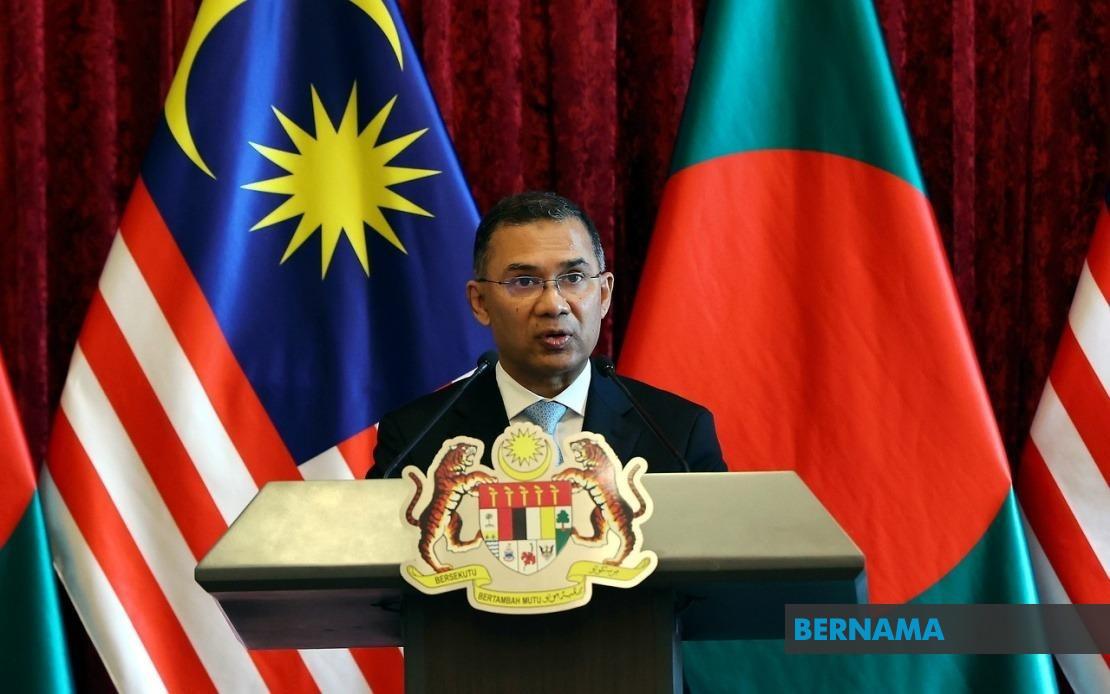
Bangladesh's Health and Family Welfare Minister Sardar Mohammad Sakhawat Hossain has attributed significant progress in bilateral relations to Prime Minister Tarique Rahman's recent visit to Malaysia in June, signalling renewed momentum in a partnership grounded in mutual confidence and shared regional interests. Speaking at a forum in Dhaka convened by the Bangladesh-Malaysia Chamber of Commerce and Industry, Hossain underscored that the two countries' relationship extends beyond traditional diplomatic channels and encompasses meaningful economic collaboration that benefits both populations.
The minister's remarks came during an event titled "Towards a Stronger Bangladesh-Malaysia Partnership," which brought together senior government officials, business leaders, and chamber representatives from both nations. The gathering reflected growing recognition in Dhaka that Malaysia represents a crucial economic partner in Southeast Asia, particularly as Bangladesh seeks to diversify its international engagement beyond traditional trading relationships and explore new pathways for development cooperation.
Hossain emphasized that the foundation of Bangladesh-Malaysia relations rests upon trust and goodwill cultivated over decades of consistent diplomatic engagement. This foundation has enabled both nations to move beyond ceremonial exchanges toward substantive cooperation in sectors ranging from trade and investment to education and healthcare. The minister's characterization of the bilateral bond as rooted in mutual trust suggests that recent political transitions in Bangladesh have not fundamentally altered the strategic orientation toward Malaysia as a stable, reliable partner in the region.
A particularly significant dimension of the partnership, according to the minister, involves the robust interaction between business communities on both sides. Bangladesh's entrepreneurial class has increasingly looked toward Malaysia as a market for exports and a source of foreign direct investment, while Malaysian companies have shown interest in Bangladesh's growing consumer base and manufacturing capabilities. Hossain's emphasis on this commercial dimension reflects a broader regional trend toward deepening economic integration as Southeast Asian nations pursue middle-income and upper-middle-income development targets.
The minister made a direct appeal to Malaysian counterparts to expand import volumes from Bangladesh, a request that underscores Dhaka's interest in correcting trade imbalances and securing better market access for Bangladeshi products. This plea carries particular weight given Bangladesh's significant manufacturing capacity in textiles, garments, and light engineering goods—sectors where Malaysia possesses complementary expertise and market connections. Such expanded trade would provide Bangladesh with crucial foreign exchange earnings at a time when the nation faces macroeconomic pressures.
Malaysia's representation at the Dhaka event through High Commissioner Mohd Shuhuda Othman reinforced the importance both nations attach to strengthening economic ties. The presence of a senior envoy at a business-focused forum signals Malaysia's readiness to move bilateral relations beyond traditional political dimensions into concrete commercial partnerships. High commissioners typically reserve attendance at such events for matters deemed strategically significant, suggesting that Malaysia too views enhanced economic cooperation with Bangladesh as a priority.
The Federation of Bangladesh Chambers of Commerce and Industry's administrator, Mohammad Fazlul Haque, participated in the proceedings, indicating that Bangladesh's organized private sector views Malaysia as integral to achieving broader development ambitions. The chamber's involvement suggests that business associations in Bangladesh are actively working to create frameworks and dialogue platforms that can facilitate increased two-way investment and trade flows, moving beyond ad-hoc commercial transactions toward institutionalized partnership mechanisms.
Prime Minister Tarique Rahman's June visit to Malaysia, which Hossain referenced as a watershed moment in bilateral ties, likely included substantive discussions on enhancing economic cooperation, addressing visa and regulatory barriers to bilateral commerce, and potentially establishing new joint ventures or sector-specific collaboration frameworks. Such high-level visits typically generate momentum that government agencies and business chambers subsequently operationalize through concrete initiatives, technical committees, and preferential trading arrangements.
For Malaysian policymakers and investors, strengthened relations with Bangladesh represent an opportunity to access a nation of over 170 million people experiencing steady economic growth despite recent challenges. Bangladesh's strategic location adjacent to India and its expanding manufacturing base make it an attractive destination for companies seeking to diversify supply chains away from China or establish regional hubs. Malaysian financial institutions and service providers similarly stand to benefit from expanded engagement with Bangladesh's rapidly urbanizing population and rising middle class.
The dialogue at the Dhaka event also reflects broader Southeast Asian dynamics wherein nations increasingly recognize that sustainable development requires deepening intra-regional economic interdependence. Bangladesh and Malaysia, despite different development stages and comparative advantages, share common interests in regional stability, maritime security, and promoting inclusive growth. Economic cooperation serves as both a consequence of and reinforcement to diplomatic alignment on these strategic matters.
Looking forward, the success of Bangladesh-Malaysia partnership will largely depend on whether political commitment translates into concrete policy reforms and private sector engagement. Potential areas for expansion include joint manufacturing initiatives, financial services collaboration, educational exchange programmes, and technology transfer arrangements. Malaysian firms with expertise in digital transformation, renewable energy, and industrial automation could partner with Bangladeshi counterparts to upgrade manufacturing capabilities and productivity.
The minister's emphasis on bilateral trust and mutual benefit suggests that both governments recognize partnership as mutually advantageous rather than transactional. This framing creates political space for addressing contentious issues and pursuing creative solutions to trade barriers or investment obstacles. As Bangladesh consolidates its post-2024 transition and Malaysia navigates evolving regional geopolitics, deepened economic ties serve the interests of both nations while contributing to broader Southeast Asian stability and prosperity.

