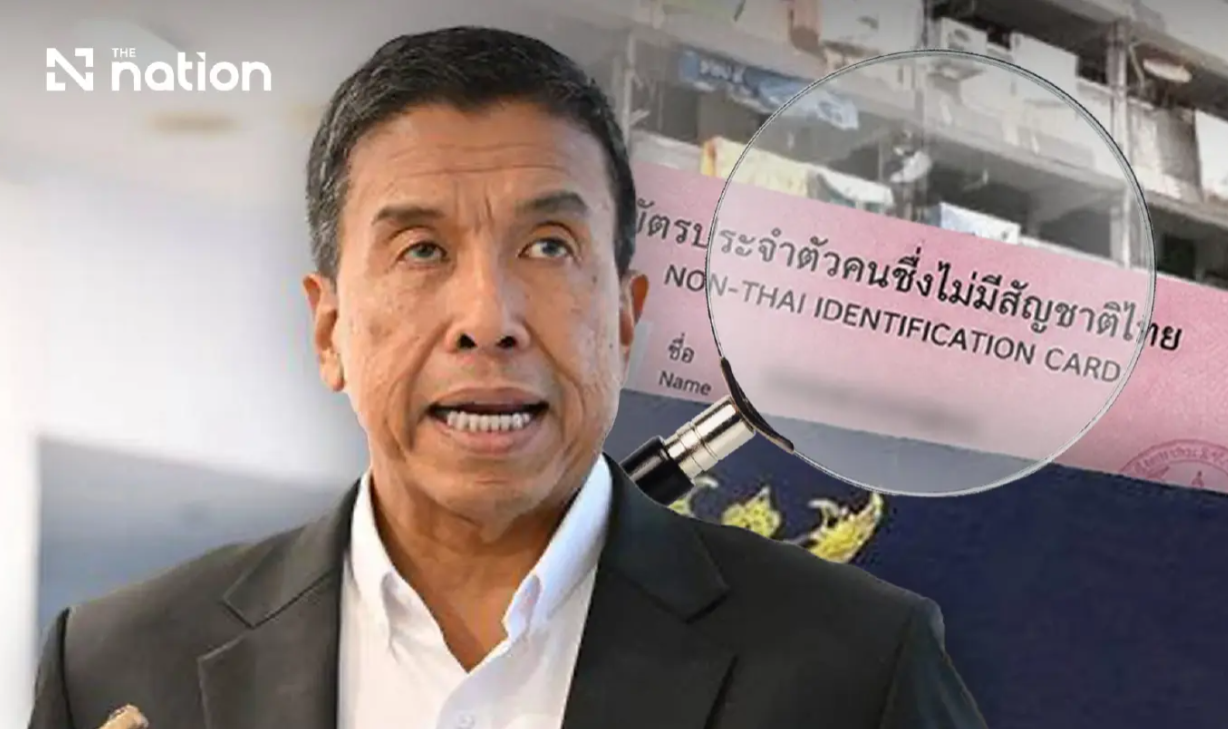
Bangkok Governor Chadchart Sittipunt has initiated a comprehensive review spanning a full decade of household registration records across all 50 district offices in the Thai capital, responding to mounting evidence of suspected irregularities in the system governing pink cards—the identification documents issued to non-Thai nationals. The directive requires each district office to submit preliminary findings by late August, signalling the serious nature of the authorities' concerns about how vulnerable the civil-registration apparatus has become to manipulation and exploitation.
At the heart of this investigation lies a sophisticated fraud network that appears to have systematically compromised Thailand's household registration system through multiple methods. One particularly brazen scheme involved acquiring birth certificates of children born in Thailand to foreign parents who subsequently left the country. Rather than being retired once the child departed, these documents remained on file and were then weaponised by fraudsters to transfer other individuals into household registrations under false identities. This approach created a foundation for obtaining pink cards for people who had no legitimate claim to such documentation, essentially embedding non-Thai nationals into the official household registry through assumed identities.
The scope of potential irregularities became starkly apparent when investigators examined Din Daeng district and discovered a single residential property measuring approximately 40 square metres with between 40 and 45 individuals listed in its household registration—a physical impossibility that should have triggered immediate administrative alarm bells. Further scrutiny of Din Daeng registrations during 2024 alone identified more than 2,000 address transfers that appeared inconsistent with normal residential patterns. These findings suggest that the fraud operates on a significant scale, potentially touching thousands of registrations across Bangkok's administrative landscape.
Whatever the mechanisms deployed, the underlying weakness appears systemic: the concentrated authority granted to individual registration officers, combined with insufficient supervisory oversight, created ideal conditions for corruption. Four Bangkok Metropolitan Administration employees have been temporarily removed from service pending disciplinary action, with a fourth removal announced as investigators widened their focus. Chadchart acknowledged that these administrative suspensions do not constitute findings of guilt and that parallel police investigations remain ongoing, yet the pattern of removals indicates a troubling nexus between compromised officials and the fraudulent scheme.
Central to unravelling the financial architecture supporting this operation is establishing whether money flowed between suspected fraud brokers and government employees. The Bangkok Metropolitan Administration lacks independent authority to compel financial disclosure from private individuals or to examine bank transactions, creating an enforcement gap that only law enforcement can bridge. Consequently, investigators must work collaboratively with police to trace payment flows and establish whether corrupt officials received compensation for facilitating fraudulent registrations. The establishment of a dedicated investigation committee reflects the determination to follow evidence wherever it leads, potentially extending to senior executives and retired officials.
The investigation's immediate scope remains subject to significant uncertainty. Chadchart cautioned that the preliminary estimate of approximately 3,000 questionable registrations has not yet been verified, and these cases may be dispersed across multiple properties rather than concentrated in obvious clusters. To manage this complexity, the BMA has established a threshold approach: the initial screening phase will identify any residential address with at least 15 registered inhabitants, a clearly abnormal density that merits closer examination. This threshold may subsequently be lowered to permit wider random auditing of individual properties, allowing investigators to cast a broader net without immediately overwhelming the administrative system.
The structural reforms emerging from this scandal acknowledge that the fraud was made possible by dangerous concentrations of unchecked authority within individual positions. Moving forward, the Bangkok Metropolitan Administration plans to distribute registration approval responsibilities among district directors and section heads, ensuring that no single officer can unilaterally approve contentious applications. Periodic rotation of officials working in sensitive registration roles will disrupt the entrenched relationships and familiarity that can facilitate long-term corruption, while expanded anti-corruption policies with particular emphasis on civil registration will strengthen institutional accountability. These measures aim to restore integrity to a system that clearly lost credibility through years of exploitation.
For Malaysian and Southeast Asian observers, this episode illuminates the vulnerability of regional civil-registration infrastructure to organised fraud. Many countries across the region operate household registration systems with comparable structural weaknesses—insufficient supervisory oversight, excessive reliance on individual officer discretion, and inadequate audit mechanisms. The Bangkok case demonstrates how determined fraudsters can weaponise such systems to facilitate identity fraud on a significant scale, particularly where foreign nationals and stateless persons are involved. The willingness to exploit administrative procedures to manufacture false documentation for non-citizens raises broader questions about documentation security and the integrity of identification systems across Southeast Asia.
The investigation also highlights the complex interplay between civil administration and criminal enforcement in addressing institutional corruption. Bangkok's authorities cannot fully resolve this crisis without police cooperation to investigate financial crimes and trace illicit payments. This interdependency underscores why tackling registration fraud requires integrated approaches spanning administrative discipline, criminal investigation, and systemic reform. The outcome will shape not only Bangkok's reputation but also provide lessons—cautionary or otherwise—for other jurisdictions wrestling with similar vulnerabilities.
The review process itself will test Thailand's commitment to transparency while protecting the interests of legitimate applicants who may face inconvenience or suspicion during the sweep. Chadchart's assurance that procedures will be reviewed to improve transparency while avoiding unfair impact on innocent parties suggests an awareness that broad audits can generate collateral damage. The challenge lies in conducting a thorough, credible investigation without systematising suspicion against entire communities. As Bangkok methodically works through its household registration records from 2017 onwards, the authorities face the difficult task of distinguishing genuine anomalies requiring investigation from legitimate registrations that merely appear unusual to untrained eyes.

