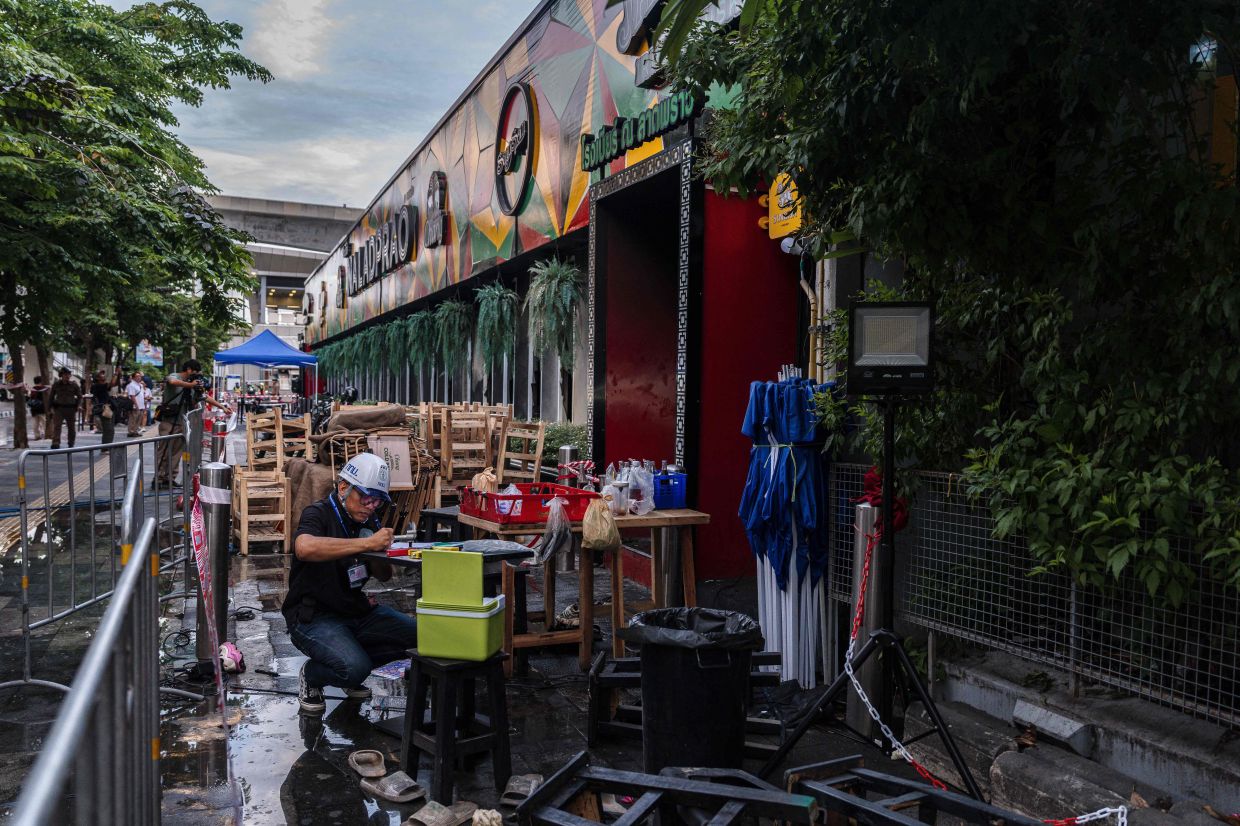
Bangkok's municipal authorities have launched an emergency response and broad safety review following a devastating fire at a restaurant and brewery in the Lat Phrao area that claimed 27 lives and left 18 others injured. Governor Chadchart Sittipunt visited the scene shortly after 2.40am on Monday and immediately instructed officials to establish a coordination centre to support grieving families and injured survivors, while ordering urgent audits of the venue's operating licences and fire-safety infrastructure across Bangkok.
The scale of the tragedy—which occurred on a night when the venue was operating as a restaurant and brewery-style bar—has prompted one of the most intensive investigations Bangkok authorities have undertaken in recent years. Preliminary reports suggest the majority of victims succumbed to smoke inhalation, though forensic specialists and medical examiners are still conducting formal identification procedures to confirm the causes of death and establish the precise circumstances that led to such high fatalities. The identification process remains ongoing, with the Bangkok Metropolitan Administration urging relatives to seek verified information through the newly established coordination centre rather than relying on unconfirmed reports.
The fire's rapid escalation appears to have been the critical factor in the high casualty rate. According to Suriyachai Rawiwan, director of Bangkok's Fire and Rescue Department, firefighters arrived approximately five minutes after receiving the emergency call, yet flames had already engulfed the premises. The thick smoke that permeated the building created a hazardous environment that severely hampered rescue operations, with visibility so compromised that teams struggled to reach those trapped inside. Survivors' attempts to flee toward toilet facilities at the rear of the building further complicated evacuation efforts, suggesting that the venue's layout may have funnelled occupants toward areas with limited exit options.
An initial examination of the fire scene has revealed several disturbing details about the building's safety provisions. Investigators discovered only two emergency exits—one located at the rear and another on the left side of the building. Preliminary evidence indicates that objects may have obstructed the left-side exit route, potentially trapping some of the 27 victims near that location. The kitchen passage served as one of the two escape routes, raising questions about whether this arrangement complied with standard safety protocols and whether staff had adequately trained evacuees on its use during emergencies.
Governor Chadchart's observations at the scene point to a troubling pattern: flames spread with unusual rapidity across the ceiling while plastic furniture in several areas remained relatively undamaged. This disparity has led investigators to theorise that toxic smoke generated by interior decorative materials may have incapacitated victims before they could reach safety. The theory suggests that materials used for aesthetic purposes—possibly synthetic furnishings, foam insulation, or other combustible decorations—released lethal fumes when ignited, overwhelming occupants with smoke before flames reached them. However, officials stressed that specialist analysis is required before confirming this hypothesis as the primary cause.
The Bangkok Metropolitan Administration has identified three immediate priorities in response to the disaster. First, the coordination centre will provide comprehensive assistance to families of the deceased and injured, directing information requests through the Chatuchak District Office. Second, officials will conduct urgent examinations of the venue's operating permits and safety certifications to determine whether the establishment had proper authorization to operate. Third, and most significantly, a detailed inspection of fire-escape systems across Bangkok will assess compliance with legal requirements, focusing on the number and condition of exits, visibility of emergency signage, and whether evacuation routes remain unobstructed.
The Bangkok Fire and Rescue Department's preliminary casualty figures indicated 27 deaths comprising nine men and 18 women, with 18 additional people injured. Eight of the injured sustained serious injuries, seven experienced moderate harm, and three suffered minor wounds. All injured individuals were transported to hospitals for treatment. The stark gender imbalance in fatalities—with 18 of 27 victims being women—may warrant analysis of evacuation patterns and whether certain areas of the venue were more difficult for women to escape from than others.
Bangkok's fire investigation units have handed the scene over to forensic specialists and investigators who must determine the precise origin and cause of the blaze, reconstruct the sequence of events, and recommend measures to prevent similar incidents. The complexity of the investigation reflects the need to examine multiple factors: whether electrical systems malfunctioned, whether cooking equipment was involved, whether flammable materials were stored improperly, and whether basic fire-safety protocols were followed. Authorities expect forensic findings to clarify whether smoke inhalation was indeed the primary cause of death, a determination that will influence safety recommendations going forward.
The immediate establishment of support services reflects Bangkok's commitment to assisting those affected while the investigation proceeds. The Chatuchak District Office opened an assistance centre offering families multiple contact points through designated staff members available by phone. This coordination approach aims to prevent information gaps and ensure relatives receive timely updates on identification procedures, benefits available, and memorial services.
For Malaysian and Southeast Asian observers, the Bangkok fire underscores persistent vulnerabilities in entertainment venue safety across the region. Similar establishments operating in shopping malls, standalone buildings, and repurposed warehouse spaces throughout Malaysia, Thailand, Vietnam, and Indonesia often present comparable risks: inadequate exit routes, combustible interior materials, unclear evacuation procedures, and insufficient fire-safety inspections. The Bangkok incident demonstrates how quickly fires can become lethal in venues where smoke generation exceeds occupants' ability to locate and reach emergency exits, a scenario that could replicate itself anywhere in the region lacking rigorous compliance enforcement.
Governor Chadchart's pledge to accelerate assistance for affected families and reduce recurrence risk signals that Bangkok authorities recognise this tragedy as a systemic failure requiring comprehensive reform. Beyond the immediate investigation, the broader safety audit of Bangkok venues may reveal how many establishments operate with inadequate fire-safety provisions, expired permits, or poorly maintained emergency systems. This incident will likely trigger regional discussions about entertainment venue regulations across Southeast Asia and may prompt neighbouring countries to reassess their own compliance frameworks.
The coordination centre's contact information reflects Bangkok's effort to centralise victim support. Four designated staff members—Kanittha (08 1734 1298), Kamonchan (08 4078 4821), Monthira (09 8951 6393), and Chakkraphan (06 3156 3466)—have been assigned to the Chatuchak District Office to handle inquiries from affected families and injured parties. This dedicated response infrastructure, while necessary, also highlights the scale of administrative burden created by such disasters and the importance of prevention systems that render such coordination centres unnecessary.

