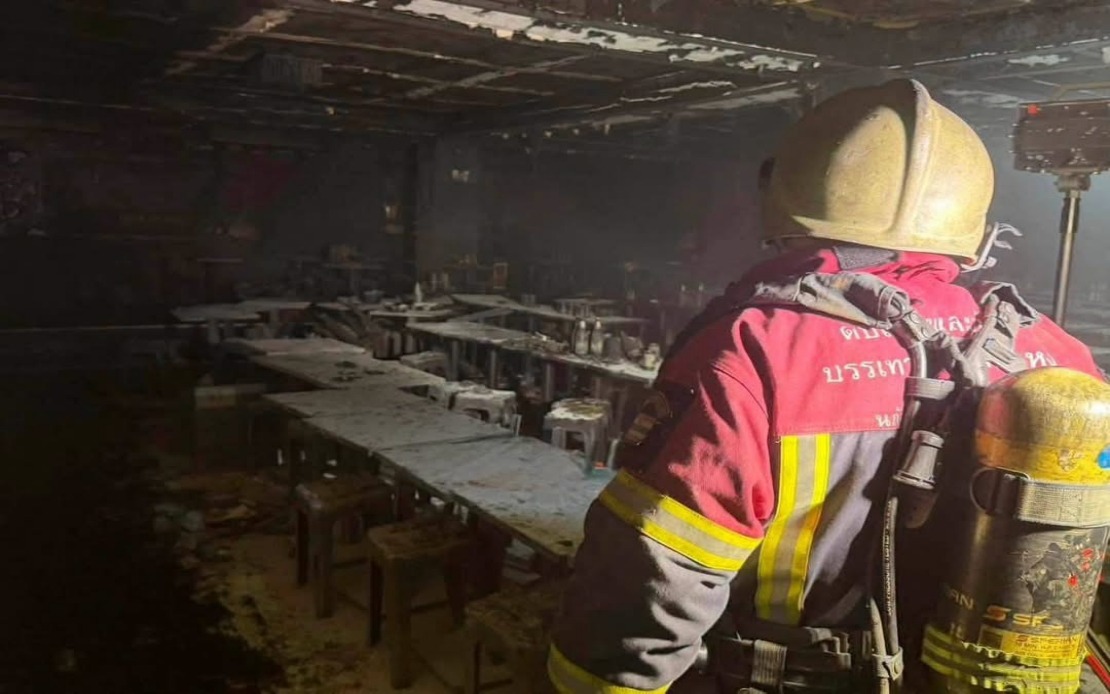
A catastrophic fire tore through a nightlife establishment in Bangkok's Lat Phrao area within Chatuchak district in the pre-dawn hours of Monday, claiming the lives of at least 27 people and leaving 18 others hospitalised. The incident marks one of Thailand's deadliest fire disasters in recent years and has prompted an urgent government review of safety standards across entertainment venues throughout the capital.
Bangkok Governor Chadchart Sittipunt arrived at the scene shortly after 2.40 am and oversaw the immediate response efforts. Initial accounts from witnesses and early responders are painting a harrowing picture of how rapidly the situation deteriorated once flames ignited. The governor's preliminary observations revealed that fire spread with alarming speed through the ceiling area of the venue, suggesting a structural vulnerability that allowed smoke and flames to propagate faster than occupants could evacuate.
Though the exact origin remains under investigation by police and forensic specialists, eyewitness testimony has provided crucial early leads. Thai Prime Minister Anutin Charnvirakul visited the disaster site and spoke with a musician performing at the venue when the fire erupted. That witness account pinpointed an electrical switchboard as the apparent ignition point, with the source describing how "explosions" followed the initial electrical fault before chaos consumed the establishment. The musician recounted how the incident escalated within seconds, forcing patrons to flee through smoke and escalating flames.
Among the 27 deceased, the Bangkok Metropolitan Administration's Department of Disaster Prevention and Mitigation documented nine men and 18 women. Of those hospitalised, eight sustained critical injuries requiring intensive care, seven suffered moderate trauma, and three sustained minor harm. Medical authorities believe most fatalities resulted from smoke inhalation rather than direct thermal injuries, though definitive cause-of-death determinations await forensic examination completion.
A particularly troubling detail has emerged regarding potential evacuation impediments. Preliminary findings indicate that several victims were discovered near an emergency exit positioned on the building's left side, with indications that obstructions may have blocked this crucial escape route. Governor Chadchart cautioned against drawing premature conclusions pending thorough investigation, yet the positioning of deceased bodies near blocked exits raises serious questions about whether poor safety management directly contributed to the death toll.
Chadchart has initiated a comprehensive safety compliance audit across Bangkok's entertainment sector. The investigation will scrutinise the establishment's operating licence validity, emergency exit sufficiency and functionality, clarity of evacuation signage, integrity of evacuation pathways, and overall adherence to building codes and safety regulations. This audit underscores a systemic concern about whether Bangkok's thousands of bars and entertainment venues maintain adequate fire safety infrastructure and emergency protocols.
The circumstantial evidence pointing toward an electrical failure resonates with safety experts' longstanding concerns about ageing electrical infrastructure in older Bangkok buildings. Many entertainment establishments occupy converted residential properties or buildings constructed decades ago, before modern fire safety codes were implemented. Upgrading electrical systems to contemporary standards requires substantial capital investment that proprietors often resist, creating widespread vulnerability across the hospitality sector.
For Malaysian readers and regional observers, this incident serves as a sobering reminder of fire safety vulnerabilities that likely exist throughout Southeast Asia's rapidly expanding entertainment and hospitality industry. Malaysia's own entertainment venues face similar challenges regarding ageing infrastructure, overcrowding, and inconsistent enforcement of safety regulations. The Bangkok tragedy underscores how quickly inadequate emergency procedures and blocked evacuation routes transform a manageable electrical fault into a mass casualty event.
Thailand's government response will likely shape regional safety standards going forward. Prime Minister Anutin's personal involvement signals political recognition that public safety failures demand high-level accountability. Whether this translates into meaningful regulatory tightening or merely temporary enforcement bursts remains to be seen, yet the sheer scale of casualties ensures sustained public scrutiny throughout the investigation.
Meanwhile, the victim identification process continues as families await confirmation of their relatives' fates. The Bangkok Metropolitan Administration has established a coordination centre to distribute official updates and manage the identification procedures through medical and relevant authorities. This logistical challenge, combined with the forensic examination requirements, means that determining precise cause-of-death conclusions will require weeks of detailed analysis.
The broader implications extend beyond Thailand's borders. Southeast Asian nations including Malaysia should scrutinise their own entertainment venue safety standards, particularly regarding electrical systems, emergency exit adequacy, evacuation signage visibility, and regular safety audits. The Bangkok fire demonstrates that even major city administrations can harbour dangerous establishments where cost-cutting and regulatory negligence create conditions for tragedy.
As investigators continue piecing together the sequence of events, questions will intensify regarding whether this disaster was preventable had authorities enforced rigorous safety compliance. That examination will likely reveal systemic failures in building inspection regimes, licensing oversight, and safety culture within Bangkok's entertainment industry—challenges that resonate across the entire Southeast Asian region and demand urgent attention from policymakers.

