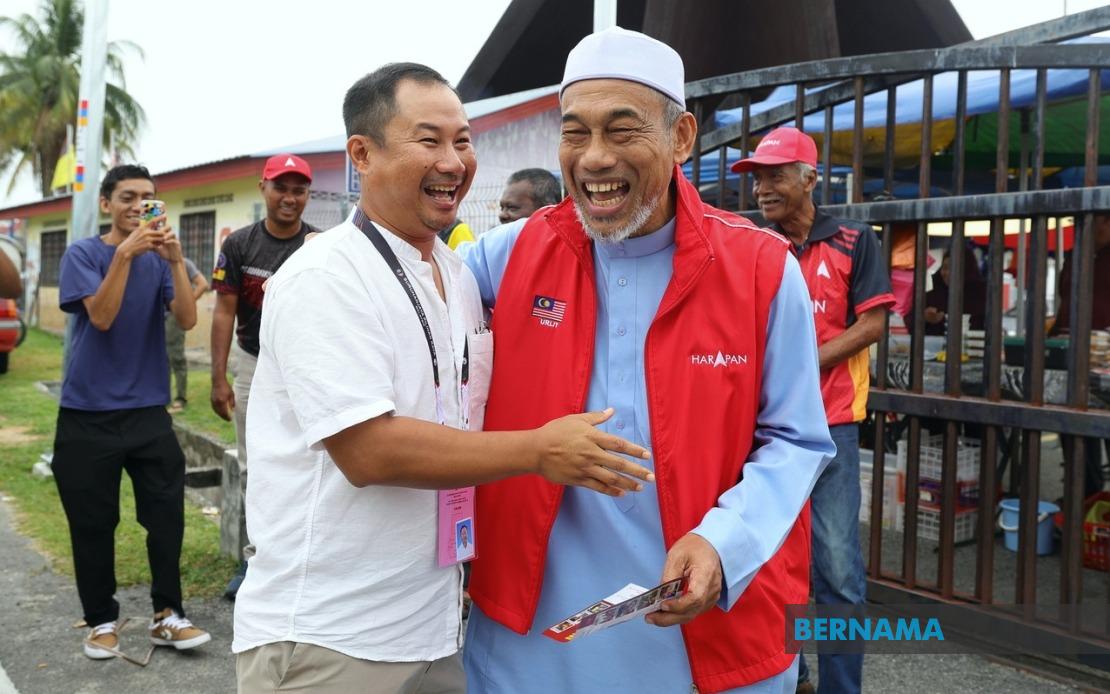
Datuk Bakri Sawir, the Pakatan Harapan candidate contesting the Klawang state seat in Negeri Sembilan, is campaigning on the strength of his service as a two-term assemblyman, hoping to secure a third consecutive victory when voters head to the polls on August 1. The 67-year-old incumbent is positioning his hands-on governance style and consistent presence in the constituency as his principal electoral assets, contrasting his approach with what he characterises as superficial political engagement that materialises only during campaign periods.
Bakri's electoral strategy centres on the relationships he claims to have cultivated among the constituency's electorate of fewer than 14,000 registered voters. He emphasises that his accessibility and direct engagement with residents have been defining features of his tenure since 2018, allowing him to operate at a scale where personalised constituent service becomes feasible. Rather than expecting constituents to navigate bureaucratic channels, he has adopted what he describes as a door-to-door methodology, bringing assistance and attention directly to households. This approach reflects a particular understanding of representative democracy that prioritises continuous community interaction over intermittent campaign appearances.
A critical element of Bakri's campaign narrative is his residential commitment to Klawang. By maintaining a home within the constituency, he positions himself as genuinely embedded in the community rather than parachuted in during election cycles. This permanent presence theoretically enables him to remain responsive to constituent needs throughout the electoral term, not merely during the five-year window preceding the next election. The significance he attaches to this residential requirement underscores an implicit critique of political representation models where elected officials maintain distant relationships with their constituencies.
Despite his confidence in his track record, Bakri displays pragmatism regarding electoral outcomes and political pluralism. He acknowledges that not all voters will support him and frames this as a natural feature of democratic competition. His statement that he regards politics as a platform for community service rather than personal advancement suggests an attempt to reframe electoral politics around substance and service orientation. This positioning may resonate particularly with voters fatigued by adversarial political discourse.
Looking beyond the current election, Bakri has articulated several development priorities he wishes to pursue if returned to office. His long-standing aspiration to establish a university-level institution in Jelebu district addresses human capital development challenges in the region. Although he acknowledges that current fiscal constraints make establishing Universiti Malaysia Negeri Sembilan impractical, his continued advocacy of this objective signals commitment to transformative infrastructure investment. Such an institution would represent a significant economic and social asset for the predominantly rural district.
In the shorter term, Bakri is championing more immediately realisable infrastructure projects aimed at economic stimulation. The proposed Rest and Recreation Area in Tembun, Hulu Klawang, represents an attempt to position the Klawang constituency as a stopover destination for highway travellers. Enhanced infrastructure of this type can generate economic spinoffs through increased tourist spending and employment opportunities for local service providers. His logic connects improved facilities with increased visitation and local economic benefits, a development paradigm familiar to planners across Southeast Asia.
Additional proposals include transforming Bukit Tajali into a recreational park offering diverse activities spanning leisure and adventure tourism. This initiative aligns with broader Malaysian strategies to develop domestic tourism and rural economic diversification. By positioning natural assets as tourism attractions, such projects can generate alternative income streams for communities traditionally dependent on agriculture or resource extraction.
Bakri's emphasis on agrotourism development in Jelebu, leveraging the district's historical significance including the British Memorial Stone, reflects recognition of heritage assets as economic resources. This approach to cultural tourism has gained traction across Southeast Asia as communities seek to monetise historical narratives whilst maintaining cultural patrimony. Such initiatives must balance economic extraction with cultural preservation, a challenge Bakri's proposals do not explicitly address.
The electoral context in Klawang comprises a three-way contest. Beyond Bakri, the field includes Danni Rais, 38, representing Perikatan Nasional, and Muhammad Adib Musa, 25, from Parti Pribumi Bersatu Malaysia. The presence of three competitive candidates, particularly a youthful Bersatu challenger, injects genuine uncertainty into what might otherwise appear a straightforward incumbent advantage scenario. The age differential between Bakri and his younger opponents may appeal to different voter demographics and concerns.
The broader electoral context involves the Negeri Sembilan State Legislative Assembly election following the assembly's dissolution on June 5. A total of 889,490 registered voters across the state are eligible to participate, with early voting scheduled for July 28 and polling day set for August 1. The electorate comprises 867,151 ordinary voters alongside 16,884 military personnel and their spouses and 5,455 police officers entitled to early voting. This composite electorate reflects Malaysia's unique franchise arrangements accommodating security force personnel.
For Malaysian voters and observers, the Klawang contest exemplifies broader questions about representative governance and electoral competition in peninsular Malaysian state politics. Bakri's campaign strategy privileges consistent service delivery and community embeddedness over grand policy pronouncements, reflecting an understanding of electoral competition at the state level where granular constituent relationships often determine electoral outcomes. His emphasis on accessibility and permanence contrasts with metropolitan electoral campaigns that deploy mass media and organisational machinery.
The Negeri Sembilan election assumes particular significance as one of relatively few contested state elections in Malaysia, providing insight into voter preferences regarding incumbency, party affiliation, and alternative candidates. Bakri's attempt to leverage his service record will test whether consistent governance and community engagement can overcome any anti-incumbent sentiment or partisan momentum favouring his opponents. The outcome in Klawang will partially reflect broader state-level dynamics affecting Pakatan Harapan's performance across Negeri Sembilan constituencies.

