Bahrain's economic situation remains precarious following months of regional instability, yet the Gulf state has resisted deploying emergency financial mechanisms, according to Noor bint Ali Alkhulaif, the nation's Minister of Sustainable Development and Chief Executive of the Bahrain Economic Development Board. In an interview this week, Alkhulaif confirmed that Bahrain has not activated the $5.3 billion currency swap agreement negotiated with the United Arab Emirates in April, a finding that emerged as the kingdom grapples with renewed security pressures and a deteriorating fiscal position.
The economic backdrop has been unforgiving for Bahrain, which entered the current crisis year already shouldering one of the heaviest debt loads across the Gulf Cooperation Council region. When Iranian hostilities escalated earlier this year, the timing could not have been worse. Credit rating agency S&P Global has projected a three percent contraction in gross domestic product for 2024, while the fiscal deficit is forecast to balloon to nearly 8.5 percent of GDP—a level that few governments can sustain without intervention. Foreign exchange reserves have fallen to approximately $3 billion, their lowest point since the COVID-19 pandemic disrupted global markets, raising legitimate concerns about the kingdom's financial flexibility.
Yet Alkhulaif presented a narrative of emerging stability and recovery gathering momentum. She acknowledged the year had not followed the planned trajectory, characterizing the situation as a deviation from what officials had envisioned as a period focused on nation-building and structural economic transformation. Despite the setback, she pointed to concrete evidence of adaptation among Bahrain's business community. Major manufacturing and logistics companies have successfully identified alternative trade routes to circumvent the Strait of Hormuz, mitigating supply chain disruptions that initially seemed inevitable. Regional tourism, which comprises roughly 90 percent of Bahrain's visitor base and totaled 15 million arrivals in the previous year, has rebounded to near pre-conflict levels—a development that suggests both international confidence in the kingdom's stability and renewed leisure travel patterns across the Gulf.
The decision to preserve the UAE currency swap represents a calculation that liquidity remains sufficient for operational needs, though not deploying such resources when they are available also signals confidence to credit markets and international investors. Alkhulaif, who also serves as a board member of Bahrain's central bank, confirmed on Thursday that the swap had not been exercised based on available information. The distinction carries weight: while other sovereigns might rush to secure emergency funding, Bahrain's restraint suggests either genuine recovery or careful confidence management.
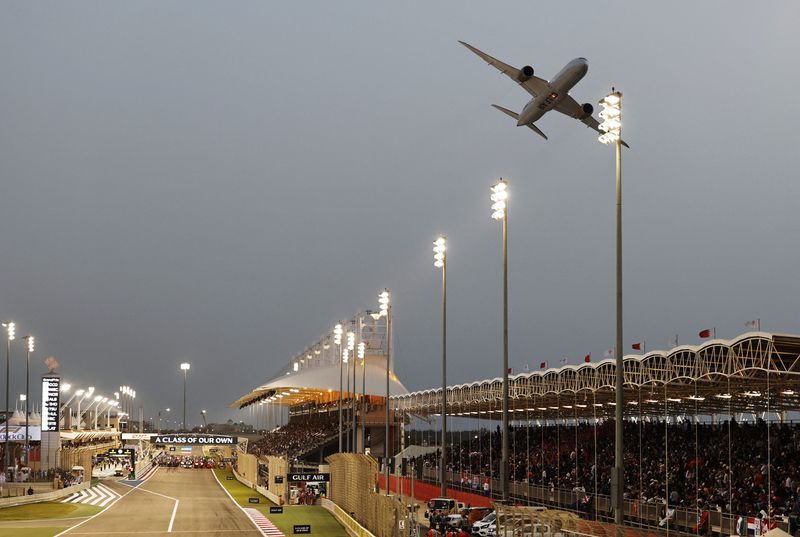
Separately, Bahrain is pursuing the restoration of its Formula One Grand Prix to the 2024 international racing calendar. The race was cancelled in March alongside Saudi Arabia's inaugural event following the eruption of wider regional conflict. The reinstatement would hinge partly on a de-escalation in United States-Iran tensions, which remain volatile. Formula One sources indicate that the most viable slot for Bahrain would fall on October 3-4, positioned between the Azerbaijan Grand Prix in Baku and the Singapore Grand Prix on October 11—a window that would allow the sport's global logistics to accommodate the race without major calendar restructuring.
Alkhulaif acknowledged active discussions with Formula One management about reintegrating cancelled races into the schedule, while noting that no formal confirmation has yet materialized. She framed the possibility guardedly, using language that reflected both hope and recognition of the geopolitical uncertainties still in play. The F1 fraternity understands that any decision must be finalized relatively soon to permit teams adequate time to adjust technical preparations, transportation logistics, and personnel deployments—a practical constraint that puts pressure on negotiations between the sport's governing bodies, Bahrain's government, and international stakeholders.
The economic stakes of a reinstated Grand Prix are substantial for Bahrain's tourism and hospitality sectors. The weekend typically draws approximately 105,000 spectators to the Sakhir circuit. Among these, international visitors with higher spending power represent roughly 10 to 15 percent of total attendance, generating outsized revenue relative to visitor numbers. For a kingdom seeking to demonstrate return to normalcy and international prestige, hosting a world-class sporting event carries symbolic and practical value that extends beyond immediate ticket and hospitality revenues.
Looking further ahead, Bahrain has ambitions that transcend the current calendar year. The kingdom is positioned to reclaim a prestigious position in Formula One's longer-term schedule: the opening race of the 2026-27 season. Additionally, Bahrain expects to host the traditional pre-season testing programs that precede formal championships. The shifting dates of Ramadan, which will fall earlier in 2026-27, render this arrangement feasible and attractive for both the kingdom and international racing teams.
These medium-term racing prospects depend critically on sustained regional stability. Should the current tensions persist or intensify, Formula One's ability to commit to Bahrain as a host venue could be compromised, particularly given the sport's recent expansion into traditionally stable markets and its preference for demonstrable security. Conversely, if the geopolitical environment stabilizes, Bahrain's established infrastructure, experienced organizational capacity, and central position in the Gulf make it a natural anchor point for the calendar.
For Malaysian observers, Bahrain's situation underscores the vulnerability of even relatively developed Gulf economies to regional conflict and the limits of financial engineering in addressing underlying structural challenges. The kingdom's composition of major debt obligations, modest oil export capacity relative to peers, and heavy reliance on regional tourism and financial services creates a complex dependence on political stability that currency swaps cannot fully mitigate. The pursuit of the F1 race represents not merely a sporting objective but a deliberate signal of governance confidence and market normalcy—a tool that other regional economies facing uncertainty might similarly deploy.

