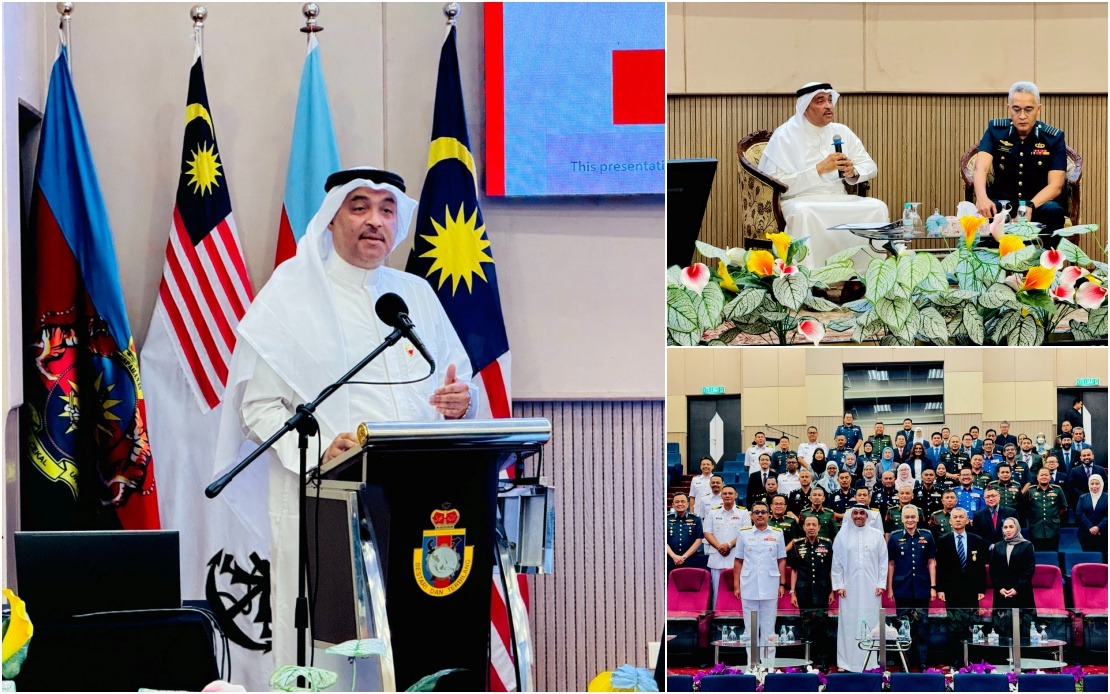
Bahrain's Ambassador to Malaysia, Dr Waleed Khalifa Al Manea, has underscored the two countries' commitment to broadening their strategic partnership, emphasising that cooperation now spans multiple sectors benefiting both populations. The envoy's remarks highlight an intensifying engagement between Putrajaya and Manama at a time when regional security concerns are reshaping bilateral relationships across the Gulf and Southeast Asia.
The deepening partnership draws strength from the personal rapport between His Majesty Sultan Ibrahim, King of Malaysia, and His Majesty King Hamad bin Isa Al Khalifa, King of Bahrain. Equally significant are the coordinated efforts of Prime Minister Datuk Seri Anwar Ibrahim and Bahrain's Crown Prince and Prime Minister, His Royal Highness Prince Salman bin Hamad Al Khalifa, both of whom have prioritised institutional mechanisms to advance joint initiatives. This leadership alignment filters through government structures, creating momentum for collaboration across defence, security, and economic domains.
One tangible expression of this partnership involves Malaysia's role in hosting the 2026 Formula 1 Gulf Air Bahrain Grand Prix, an event that transcends sporting spectacle to symbolise deeper economic and cultural ties. Such high-profile international engagements serve dual purposes: they elevate each nation's profile on the global stage whilst reinforcing bilateral bonds through sustained collaboration on logistics, security, and promotional activities. For Malaysia, securing this prestigious motorsport fixture demonstrates its capacity to host world-class events whilst strengthening ties with an important Gulf partner.
Dr Al Manea articulated Bahrain's comprehensive security doctrine during a lecture at the National Resilience College, part of the Malaysian National Defence Studies Centre, where he addressed senior military personnel, police officials, government representatives, and parliamentary members. His presentation underscored how Bahrain balances sovereignty protection with civilian safeguarding, factual documentation of security incidents, and diplomatic engagement to address regional instability. This multifaceted approach reflects lessons from Bahrain's own experience navigating complex geopolitical pressures whilst maintaining stability.
The Gulf Cooperation Council member has emerged as a significant voice on maritime security, an issue with profound implications for ASEAN nations whose prosperity depends on unimpeded shipping lanes. Dr Al Manea highlighted Iranian attacks targeting GCC member states, including civilian populations, critical infrastructure, and commercial navigation routes. These incidents have reverberated globally, disrupting supply chains and heightening insurance costs. For Malaysia and other Southeast Asian economies reliant on Gulf trade, such instability directly threatens economic interests and regional prosperity.
During Bahrain's April presidency of the UN Security Council, the kingdom spearheaded international diplomatic initiatives aimed at safeguarding maritime corridors and protecting essential infrastructure. This activism reflects a deliberate strategy to internationalise Gulf security challenges, drawing broader international engagement rather than allowing regional disputes to fester unresolved. Malaysia's subsequent co-sponsorship of UN Security Council Resolution 2817 demonstrated solidarity with Gulf partners whilst affirming ASEAN's commitment to freedom of navigation—a principle fundamental to Southeast Asian interests.
Resolution 2817 embodied crucial principles: reaffirming state sovereignty over territorial waters, emphasising civilian protection in conflict situations, and calling for cessation of armed attacks. For Malaysia, supporting this resolution signalled alignment with international law frameworks that protect smaller states from coercive pressure, a principle equally applicable to Southeast Asian circumstances. The vote represented practical solidarity rather than mere diplomatic posturing, binding Malaysia to commitments supporting maritime security norms.
The strategic partnership reflects broader regional awareness that Gulf stability directly affects Southeast Asian security and prosperity. When major commercial routes face disruption, when insurance premiums spike, and when geopolitical tensions escalate, Malaysian companies and consumers bear real consequences. Conversely, Malaysia's engagement in Gulf diplomatic initiatives amplifies Southeast Asian voices in discussions shaping Middle Eastern outcomes, elevating ASEAN's position in global security architecture.
Bahrain's comprehensive security approach—integrating defence capabilities, civilian protection mechanisms, diplomatic channels, and collective coordination frameworks—offers lessons applicable to ASEAN's own evolving security challenges. As Southeast Asian nations confront maritime disputes, transnational threats, and great power competition, studying how smaller states navigate complex geopolitical environments provides practical insights. The Bahrain-Malaysia partnership thus operates on reciprocal learning and mutual interest rather than asymmetric dependence.
Looking forward, the bilateral relationship appears positioned for continued expansion. Institutional mechanisms involving senior government figures, military-to-military contacts, and parliamentary exchanges create multiple channels for sustained engagement. Cultural and sporting initiatives, particularly the 2026 Formula 1 commitment, ensure public-level awareness of partnership development beyond elite diplomatic circles. This multi-layered approach builds resilience into bilateral relations, making cooperation less vulnerable to shifting political winds.
For Malaysia specifically, deepening Gulf relationships diversifies diplomatic and economic portfolios, reducing over-reliance on any single regional power whilst strengthening ASEAN's collective negotiating position. As the Middle East faces complex security challenges requiring international cooperation, Malaysia's active participation demonstrates its commitment to global stability whilst securing tangible benefits for domestic stakeholders. The partnership ultimately reflects how middle-power diplomacy operates effectively when guided by clear national interests combined with genuine commitment to rules-based international order.

