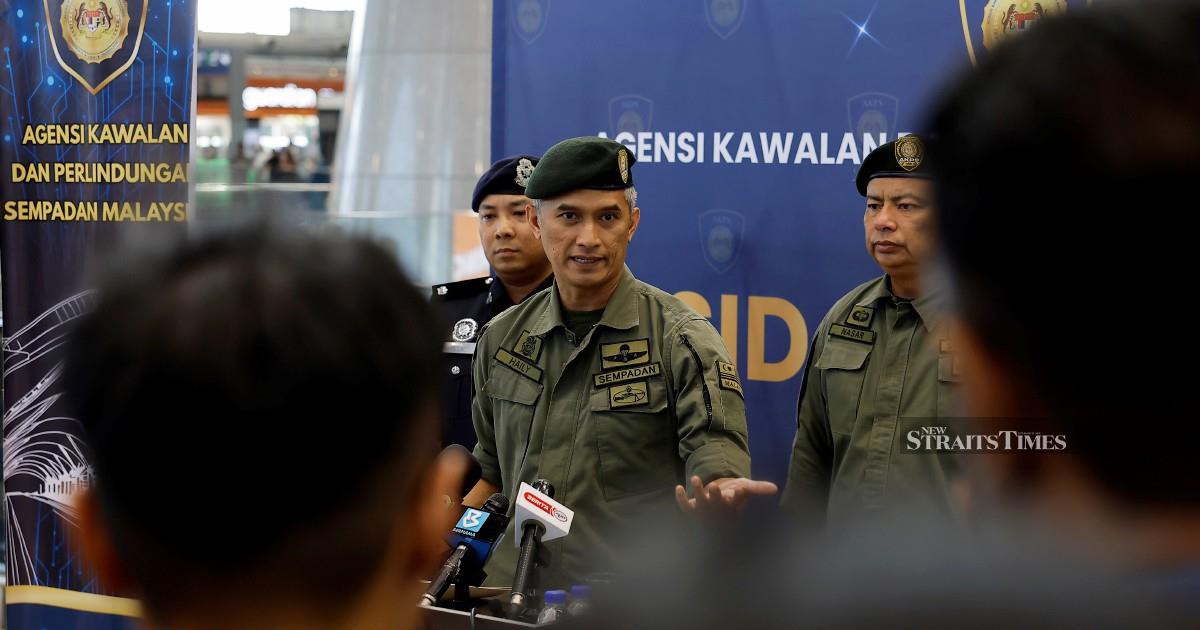
A Malaysia Airlines pilot detained in Indonesia after being found with 70,000 ecstasy pills in his luggage was screened through a baggage system operated by AVSEC, not under the purview of the Malaysia Border Control and Protection Agency, according to official clarification this week.
The distinction carries significance in Malaysia's ongoing efforts to streamline border security responsibilities and accountability frameworks. AVSEC, the private aviation security contractor, maintains separate operational protocols from the government's newly consolidated border agency, which was established to unify and strengthen protection mechanisms across all entry and exit points nationwide. This clarification emerged as authorities sought to address public concerns about potential gaps in the screening process that allowed the pilot to depart Malaysia with the contraband.
The incident itself raises uncomfortable questions about the thoroughness of security procedures at Malaysia's primary aviation hub and the effectiveness of coordination between different security stakeholders operating within the same physical spaces. When a commercial airline pilot can transport such a substantial quantity of illicit drugs through departure procedures, it inevitably prompts scrutiny of whether current systems possess sufficient redundancy and rigour. The Malaysia Airlines pilot's arrest in Indonesia highlighted vulnerabilities that extend beyond a single screening point, suggesting systemic issues that demand comprehensive examination.
Malaysia's approach to aviation security involves multiple stakeholders with distinct responsibilities. While AVSEC handles passenger and baggage screening at airports as a private contractor, the MCBA coordinates broader border protection strategy. This layered structure, theoretically designed to create checks and balances, sometimes generates confusion about accountability when breaches occur. The government's recent consolidation of border agencies under MCBA aimed partly to clarify command structures and eliminate jurisdictional ambiguities that could otherwise allow security lapses to fall through the cracks.
The arrest has drawn attention to the ongoing challenge of preventing commercial pilots—who possess unique access privileges and familiarity with airport procedures—from exploiting their position for smuggling operations. Pilots occupy a peculiar category within airport security frameworks; they must move through areas with reduced screening intensity compared to ordinary passengers, yet simultaneously carry responsibility for the safety of hundreds of lives. Balancing operational efficiency with security thoroughness remains a persistent tension in aviation management globally, and Malaysia is hardly alone in confronting this dilemma.
Understanding the distinction between AVSEC's operational role and MCBA's strategic mandate helps contextualize the broader security landscape. AVSEC's primary function centres on immediate screening and access control at airport checkpoints, while MCBA oversees policy, coordination, and integration of border security across multiple agencies and facilities. When an incident occurs, identifying which entity bears operational responsibility becomes crucial for implementing corrective measures and preventing recurrence. The clarification by officials suggests an effort to establish clear accountability while simultaneously demonstrating that the incident did not reflect MCBA's direct oversight failure.
For Malaysia's aviation industry and travelling public, the incident underscores the importance of maintaining vigilance and continuous improvement in security protocols. Malaysia Airlines, as the national carrier, faces particular reputational sensitivity regarding security matters following historical incidents. Each breach, however successfully it was ultimately detected by Indonesian authorities, contributes to perceptions about Malaysia's security standards. Airlines and security contractors must therefore treat such incidents as catalysts for review and enhancement rather than isolated anomalies.
The involvement of Indonesian authorities in apprehending the pilot after departure from Malaysia also illustrates how international cooperation remains essential in combating drug trafficking networks. Smugglers routinely exploit differences in enforcement capabilities and security standards between countries, planning routes and methods accordingly. The pilot's arrest demonstrates that while Malaysia's outbound screening may contain vulnerabilities, Indonesia's inbound procedures functioned effectively to intercept the contraband. This underscores the importance of information-sharing and coordinated enforcement across Southeast Asian aviation networks.
Moving forward, Malaysia must examine whether AVSEC's operational standards align with international best practices and whether the agency receives adequate training, technology, and resources to execute screening responsibilities comprehensively. The MCBA's role in establishing benchmarks and conducting oversight of contracted security providers becomes increasingly critical in such contexts. Additionally, special protocols targeting high-risk categories such as aviation personnel may warrant enhancement, including enhanced screening measures and intelligence integration that flags irregular patterns of travel or behaviour.
The incident also prompts reflection on broader supply-side considerations regarding ecstasy and synthetic drug trafficking through Malaysia. The scale of the interception—70,000 pills represents significant volume by street-level standards—suggests either an attempt to establish distribution networks in a new market or a shipment destined for transnational operations. Understanding the sourcing and intended destination of such quantities informs law enforcement strategy and helps agencies target trafficking networks more effectively than reactive enforcement alone.

