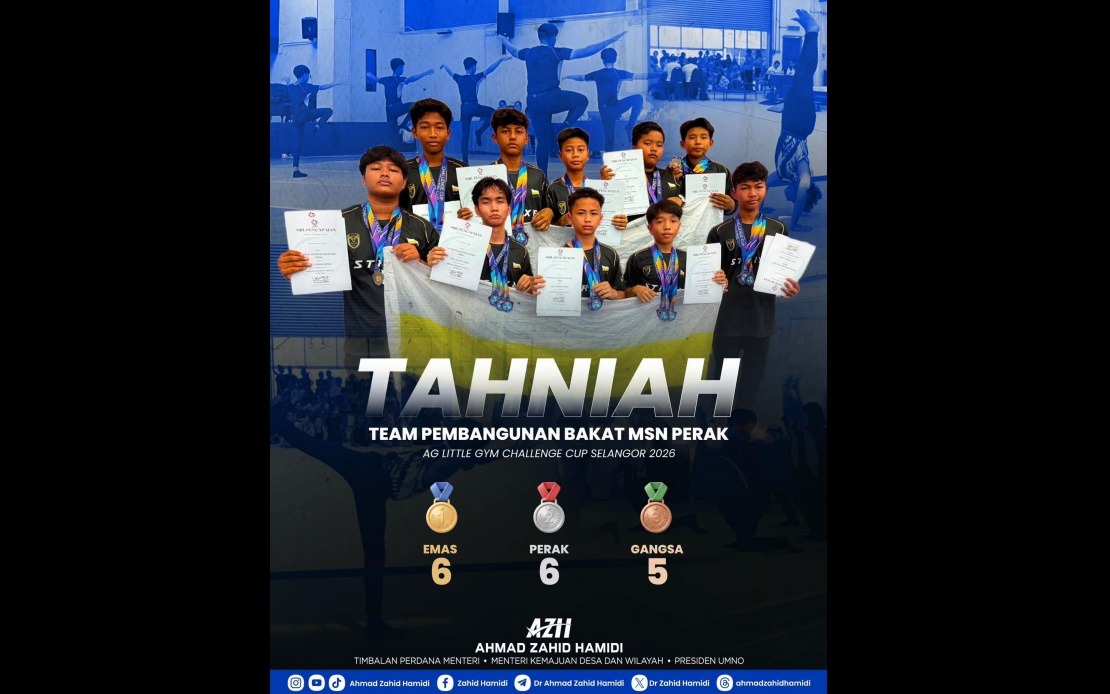
Young gymnasts from Bagan Datuk have etched their names into the district's sporting history after capturing an impressive haul of medals at the AG Little Gym Challenge Cup Selangor 2026. The competition, held in Kajang on August 1, saw the talented contingent walk away with six gold medals, six silver medals, and five bronze medals—a remarkable showing that has drawn widespread recognition from local leadership and community organisations.
Deputy Prime Minister Datuk Seri Dr Ahmad Zahid Hamidi, who represents Bagan Datuk in Parliament, took to social media to celebrate the milestone achievement. His endorsement carries particular significance given his high-profile position within the federal government, elevating the status of these young athletes' accomplishments beyond the local sporting sphere. The timing of his public recognition underscores how Malaysian political leaders increasingly leverage grassroots sporting successes to demonstrate their constituencies' capabilities and competitive spirit.
In his statement, Ahmad Zahid emphasised that the medals represent far more than competition victories. He highlighted that the young athletes have demonstrated intellectual rigour in their studies whilst simultaneously excelling in sports—a dual achievement that reflects positively on the educational environment within Bagan Datuk. This framing aligns with broader Malaysian policy objectives around developing holistic individuals capable of balancing academic excellence with physical fitness and competitive endeavour.
The Deputy Prime Minister's remarks touched on the crucial role of structural support systems in athletic development. He noted that success in sports requires more than raw talent; it demands proper guidance, institutional backing, and sustained investment in training infrastructure. For a district-level gymnastics programme, this acknowledgment signals the importance of parental engagement, coaching expertise, and access to quality facilities—resources that smaller communities sometimes struggle to secure in Malaysia's competitive sports landscape.
The Bagan Datuk Generasi Muda Gymnastics Club further amplified the achievement through their own social media messaging, framing the medal haul as validation of their training philosophy. Their statement emphasised the discipline, perseverance, and countless training hours that underpin competitive success. Rather than treating the Kajang competition as a culmination, the club positioned it as an intermediate checkpoint within a longer developmental trajectory, encouraging continued effort and improvement.
This aspirational messaging reflects contemporary best practices in youth sports development. Experienced coaching programmes increasingly discourage athletes from viewing single competitions as definitive measures of success. Instead, they encourage participants to treat each tournament as a learning opportunity and stepping stone toward higher levels of competition. The club's explicit statement that "this is not the finish line" demonstrates mature sporting philosophy that seeks sustained excellence rather than momentary glory.
The concentration of gymnastics talent within a single district raises interesting questions about how Malaysian sporting excellence develops geographically. Bagan Datuk's success in this particular discipline suggests that local investment in one sport can create a critical mass of skilled athletes, coaches, and support structures that become self-reinforcing. Other districts seeking to develop sporting profiles might observe this model as evidence that focused specialisation, combined with community backing, can generate internationally competitive results.
Gymnastics occupies a particular niche within Malaysian sports. Unlike football or badminton, which benefit from established national league structures and widespread grassroots participation, artistic gymnastics depends more heavily on dedicated clubs and specialist coaching. The emergence of a competitive programme in Bagan Datuk suggests growing diversification in Malaysian sporting culture, with communities exploring disciplines beyond traditional football and badminton dominance. This diversification could eventually strengthen Malaysia's overall Olympic and international sporting credentials.
The level of parental and community involvement evident in the Bagan Datuk programme speaks to changing attitudes toward youth development in Malaysian society. Gymnastics requires substantial financial investment for training fees, equipment, travel to competitions, and coaching expertise. That Bagan Datuk families have demonstrated commitment to these requirements indicates either growing disposable income in the district or a conscious prioritisation of athletic development alongside education. Either scenario carries implications for how Malaysian communities are evolving economically and culturally.
Looking forward, the challenge facing the Bagan Datuk Generasi Muda Gymnastics Club involves sustaining this momentum whilst broadening the talent pipeline. Initial success often attracts additional participants, but retaining dedication over years of training requires institutional stability, consistent coaching quality, and access to increasingly sophisticated facilities as athletes advance toward national and international competition levels. Malaysian clubs in various sports have learned that maintaining competitive edge demands continuous investment and evolution rather than resting on past achievements.
The recognition from senior political leadership like Ahmad Zahid also carries practical implications for the programme's future funding and institutional support. Public acknowledgment from high-ranking government figures often translates into increased community awareness, potential sponsorship opportunities, and consideration within state or federal sports development allocations. For a district-level gymnastics club, such attention can prove transformative in terms of securing resources and legitimacy within the broader Malaysian sporting ecosystem.
This achievement also resonates within the context of Southeast Asian sports development. Countries across the region have invested heavily in gymnastics, recognising its value both for Olympic medal prospects and for developing discipline, coordination, and physical confidence in younger generations. Bagan Datuk's success positions Malaysia positively within regional gymnastics discussions and demonstrates that competitive capability exists beyond Malaysia's established sporting powerhouses.

