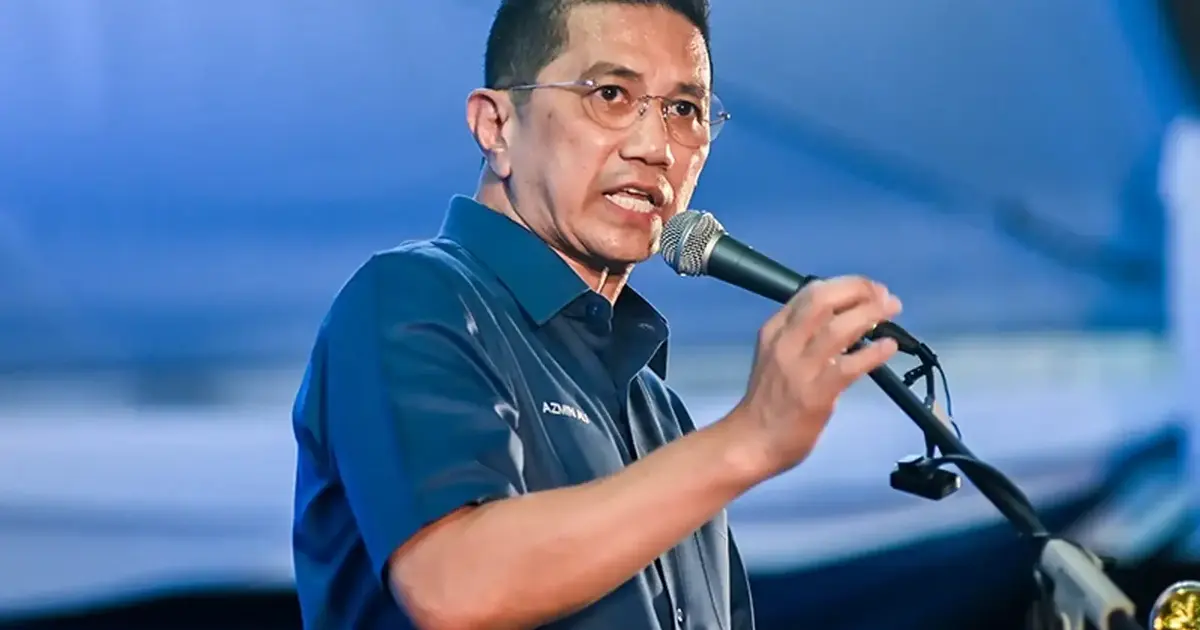
Azmin Ali, the current secretary-general of Bersatu, has emerged in political circles as a potential conduit for reconciliation between Bersatu and Pakatan Harapan should the party's leadership undergo significant transition. Observers of Malaysian politics point to his long history within the People's Justice Party (PKR), where he served as deputy president for roughly ten years before shifting allegiances, as evidence of his capacity to bridge the substantial organisational and ideological divides that have fractured the opposition coalition.
The speculation centres on scenarios where Bersatu's existing power structure might fundamentally alter, with Azmin's unique position within both party ecosystems rendering him potentially valuable in reconstruction efforts. His decade-spanning involvement with PKR provided him with deep networks, institutional knowledge, and personal relationships across the broader Pakatan alliance that remain relevant despite his current party membership. Political analysts suggest that such advantages position him distinctly compared to other Bersatu figures who lack comparable historical ties to the coalition's major components.
Bersatu itself emerged from a rupture within UMNO and has since navigated complex relationships with both Pakatan Harapan and other political formations. The party's trajectory reflects Malaysia's volatile coalition politics, where stability remains elusive and repositioning of major players occurs regularly. Azmin's background provides him with understanding of PKR's operational mechanics, factional dynamics, and leadership preferences developed over his tenure as the party's second-ranking official. This institutional familiarity extends beyond mere technical knowledge to encompass personal relationships with influential PKR figures whose cooperation would be essential to any meaningful rapprochement.
The broader context involves ongoing tensions within Malaysia's political landscape regarding coalition composition and stability. Bersatu's position relative to Pakatan Harapan remains contested and subject to shifting calculations based on electoral prospects, internal party dynamics, and national political developments. Any future reconciliation scenario would necessarily involve complicated negotiations spanning multiple party structures, and individuals with credibility across factional lines become particularly valuable to such processes. Azmin's history as a respected PKR functionary for an extended period provides him standing that others within Bersatu might lack.
Political observers note that Azmin's standing within both ecosystems does not guarantee successful bridge-building, given the depth of grievances and strategic divergence that have accumulated over recent years. However, his capacity to understand both institutional perspectives and maintain some credibility within each structure renders him functionally distinct from competitors who might emerge in similar scenarios. The duration of his PKR service means numerous relationships with current party members remain intact, even as formal organisational bonds have shifted.
Malaysian coalition politics has historically demonstrated that individuals positioned at intersections between major power blocs can wield disproportionate influence during periods of restructuring or realignment. Azmin's current role as Bersatu secretary-general provides him with significant administrative authority within his existing party framework, while his PKR background supplies the historical credentials necessary for serious engagement with Pakatan leadership. This dual positioning creates a distinctive strategic asset within the context of potential future negotiations.
Analysts emphasise that any meaningful convergence between Bersatu and Pakatan Harapan would require addressing fundamental disagreements regarding coalition structure, policy orientation, and leadership accountability that have accumulated since their separation. Such negotiations would necessarily involve multiple actors and complex institutional dynamics extending far beyond any single individual's influence. Nevertheless, the availability of trusted interlocutors with genuine credibility in both camps substantially facilitates the exploratory conversations from which larger negotiations might eventually emerge.
The speculation regarding Azmin's potential role also reflects Malaysian political observers' assessment of Bersatu's current trajectory and sustainability within the existing political configuration. Questions regarding party stability and long-term coalition viability naturally prompt consideration of alternative alignments and the personnel capable of negotiating such shifts. Azmin's unique background positions him advantageously in such contingency scenarios, regardless of whether they materialise into concrete political developments.
For Malaysian readers tracking coalition politics and party dynamics, the significance of these observations lies in understanding how individual relationships and institutional memory facilitate political transitions. The emphasis on Azmin's decade-long PKR tenure underscores that Malaysian politics, despite its fluidity, retains certain continuities in personnel and relationships that can provide anchors during periods of structural change. His potential utility as a bridge figure reflects the reality that successful political negotiations typically require participants with credibility across factional divides.
Regional observers of Southeast Asian politics may find particular interest in how Malaysian parties navigate coalition dynamics and leadership transitions, given the region's broader patterns of shifting political alignments. The Malaysian case demonstrates how individual positions at intersections of major power blocs can acquire strategic importance during periods of potential realignment, and how institutional history shapes ongoing political possibilities even as formal organisational structures shift substantially.