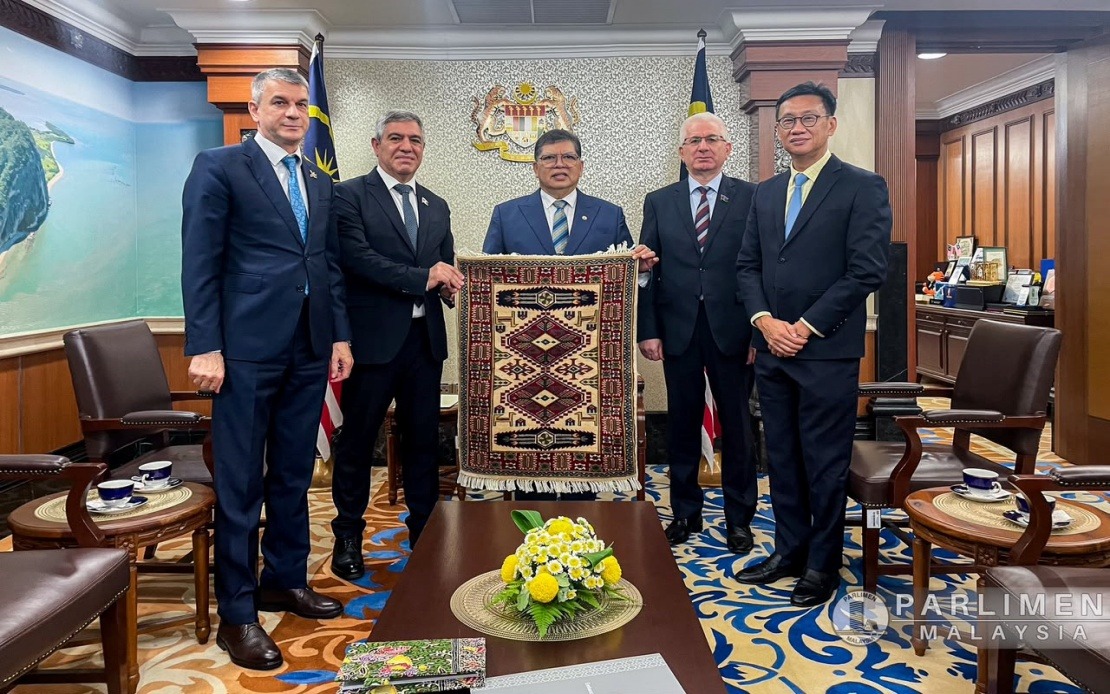
A working delegation from Azerbaijan's Parliament arrived in Malaysia recently to reinvigorate bilateral parliamentary cooperation and unlock fresh avenues for economic collaboration between the two nations. The visit, led by Vugar Bayramov, who heads the Working Group for Azerbaijani-Malaysian Interparliamentary Relations in the Azerbaijani Parliament, included fellow parliamentarian Bakhtiyar Aliyev and represented a strategic effort to deepen institutional connections that extend beyond traditional diplomatic formalities.
The timing of this engagement reflects broader regional dynamics in Southeast Asia, where nations increasingly seek partnerships with countries beyond their immediate geographic orbit. Azerbaijan, positioned at the crossroads of Europe and Asia, has become an increasingly important player in global energy markets and regional politics. For Malaysia, such exchanges present opportunities to diversify its international partnerships and tap into emerging markets. The visit demonstrates how parliamentary delegations serve as crucial mechanisms for building relationships that can translate into concrete economic and strategic benefits.
During their stay, Bayramov and Aliyev conducted a series of high-level meetings that underscored the comprehensive nature of the bilateral engagement. Their courtesy call on Dewan Rakyat Speaker Tan Sri Johari Abdul signalled respect for Malaysia's legislative institutions and established direct lines of communication at the most senior parliamentary levels. This engagement with Malaysia's lower house leadership provides a foundation for future legislative cooperation, including potential joint committees or collaborative initiatives on matters of mutual interest.
The delegation's interaction with Wong Chen, chairman of the Malaysian Parliament's Special Select Committee on International Relations and International Trade, proved particularly significant. This particular committee oversees Malaysia's international relations and trade policy considerations, making it a strategic touchpoint for any nation seeking to expand commercial ties. Similarly, their meeting with Zahir Hassan, chairman of the West Asia Friendship Group, positioned Azerbaijan within Malaysia's established network of regional relationships, potentially facilitating deeper integration into Malaysia's West Asian diplomatic framework.
Engagements with Dewan Negara President Datuk Awang Bemee Awang Ali Basah added another layer to the delegation's visit, ensuring that both chambers of Malaysia's Parliament were actively involved in discussions about future cooperation. The upper house's involvement signals that these are not merely transactional exchanges but rather comprehensive efforts to build institutional relationships that can endure across multiple parliamentary terms and political cycles. Both sides reportedly exchanged perspectives on advancing parliamentary cooperation, suggesting discussions may have touched on issues ranging from legislative best practices to coordinated positions on regional or international matters.
Beyond parliament, the delegation engaged extensively with Malaysia's private sector, meeting with more than 20 business entities under the auspices of the Malaysian National Chamber of Commerce and Industry. These interactions reveal that the visit was not confined to political grandstanding but reflected genuine commercial intent. The presence of S. Gnanasambanthan, the chamber's secretary-general, in these discussions indicated that Malaysia's organised business community viewed the Azerbaijani interest as sufficiently credible to warrant serious engagement.
The business-focused portion of the visit explored multiple dimensions of potential cooperation. Discussions centred on expanding business-to-business relationships, a critical foundation for sustained economic engagement that operates independently of governmental whims. The delegation and Malaysian business representatives explored new opportunities for trade and investment collaboration, suggesting that both parties identified genuine complementarities in their respective economies. Promoting cooperation between the business communities of both nations—rather than relying solely on government-to-government channels—creates resilient economic ties that can weather political fluctuations.
Dewan Rakyat Speaker Johari's subsequent reflection on the visit added philosophical weight to the practical discussions. His emphasis on people-centred diplomacy and building human connections that transcend borders and differences resonates with evolving international relations theory, which increasingly recognises that sustained partnerships require genuine interpersonal relationships alongside formal agreements. His observation about geopolitical uncertainties testing international relations proved particularly apt, given the complex global environment where nations must carefully cultivate relationships with diverse partners to hedge against strategic risks.
For Malaysia, this engagement fits within a broader strategy of maintaining balanced international relations. By hosting and reciprocating parliamentary visits from nations across Asia, Europe, and beyond, Malaysia positions itself as a neutral, pragmatic actor capable of engaging constructively with diverse partners. Azerbaijan's location and strategic importance in energy markets—particularly its role as a supplier to alternative markets beyond Russia—makes it an increasingly relevant partner for nations seeking to diversify their geopolitical and economic portfolios.
The visit also reflects Azerbaijan's own diplomatic priorities, particularly its efforts to strengthen relationships in Southeast Asia. As Azerbaijan navigates complex regional politics in the Caucasus and seeks to consolidate its position in global affairs, deepening ties with a moderate, economically dynamic Southeast Asian nation like Malaysia offers multiple benefits. Such partnerships enhance Azerbaijan's international standing and create potential platforms for advancing Azerbaijani interests within multilateral forums where Malaysian voices carry weight.
The comprehensive nature of the delegation's visit—spanning parliament, government, and private sector—suggests that both nations are serious about moving beyond symbolic gestures toward substantive cooperation. The discussion of specific areas for collaboration, including trade and investment, indicates that discussions were concrete rather than merely aspirational. For Malaysian businesses, exposure to Azerbaijani economic opportunities could eventually translate into market access, while Azerbaijani companies gain insight into Southeast Asian operations and potential regional expansion platforms.
Moving forward, the success of this visit will be measured not by the courtesy calls exchanged but by tangible outcomes that follow. Whether parliamentary working groups establish regular communication channels, whether trade agreements materialise, or whether business relationships evolve into actual commercial ventures will determine whether this engagement represents a genuine inflection point in bilateral relations or merely a pleasant diplomatic episode. The foundation has been laid through multiple institutional touchpoints and serious business engagement, creating momentum that responsible stewardship from both sides could transform into lasting partnership.

