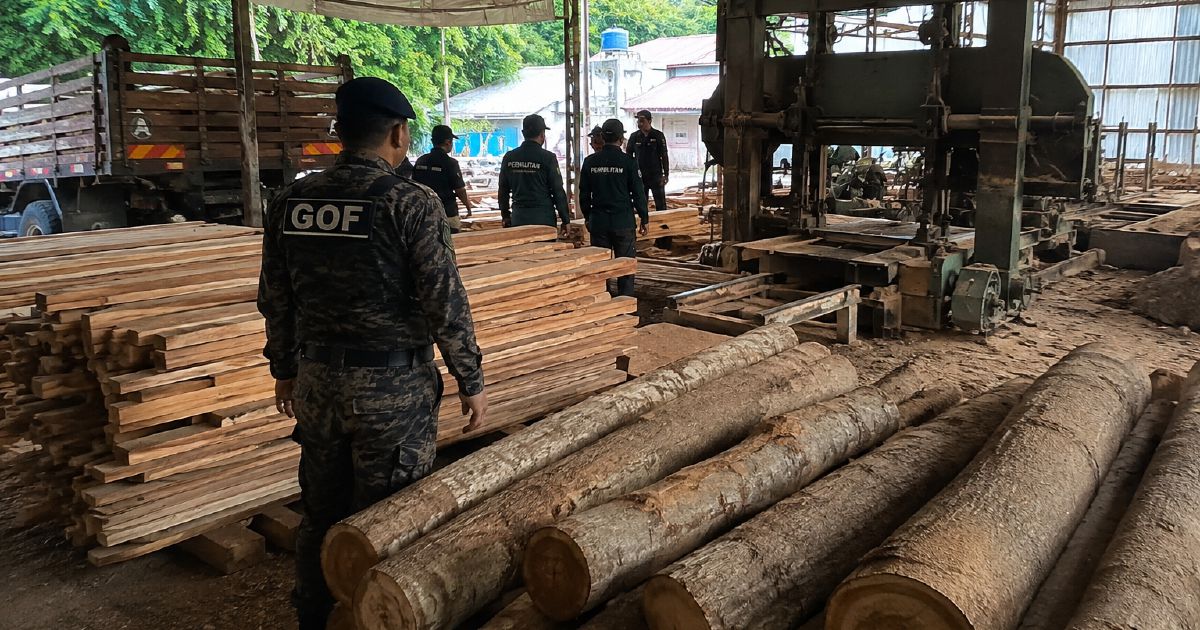
The General Operations Force (GOF) descended on a sawmill operation in Kuala Berang, Terengganu, in an enforcement action that resulted in the seizure of timber stocks and industrial equipment collectively valued at RM640,510. A 20-year-old male occupant of the premises was taken into custody during the raid, marking another instance of active government intervention against what officials suspect may be unlicensed timber processing activities in the state's woodworking sector.
Terengganu's timber and forestry sector has long been subject to regulatory scrutiny, with multiple enforcement agencies maintaining oversight of operations to prevent illegal logging and processing. The GOF, a paramilitary unit operating under Malaysia's Ministry of Defence, has progressively intensified its presence in these monitoring efforts, particularly across the east coast states where timber operations remain economically significant but administratively complex. This particular operation reflects the ongoing commitment by authorities to maintain compliance standards across the industry.
The equipment and timber seized during the raid represent a substantial asset haul, suggesting the facility had been operating at a considerable operational scale. Processing equipment in modern sawmill operations typically includes heavy machinery for cutting, sorting, drying, and finishing timber products, investments that can easily reach six figures in value. The precise breakdown of seized items—distinguishing between raw timber inventory and specialized machinery—remains under official documentation, though the combined figure indicates a well-established operation rather than a rudimentary timber processing setup.
The arrest of the 20-year-old suspect initiates investigative procedures that will likely examine licensing compliance, environmental clearances, and adherence to timber harvesting regulations. Malaysia's Forestry Act and associated state-level legislation impose strict requirements on timber processors, mandating proper documentation of timber sources, compliance with sustainability quotas, and correct classification of wood species. Unauthorized or inadequately licensed operations risk substantial penalties including equipment forfeiture, substantial fines, and potential criminal liability depending on the severity of violations identified.
The Kuala Berang locality, situated in the Terengganu interior, forms part of the state's historic timber production zones where the resource extraction industry has provided employment and economic activity for generations. However, this long-standing heritage has also created an enforcement challenge, as traditional industry practices sometimes conflict with modern regulatory frameworks and environmental conservation priorities. Recent years have seen increasing tension between local economic interests and state-level environmental compliance mandates, making operations like today's raid politically sensitive within affected communities.
Terengganu's position along Malaysia's east coast has made it strategically important for timber trade, with proximity to both domestic consumption centers and export logistics infrastructure. However, this commercial importance has occasionally attracted operations that exist in legal grey areas, particularly when timber sourcing or processing methodologies fall short of prescribed standards. The GOF's intervention capability, which extends across federal enforcement domains, provides authorities with specialized personnel trained in detecting irregularities that standard municipal inspections might overlook.
The monetary value placed on seized materials reflects current timber and equipment market conditions in Malaysia, where processing machinery commands premium pricing due to import costs and specialized manufacturing. The timber component of the seizure indicates stockpiles that, depending on species and grade classification, could represent weeks or months of normal commercial processing activity. For the broader Terengganu timber industry, such enforcement actions serve as periodic reminders that regulatory compliance carries genuine operational and financial consequences.
Investigations following such seizures typically extend beyond the immediate arrest, potentially implicating timber suppliers, equipment financiers, and commercial clients who may have unknowingly or deliberately engaged with non-compliant operations. Authorities occasionally uncover broader networks of semi-informal timber transactions when examining individual facility operations, particularly in regions where rural lumber commerce has historically operated through personal and family connections rather than formalized supply contracts.
The raid's timing and execution suggest coordinated planning, indicating that GOF intelligence or tip-offs had identified the facility as warranting enforcement attention. Such operations require sufficient investigative groundwork to justify the deployment of personnel and resources, particularly in cases where large-value assets are targeted for seizure. The successful completion of the operation without reported incidents demonstrates effective tactical planning by enforcement personnel.
For Malaysia's timber sector more broadly, sustained enforcement actions reinforce the government's commitment to combating unlicensed processing despite economic pressures and regional competition from less-regulated operations in neighboring countries. This regulatory consistency, while occasionally burdensome for compliant operators, maintains market integrity and supports Malaysia's international reputation for responsible timber management—a commercially valuable positioning for exports to environmentally-conscious markets.

