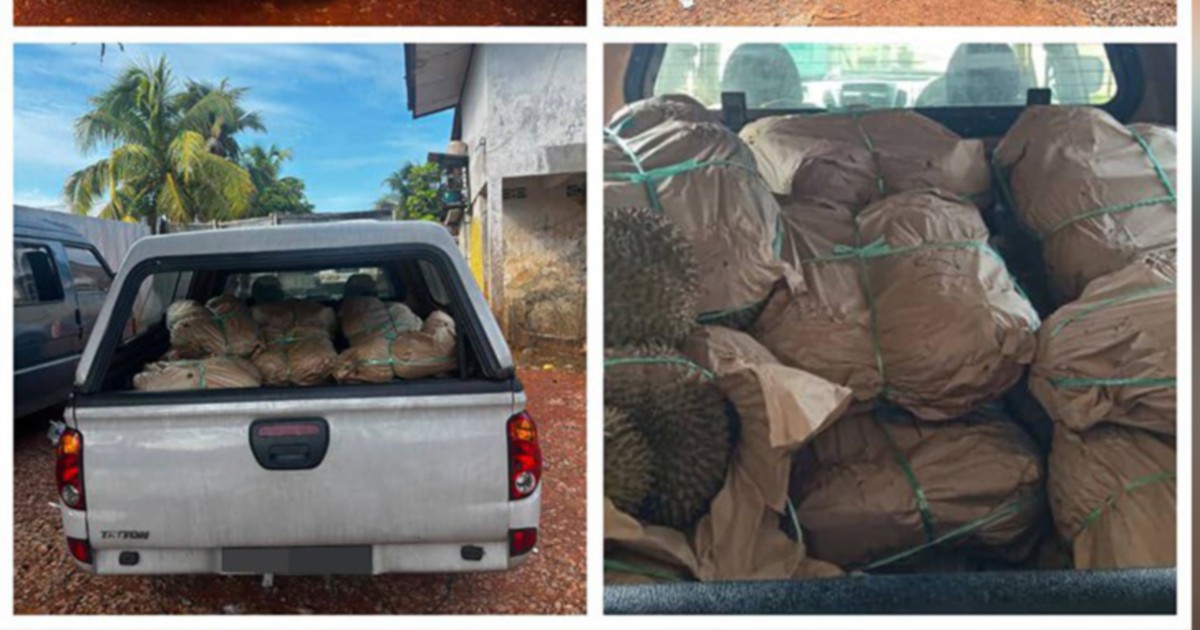
Enforcement agencies have intensified border operations in Kelantan following a significant contraband seizure at an illegal waterside entry point. The General Operations Force apprehended a 20-year-old male driver and confiscated a substantial shipment of durians valued at over RM50,000 during an operation at the Abe Li Posmen unregistered jetty in Rantau Panjang. The operation also resulted in the seizure of the vehicle used in the smuggling attempt, a four-wheel-drive worth considerable value, during what authorities describe as a routine enforcement activity.
The haul of 350 kilogrammes of durians represents a significant interception in the ongoing battle against agricultural smuggling along Malaysia's maritime borders. The Rantau Panjang area, situated along the Thailand-Malaysia boundary in Kelantan, remains a persistent hotspot for illicit cross-border trade due to its complex coastline and numerous unmonitored access points. The presence of unregistered jetties like Abe Li Posmen complicates enforcement efforts and provides opportunities for smugglers to operate beyond official checkpoints, making this seizure indicative of wider smuggling networks operating in the region.
Durian smuggling represents a particularly lucrative black-market operation given the premium prices Malaysian-grade durians command in international markets, particularly in neighbouring Thailand and across Asia. The fruit's high value, combined with seasonal availability and transport challenges, creates strong incentives for smugglers to circumvent official trade channels and taxation systems. Authorities believe organised syndicates coordinate these operations, using informal maritime routes to transport contraband that would otherwise face scrutiny through legitimate border crossings and quarantine procedures.
The arrest of a relatively young individual raises questions about recruitment patterns within smuggling networks. Law enforcement agencies often observe that criminal organisations employ younger operatives for frontline smuggling duties, offering them modest compensation while insulating higher-level organisers from direct prosecution. This operational model has proven effective for maintaining network continuity, as individual arrests create minimal disruption to overall smuggling infrastructure. Investigators typically focus on identifying supply chains and financial beneficiaries to dismantle organisations rather than simply processing individual couriers.
Kelantan's geography and economic conditions have historically made it vulnerable to cross-border trade irregularities. The state's location, its proximity to Thailand's major markets, and the livelihoods of fishing communities in border regions create complex dynamics around smuggling enforcement. Local residents sometimes view informal trade as economically beneficial, particularly when official channels impose taxes, tariffs, or bureaucratic restrictions that reduce profitability. This cultural and economic context complicates enforcement objectives and requires coordinated approaches balancing security concerns with livelihood considerations.
The confiscation of the four-wheel-drive vehicle signals authorities' commitment to dismantling smuggling infrastructure by targeting both contraband and the assets used in operations. Vehicle seizure policies aim to increase operational costs for smuggling networks and reduce their mobility. However, the ready availability of replacement vehicles and the modest penalties many smugglers face relative to profits generated means such measures, while valuable, require complementary strategies including enhanced intelligence gathering and inter-agency coordination.
Cross-border agricultural smuggling reflects broader regional trade dynamics and regulatory disparities between Malaysia and neighbouring countries. Thai markets often offer higher prices for premium Malaysian durians, creating arbitrage opportunities that smugglers exploit. Simultaneously, tariff structures, export licensing requirements, and quarantine protocols established by Malaysian authorities aim to protect domestic producers and ensure food safety standards, objectives that smugglers deliberately circumvent.
The operation demonstrates ongoing investment by the General Operations Force in border security, though resource constraints remain persistent challenges. Effective maritime enforcement requires surveillance technology, rapid response capabilities, and intelligence networks spanning multiple agencies and jurisdictions. The Abe Li Posmen seizure represents successful detection, but analysts acknowledge that identified contraband represents only a fraction of overall smuggling volume, with significant quantities likely passing through undetected.
Looking forward, tackling durian smuggling requires multifaceted approaches extending beyond enforcement alone. Strengthening legal trade frameworks, improving port facility infrastructure, enhancing inter-agency intelligence sharing, and addressing underlying economic incentives for smugglers could create more sustainable solutions. Regional cooperation with Thai authorities, including information exchange and joint operations, offers potential for disrupting smuggling networks at source. Additionally, engaging with farming communities and transport operators to promote legitimate trade channels may gradually shift market participation away from informal arrangements toward regulated commerce benefiting both producers and public revenues.

