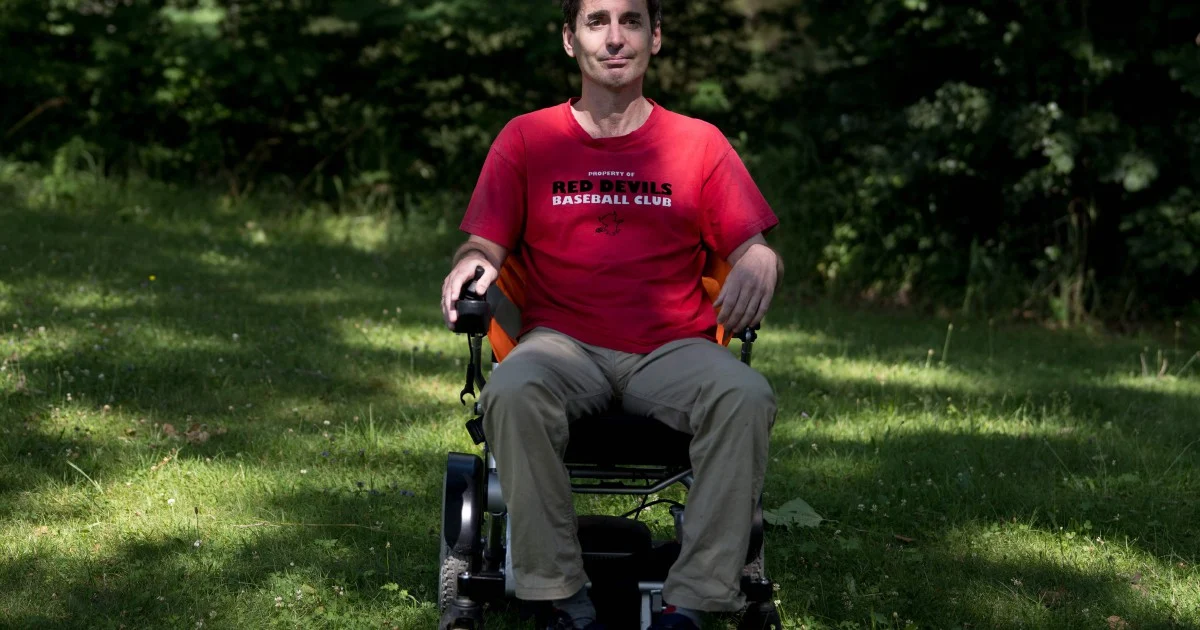
Mex Muellner, an Austrian resident who uses a wheelchair, finds himself at the centre of a landmark legal battle over climate responsibility and human rights protections. Confined to his wheelchair during successive waves of extreme heat sweeping across Europe, Muellner has decided to take his government to court, arguing that Austria's inadequate response to the climate crisis amounts to a violation of his fundamental rights. His case represents a growing trend of citizens using legal systems to force governments into stronger climate commitments, a strategy that has gained traction across Europe in recent years.
The decision to pursue legal action stems from the disproportionate vulnerability that extreme temperatures pose to people with disabilities. Unlike the general population, individuals with mobility impairments face heightened risks during heatwaves. Those confined to wheelchairs often struggle with temperature regulation, limited access to cooling facilities, and reduced ability to relocate to safer environments when conditions become dangerous. For Muellner, the recurring heatwaves are not merely uncomfortable—they represent a serious threat to his health and independence. The accumulation of successive high-temperature events has crystallised his conviction that inaction from his government is untenable.
Austria, despite its reputation as an environmentally conscious nation, has faced persistent criticism from climate advocates regarding the pace and scope of its decarbonisation efforts. The country's emissions reductions have lagged behind targets set by the European Union, and its transition away from fossil fuels remains slower than many peer nations. Public discourse around climate policy in Austria, as in many developed democracies, has often been dominated by competing economic and social priorities. However, cases like Muellner's are shifting the conversation toward a more explicit recognition of how climate neglect directly harms vulnerable populations.
The choice to bring this matter before a rights court signals an important escalation in climate litigation strategy. Rather than appealing to political or economic arguments—which have proven insufficient to drive rapid change—Muellner's legal team is anchoring their case in fundamental human rights frameworks. This approach recognises that the right to life, the right to health, and the right to dignity are not abstract principles but concrete protections that governments must actively defend, particularly against threats that disproportionately affect marginalised groups.
Heatwaves across Europe have intensified markedly in recent years, with 2023 and 2024 witnessing unprecedented temperature records. Austria experienced significant heat stress during these periods, with implications extending far beyond discomfort. Emergency services reported increased hospital admissions during peak heat days, particularly among elderly residents and people with chronic health conditions. For someone using a wheelchair, the practical barriers to finding relief compound the physiological dangers. Public spaces lack adequate shaded areas, transport systems become unbearably hot, and institutional support for vulnerable populations during extreme weather remains inadequate.
Muellner's litigation reflects a broader pattern of climate cases gaining momentum in European courts. Similar suits have been filed in Germany, France, and other nations, with varying degrees of success. The European Court of Human Rights and national constitutional courts have increasingly recognised that climate change can engage human rights protections. These rulings suggest that governments cannot indefinitely postpone climate action without legal consequence, a principle that carries significant implications for all nations, including those in Southeast Asia that face comparable or greater climate vulnerabilities.
The case also highlights how climate justice intersects with disability rights advocacy. People with disabilities are among the most climate-vulnerable populations, yet their voices are often marginalised in broader climate discussions that focus on aggregate statistics and general populations. Muellner's decision to centre his own experience and needs within a climate litigation framework is therefore doubly significant—it challenges both government climate inertia and the tendency to overlook how climate impacts are experienced unevenly across society.
For Malaysia and other Southeast Asian nations, Muellner's case carries instructive value. The region already faces intense heat stress, and disability inclusion in climate resilience planning remains underdeveloped. As temperatures rise and extreme weather events become more frequent, governments across Asia will face mounting pressure to demonstrate that their climate and adaptation policies protect all citizens, not merely the general population. Legal challenges similar to Muellner's may well emerge in the region, prompted by citizens with disabilities experiencing climate impacts that governments have failed to adequately address.
The outcome of Muellner's case will likely influence how courts across Europe and beyond interpret governments' obligations to address climate change as a human rights imperative. A ruling in his favour would establish important precedent, potentially opening pathways for other vulnerable groups to pursue similar claims. Conversely, an unfavourable judgment would not necessarily end such litigation, but rather encourage refinement of legal strategies and argumentation. Either way, Muellner's determination to challenge his government through the courts represents a significant escalation in holding states accountable for climate inaction, transforming what might otherwise remain a private hardship into a public question of rights and responsibility.

