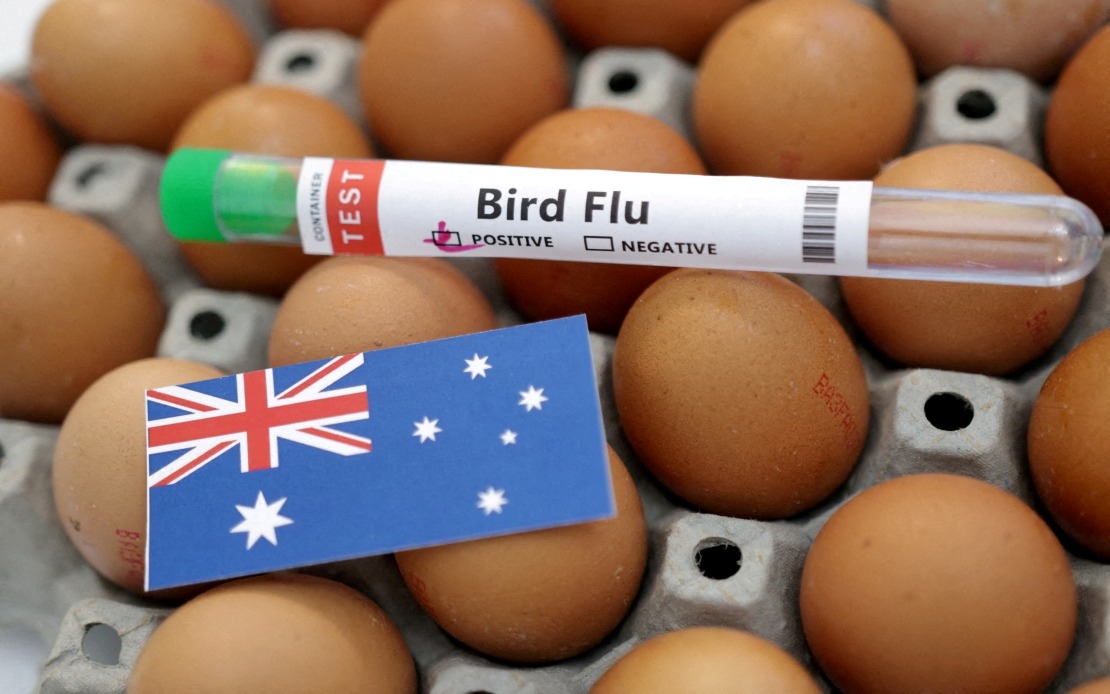
Australia's battle against H5N1 bird flu has intensified as confirmed and presumed positive cases climbed beyond 200 by mid-August, prompting one of the country's most populous states to impose strict quarantine measures on commercial poultry operations. The escalating outbreak underscores the speed with which the deadly strain has propagated through Australia's avian population in recent weeks, raising concerns about potential spillover into the nation's food-producing flocks and the broader regional biosecurity implications for Southeast Asia.
According to the Australian Department of Agriculture, Fisheries and Forestry, the nation recorded 203 confirmed or presumed H5N1 cases as of Saturday. This dramatic surge reflects a tripling of infections during August alone, with only 52 cases reported at the end of July. The acceleration demonstrates how rapidly the virus has become entrenched in wild bird populations across multiple states, signalling a shift in the disease's epidemiology that authorities were clearly not prepared to contain.
South Australia remains the epicenter of the outbreak, accounting for nearly three-quarters of all cases with 147 infections documented. The state confirmed 28 additional cases on a single day, all identified in wild seabirds—predominantly waterbirds concentrated in coastal and inland water bodies. This concentration in wild populations suggests that migratory birds and local waterbird colonies are serving as primary vectors, a pattern consistent with H5N1 outbreaks observed in other parts of the world where wetland ecosystems become temporary reservoirs for the virus.
Victoria, Australia's second-largest state by population and a significant agricultural region, has emerged as the second-most affected jurisdiction with 43 cases. Importantly, 36 of Victoria's confirmed infections were discovered in birds found near the South Australia border in the state's western reaches during Thursday and Friday inspections. This geographic clustering at a state boundary suggests the virus is advancing through connected ecological zones, following the movements of wild bird populations that do not recognize administrative borders.
Facing this advancing threat to domestic agriculture, Victoria's government implemented a decisive protective measure on Friday. Poultry producers along the state's south coast, including those operating within the greater Melbourne region, must now confine all flocks of 50 birds or more indoors for a mandatory initial period of 14 days. This precautionary biosecurity protocol represents a significant imposition on farming operations but reflects the government's assessment that the risk of H5N1 jumping from wild birds to commercial poultry has become acute.
Victorian Agriculture Minister Michaela Settle framed the indoor housing requirement as a necessary preventive step aimed at severing transmission pathways between wild and domestic bird populations. The logic underlying this measure is straightforward: by physically separating commercial flocks from outdoor environments where H5N1-infected wild birds congregate, authorities hope to prevent direct contact and the contamination of feed, water, and shared airspace. The 14-day window allows time for the initial outbreak surge among wild birds to abate and surveillance systems to detect any breaches in biosecurity.
The choice of 50 birds as the threshold for mandatory compliance suggests that Victoria has targeted medium and large-scale commercial operations while potentially exempting smaller backyard poultry keepers—a pragmatic approach that balances biosecurity imperatives against regulatory burden. However, this distinction also creates potential risk vectors if smaller producers fail to adopt voluntary precautions, a concern that regulators likely weighed carefully in establishing the threshold.
For Southeast Asian nations including Malaysia, Australia's H5N1 crisis carries sobering implications. As a significant agricultural exporter and source of breeding stock and poultry genetics for regional producers, any disruption to Australian poultry operations could reverberate through supply chains across the region. Furthermore, the outbreak demonstrates that even wealthy, technologically advanced nations with robust agricultural infrastructure struggle to contain highly pathogenic avian influenza once it becomes established in wild bird populations. This reality should prompt reflection among Southeast Asian governments about their own surveillance and rapid-response capacities.
The virus's apparent preference for wild seabirds in the Australian outbreak differs from some previous H5N1 events, where transmission to domestic poultry occurred rapidly. This pattern may reflect the particular susceptibility of Australia's native waterbird species to H5N1, or alternatively, the outbreak may still be in relatively early stages before potential spillover to commercial operations. The confirmed cases to date have all involved wild birds, but the cumulative viral load now circulating in Australian ecosystems increases the statistical probability of eventual contact with domestic flocks.
Australia's experience also highlights the epidemiological challenge posed by wild bird populations in containing avian influenza. Unlike poultry flocks, which can be quarantined and tested, wild birds cannot be similarly controlled. Infected wild birds across state boundaries and natural barriers, making the outbreak inherently difficult to contain through conventional agricultural biosecurity measures. Authorities must therefore rely on rapid detection, isolation of affected flocks if spillover occurs, and public communication to minimize transmission risks.
The Victorian government's decision to act preemptively through the indoor housing mandate, rather than waiting for confirmed cases in domestic poultry before responding, suggests a "learn from others' mistakes" approach. Previous global H5N1 episodes have demonstrated that delayed responses to spillover events allow the virus to spread rapidly through poultry operations, devastating local industries and potentially creating conditions for the emergence of reassortant strains with enhanced mammalian transmissibility. By establishing containment zones before such spillover occurs, Victoria aims to prevent a secondary crisis in the commercial poultry sector.
Looking forward, the trajectory of Australia's outbreak will depend on whether the virus remains confined to wild bird populations or makes the critical transition to domestic flocks. The implementation of enhanced surveillance, the housing mandate, and coordination between state and federal agricultural authorities represent Australia's current defensive strategy. For the region, continued vigilance and information sharing about the outbreak's evolution should be priorities, as H5N1's potential mobility through migratory bird networks respects no national boundaries and poses shared biosecurity challenges across Southeast Asia and beyond.

