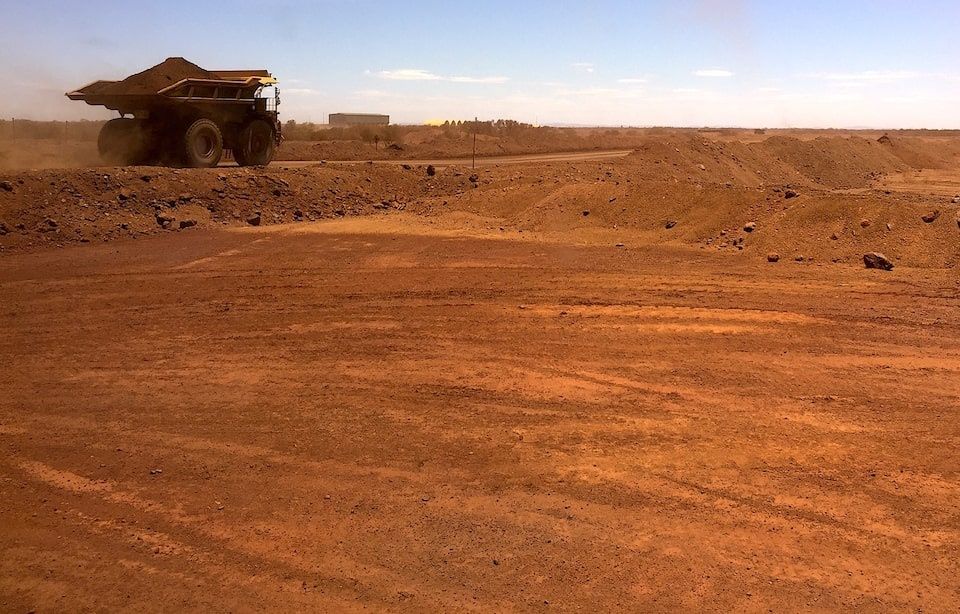
A team of researchers at Edith Cowan University in Western Australia has made a potentially significant discovery regarding the generation of natural hydrogen from the state's abundant mineral resources. The findings centre on magnetite, an iron oxide mineral found beneath WA's characteristic red soil, which appears capable of producing hydrogen gas when exposed to hot water in subsurface environments. This development could reshape thinking about low-carbon energy prospects in one of the world's premier mining regions and offers intriguing possibilities for energy policy across the Asia-Pacific.
The breakthrough emerged from work conducted at ECU's School of Engineering, where scientists systematically investigated how hydrogen forms naturally underground and what geological conditions allow such production to continue. Rather than viewing hydrogen energy as exclusively dependent on industrial processes or renewable electricity, the research suggests that existing geological formations may already be generating this clean fuel through natural chemical reactions occurring deep within the Earth. This paradigm shift has implications for how nations evaluate their energy endowments and develop future energy strategies.
Western Australia's significance in this context cannot be overstated. The state hosts some of the planet's largest banded iron formations—ancient geological structures created billions of years ago when the Earth's atmosphere was being chemically transformed. These formations, currently exploited for iron ore production, appear to possess an additional utility. The research indicates that by deliberately injecting solutions into these banded iron formations, hydrogen production could be substantially amplified beyond what occurs naturally. This suggestion opens the door to a hybrid approach: extracting value from existing mining infrastructure while simultaneously generating energy commodities.
To validate their hypothesis, the research team conducted controlled laboratory experiments replicating the pressure and temperature conditions found thousands of metres beneath the surface. Magnetite samples were exposed to water heated to 200 degrees Celsius and subjected to high pressure for a 60-day period. This extended exposure allowed the team to observe hydrogen generation under circumstances closely matching genuine subsurface geology. The methodology was rigorous enough to yield findings worthy of publication in the International Journal of Hydrogen Energy, one of the field's leading peer-reviewed outlets.
Crucially, the research revealed that hydrogen production depends on multiple interconnected factors rather than magnetite concentration alone. The study found that the accessibility of fresh mineral surfaces proved equally important as the mineral's mere presence. Water must be able to permeate through fractures, pores, and other permeable pathways within the rock to maintain ongoing reactions with magnetite. This finding suggests that simply possessing extensive magnetite deposits is insufficient; geological structures must also display the porosity and fracture characteristics necessary to sustain water circulation and chemical interactions.
For Southeast Asia and the broader Indo-Pacific region, this discovery carries strategic implications. As nations pursue decarbonisation targets and seek alternatives to fossil fuels, discovering indigenous hydrogen sources could reduce energy import dependence. Countries like Malaysia, Indonesia, and Thailand have been exploring hydrogen pathways primarily through electrolysis powered by renewables or through industrial processes. A natural hydrogen source in a neighbouring major economy could influence regional energy trade patterns and investment flows. Australian hydrogen could potentially serve regional markets, particularly if extraction and distribution infrastructure develops.
The commercial viability question remains open. While the research demonstrates that natural hydrogen generation is feasible under appropriate conditions, scaling from laboratory experiments to industrial production involves substantial technical and economic hurdles. Mining operations would need to be redesigned to accommodate hydrogen extraction alongside iron ore production, or entirely new operations focused solely on hydrogen recovery would need to be developed. Capital requirements, environmental permitting, and operational complexity all present challenges that engineering teams must address before commercial deployment becomes realistic.
Environmental considerations also warrant examination. Mining has historically imposed significant ecological costs, and expanding mining activities into hydrogen extraction could compound these impacts unless carefully managed. However, the research suggests that hydrogen extraction might occur through injection of solutions into existing formations rather than through additional ore excavation, potentially offering a less invasive pathway than traditional mining expansion. This distinction could prove important in gaining community acceptance and regulatory approval in increasingly environmentally conscious jurisdictions.
The timing of this discovery aligns with growing global interest in hydrogen as an energy vector. Numerous countries have announced hydrogen strategies, and industry players have begun scaling up electrolyser production. Yet hydrogen energy remains constrained by the cost of production, particularly when generated through renewable electricity. Natural hydrogen, if it can be accessed economically, could provide a lower-cost alternative that complements synthetic hydrogen produced through electrolysis. Western Australia, already a global energy superpower through oil and natural gas exports, could potentially add hydrogen to its energy portfolio.
Looking forward, additional research phases will likely focus on validating natural hydrogen production in actual geological settings rather than laboratory conditions. Field trials in WA's iron formations would test whether the controlled results translate to real-world scenarios. Simultaneously, engineers will investigate extraction and separation technologies capable of isolating hydrogen from mixed gases that emerge from subsurface injection processes. These next steps will determine whether this theoretical discovery can transition into a practical energy industry.
The findings from Edith Cowan University represent an important contribution to expanding the global hydrogen knowledge base. They remind policymakers and energy strategists that technological solutions to decarbonisation may emerge from unexpected sources, including fundamental reconsideration of existing natural resources. For Western Australia, the potential to monetise natural hydrogen from its vast mineral endowments could create new economic value while contributing to global climate objectives. The research opens a new chapter in how humanity might harness planetary resources for sustainable energy production.

