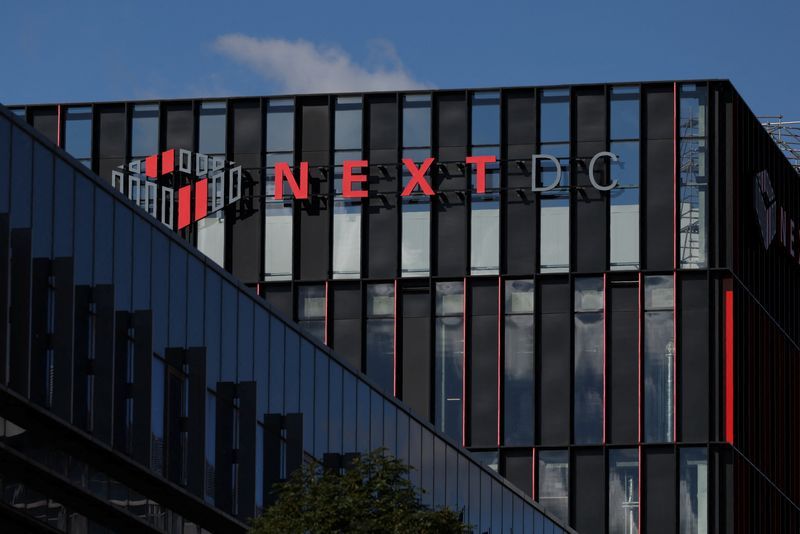
Australia's largest independent data centre operator NextDC has delivered stronger-than-expected financial results for the year ending June, yet the company's disclosure of worsening water and energy efficiency metrics has underscored mounting concerns about the physical costs of powering the artificial intelligence boom across the Asia-Pacific region. The firm reported revenue growth of 16 per cent and returned to profitability with a net profit of A$82.1 million, a dramatic turnaround from the A$60.5 million loss recorded in the previous year, though this improvement was partly assisted by an accounting revaluation of its property assets. More tellingly, underlying earnings before interest, tax, depreciation and amortisation climbed 15 per cent to A$248.8 million, surpassing consensus analyst expectations and signalling robust underlying operational momentum.
The environmental performance picture, however, presents a far less encouraging trajectory. NextDC's water usage effectiveness ratio—a key metric measuring litres consumed per kilowatt-hour of computational output—deteriorated to 2.40 litres per kilowatt-hour in the reporting period, rising from 2.25 the previous year. Similarly, the company's power usage effectiveness ratio, which quantifies the proportion of electricity devoted to essential cooling and infrastructure overhead rather than actual computing tasks, climbed to 1.49 from 1.44. What makes these figures particularly concerning for policymakers and environmental advocates is that both metrics have now trended worse for three consecutive reporting periods, suggesting systemic pressures rather than temporary aberrations.
NextDC has attributed the deteriorating efficiency ratios to several operational factors. The company noted that newly constructed data centre capacity requires extended commissioning periods during which sophisticated cooling systems run at full capacity before information technology equipment reaches full deployment. Additionally, the firm undertook comprehensive data reconciliation work that identified previously undetected water leaks and measurement anomalies across its operational portfolio. In its sustainability report released alongside the financial results, NextDC explained that the elevated water consumption reflected combined pressures from portfolio expansion and intensified activity across operational, commissioning and expansion projects. The company further disclosed that the past year involved substantial validation and reconciliation of water data across its facilities, encompassing investigations into isolated leaks, utility metre irregularities and discrepancies between site-level measurements and utility company records.
These metrics carry far-reaching implications beyond quarterly performance indicators. Environmental efficiency ratios have become critical political barometers in major developed economies, serving as proxies for assessing the cumulative strain that the burgeoning data centre sector imposes on electricity grids and freshwater supplies. Legislators, regulators and the voting public increasingly scrutinise these figures as indicators of whether data centre proliferation is sustainable within existing infrastructure constraints. The political salience of data centre environmental impact has intensified dramatically over the past two years as artificial intelligence deployment has accelerated global demand for computing capacity.
Governments and local authorities worldwide are responding to these pressures with increasingly interventionist policy approaches. A growing coalition of jurisdictions—including major cities, regional governments and national authorities—has implemented moratoriums, construction freezes or outright bans on new data centre development. Policy concerns extend beyond mere water and electricity consumption to encompass broader dimensions of impact: electricity grid strain, escalating power costs borne by other consumers, localised water scarcity in regions with chronic supply constraints, competition for available land, and community resistance to industrial intensification. These multifaceted concerns have created a complex political landscape in which data centre operators must navigate not merely regulatory compliance but active public opposition and shifting legislative frameworks.
The Australian federal government has positioned itself at the forefront of this regulatory movement. Canberra is actively developing mandatory, nationally consistent standards designed to govern data centres' consumption patterns, site selection and infrastructure choices. In a particularly significant policy shift, Australian regulators have recently proposed that new data centre operators should construct dedicated renewable energy generation capacity rather than drawing additional electricity from the national grid. This approach represents a fundamental reframing of the relationship between data centre development and energy infrastructure, placing responsibility for resource provision directly upon operators rather than allowing it to become diffused across broader energy markets and existing consumers. Such regulatory proposals reflect growing political determination to ensure that the artificial intelligence infrastructure boom does not simply transfer environmental and economic costs to broader society.
NextDC's competitive position within Australia's data centre market places particular pressure on the company to address these efficiency concerns. The firm operates within an increasingly contested landscape populated by formidable rivals, including AirTrunk—majority-owned by American private equity giant Blackstone—and CDC Data Centres, which operates under the ownership of New Zealand infrastructure investor Infratil. Both competitors operate substantial assets across Australia and the Asia-Pacific region and possess deep financial resources to invest in efficiency improvements and renewable energy infrastructure. The competitive dynamic means that NextDC cannot simply dismiss efficiency concerns as immaterial to market positioning; regulators and major corporate customers increasingly factor environmental performance into vendor selection decisions, particularly among technology companies committed to sustainability targets.
For Southeast Asian readers and policymakers, NextDC's experience offers crucial lessons as artificial intelligence infrastructure deployment accelerates across the region. Malaysia, Singapore, Thailand and other Southeast Asian nations are attracting substantial data centre investment as companies establish regional computing hubs. The efficiency challenges revealed by NextDC's reporting suggest that rapid expansion of data centre capacity without concurrent investment in efficiency improvements and dedicated renewable energy can quickly create resource pressures within less developed electricity and water infrastructure systems. Several Southeast Asian nations already face periodic electricity shortages and water stress, particularly during dry seasons or peak demand periods, making the resource intensity of data centre operations politically sensitive.
The market responded positively to NextDC's financial results, with share prices rising 3.3 per cent during mid-session trading on the Friday following the announcement, indicating that investors prioritised the profit beat and earnings growth over environmental performance concerns. This market reaction suggests that financial markets have not yet fully priced in the potential regulatory and reputational costs associated with deteriorating environmental metrics. However, the increasing regulatory momentum visible in Australian policy discussions may soon translate into material financial impacts through mandatory efficiency standards, potential taxation of water consumption, or renewable energy procurement requirements that elevate operational costs. The company faces a strategic challenge in demonstrating that profitability and environmental stewardship can advance simultaneously, a task that may prove increasingly difficult given the fundamental tension between rapid capacity expansion and efficiency improvement.

