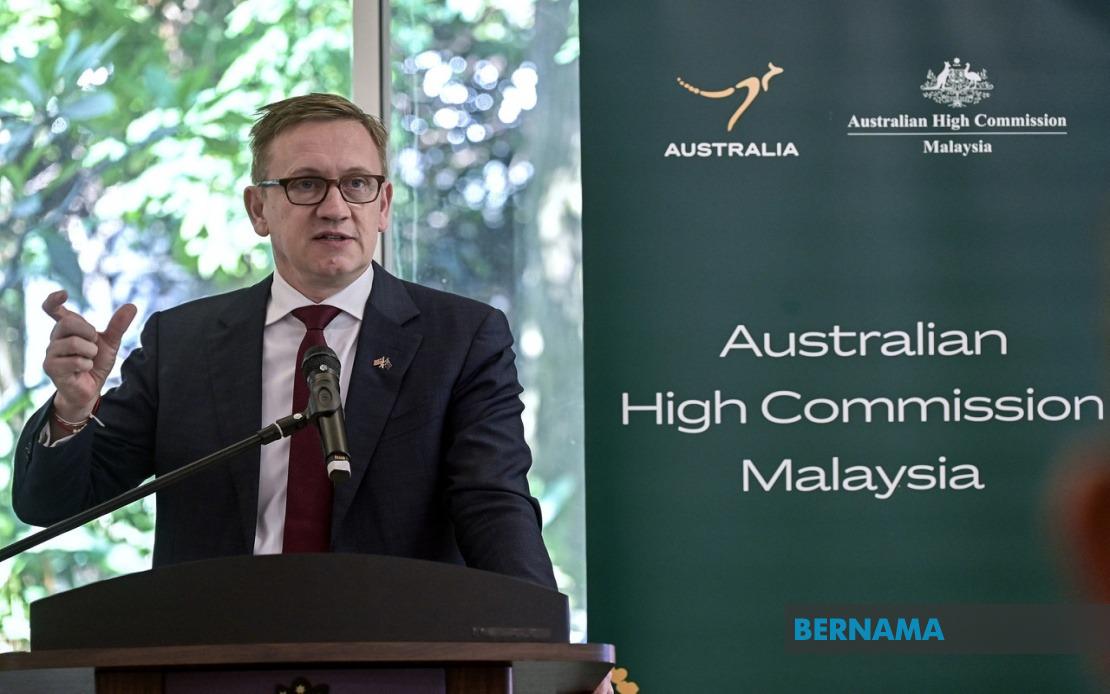
Australia has introduced a fresh scholarship pathway designed to give more Malaysian students the opportunity to pursue portions of their university education in Australia, marking a strategic expansion of educational ties between the two countries. The Australia Awards-Malaysia Semester Programme, officially launched by the Australian High Commission in Kuala Lumpur, represents an investment in what Canberra views as vital human and institutional connections for the region's future.
Julian Hill, Australia's Assistant Minister for International Education, described the initiative as embodying Australia's commitment to fostering closer people-to-people relationships with Malaysia through educational exchange. His framing placed the scholarship within a broader diplomatic context, where educational mobility serves as a foundation for lasting bilateral goodwill. The programme allows students enrolled at Australian branch campuses operating within Malaysia to undertake up to two semesters of their studies at their parent institutions in Australia, with costs for travel, accommodation, living expenses, visas and insurance covered by the sponsorship scheme.
For Malaysian readers, the initiative carries significance beyond individual student benefits. Australia has long positioned itself as a premier education destination for Malaysian youth, with Hill noting that over half a million Malaysians have studied there historically. This accumulation of shared educational experience creates what Australian officials characterise as a "human bridge" between societies, where returning graduates potentially maintain professional and personal networks that influence trade relationships, research collaborations and diplomatic rapport. The scholarship programme attempts to systematise and expand this informal advantage by removing financial barriers that might otherwise prevent talented students from participating.
The pilot phase launched in July 2024 with 16 Malaysian undergraduates and postgraduate students beginning their semester abroad. Three Australian university branch campuses in Malaysia currently participate in the scheme: Curtin University Malaysia, Monash University Malaysia and the University of Wollongong Malaysia. All four campuses operating in Malaysia, including Swinburne University of Technology Sarawak Campus, have received invitations to join the expanded programme, positioning the initiative for potential growth across Malaysian states, particularly in East Malaysia where Swinburne's presence in Sarawak extends educational access.
Australian High Commissioner to Malaysia Danielle Heinecke and MARA Chairman Dr Asyraf Wajdi Dusuki attended the launch, signalling government-to-government endorsement of the scheme. This institutional backing proved important for legitimising the programme within Malaysia's education ecosystem, where both private sector universities and government-linked bodies like MARA exercise considerable influence over student pathways and scholarship visibility. The presence of senior representatives from Australian universities underscored the collaborative nature of the initiative, built on existing academic infrastructure already established in Malaysia.
Hill emphasised a reciprocal dimension to educational exchange, expressing hope that more Australian students would reciprocate by studying at Australian branch campuses within Malaysia through complementary initiatives such as the New Colombo Plan and semester exchange arrangements. This emphasis on two-way mobility reflects Australia's broader strategic interest in deepening Southeast Asian familiarity among its own youth, particularly regarding regional economic opportunities and geopolitical realities. For Malaysia, hosting more Australian students potentially creates similar diplomatic dividends, exposing Australians to Malaysian culture, governance structures and business practices during formative educational years.
The Australian government has committed funding for an initial four-year cycle aligned with its budgetary planning, though Hill indicated aspirations for the programme to eventually achieve permanent status. This timeframe matters for Malaysian students evaluating long-term educational investment; while four years of guaranteed funding provides sufficient certainty for programme establishment, the framing of permanence as a future goal suggests potential funding vulnerabilities dependent on Australian political priorities or budgetary pressures. Malaysian institutions seeking to integrate this scholarship into their recruitment strategies must account for this contingency.
Beyond individual scholarships, Hill articulated a vision of Australian university branch campuses in Malaysia functioning as research hubs rather than purely teaching institutions. He highlighted collaborative potential in medical science, clean energy, mining and agriculture—sectors where both nations face shared challenges or possess complementary expertise. This research orientation positions the semester exchange programme as part of a larger ecosystem supporting applied knowledge generation, with the mobility of students serving as a mechanism for exposing them to research facilities, academic networks and problem-solving approaches unavailable at their home campuses. For Malaysian universities and policymakers, this framing suggests that maximising the scholarship's value requires institutional emphasis on research engagement rather than purely academic credit-stacking.
The initiative sits within Australia's broader Southeast Asian engagement strategy, conceived as a means of strengthening economic partnerships and cultural understanding during a period of significant regional geopolitical complexity. By facilitating student mobility before career divergence, Australia invests in cultivating professionals who will occupy influential positions throughout Malaysian society—in government, business, academia and civil society—while maintaining familiarity with Australian institutions and values. This soft power dimension operates subtly but represents a calculated return on Australia's educational investment.
For Malaysian students, the practical appeal centres on accessing world-class university facilities and research opportunities without requiring international relocation for entire degree programmes. Many Malaysian parents prefer their children studying domestically or in nearby regional centres; the semester exchange model accommodates this preference while providing international exposure. The scholarship's coverage of living expenses addresses a critical barrier for middle-income families—those ineligible for most needs-based aid but lacking surplus capital for overseas education costs.
The programme also reflects evolved thinking about international education delivery. Rather than promoting wholesale brain drain through permanent relocation, the semester model assumes students will maintain primary institutional connections in Malaysia while gaining temporary Australian exposure. This approach aligns with Malaysia's interest in retaining talented graduates within its economy while ensuring they acquire international competencies increasingly demanded by employers in knowledge-intensive sectors.
Looking ahead, the success of this initiative may influence how other developed nations structure educational partnerships with Malaysia. If the pilot cohort generates positive outcomes—measured through student satisfaction, academic performance and subsequent professional trajectories—the model could inspire analogous programmes from other countries seeking deeper engagement with Malaysian education sectors. For Malaysia's government and universities, monitoring and publicising these outcomes becomes strategically important for demonstrating the value of international educational partnerships to domestic audiences.

