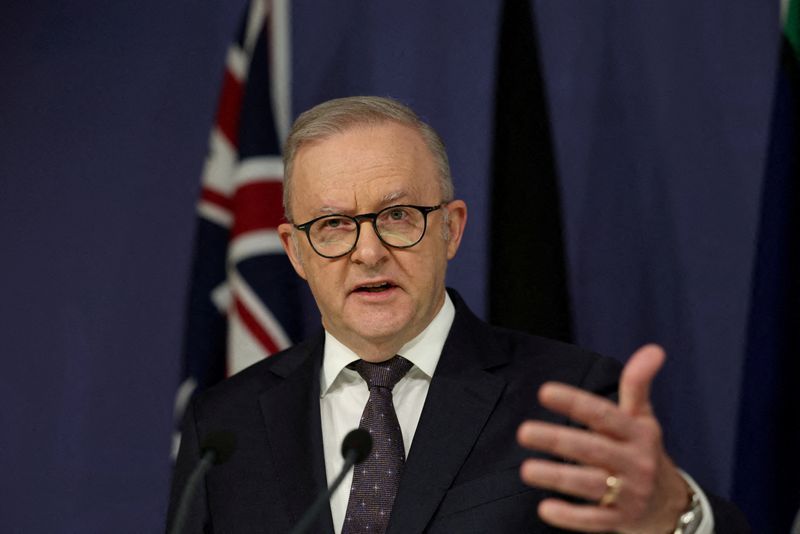
Australia has announced plans to establish a centralised Office of AI embedded within the Department of the Prime Minister and Cabinet, marking a significant shift in how the government approaches regulating one of the world's most consequential technologies. Prime Minister Anthony Albanese is expected to unveil the initiative in a major address in Sydney on Wednesday, positioning the move as a necessary evolution in how Canberra manages emerging technologies that cut across multiple sectors of the economy.
The creation of this office represents a departure from Australia's previous fragmented approach to AI governance. Rather than addressing challenges on an ad-hoc basis as they emerge in different industries or policy areas, the new structure will ensure a coordinated whole-of-government strategy that brings together different ministries under a unified framework. This horizontal integration across departments is intended to prevent regulatory gaps and eliminate inconsistencies that could hamper both innovation and public safety.
Albanese is expected to draw historical parallels to justify the new centralised approach, comparing AI to other transformative technologies that required government coordination. The analogy extends back to civil aviation in the 1920s and forward to genetic engineering in the 1990s, both cases where coordinated regulatory frameworks emerged once policymakers recognised that decentralised, sector-specific responses were insufficient. The comparison underscores the magnitude of AI's potential impact and the government's recognition that ad-hoc regulation will not serve Australia's interests.
From an investment perspective, Australian officials argue that the Office of AI will enhance the nation's attractiveness as a destination for artificial intelligence development and deployment. By providing clarity on approval processes and streamlining compliance requirements, the government believes it can reduce uncertainty for companies considering whether to establish or expand operations in Australia. This regulatory clarity, proponents contend, can level the playing field with other nations that are racing to position themselves as AI hubs while also managing the technology responsibly.
For Malaysian and Southeast Asian observers, Australia's move carries particular significance as the region grapples with similar questions about how to regulate AI without stifling innovation. Many countries in the region lack comprehensive AI-specific legislation, much like Australia currently does, relying instead on patchwork approaches through existing consumer protection and privacy frameworks. Australia's establishment of a dedicated coordinating body could serve as a template—either positive or cautionary—for how other regional economies might structure their own regulatory responses.
The announcement arrives at a moment of mounting concern about AI's societal implications. Australian workers, unions, and civil society groups have raised alarms about potential job displacement as AI systems become increasingly capable of performing tasks previously done by humans. Simultaneously, environmental advocates have highlighted the massive energy and water consumption required to power data centres that support AI training and deployment, a worry particularly acute in a country already facing water scarcity and climate pressures.
Beyond employment and environmental concerns, stakeholders across Australia have flagged threats to intellectual property, national security, and consumer safety as AI proliferates. Without comprehensive legal safeguards, creative industries fear their work could be used to train generative AI systems without compensation, while security experts worry about adversarial uses of artificial intelligence. Consumer advocates point to risks of algorithmic discrimination and the spread of misinformation through AI-generated content.
Australia's current regulatory landscape relies heavily on a voluntary AI ethics framework that lacks enforcement mechanisms, alongside generic privacy and consumer protection legislation that was not designed with AI's specific capabilities in mind. This patchwork has proven inadequate as the technology accelerates through healthcare, finance, manufacturing, and public administration. The Office of AI is intended to address this inadequacy by developing standards that can be applied consistently and comprehensively.
The world-first designation given to Australia's approach reflects genuine novelty in how governments are institutionally organizing around AI governance. While the European Union has pursued the AI Act, a comprehensive legislative framework, and the United States relies on sectoral regulation and executive guidance, Australia's model of creating a dedicated coordinating office within the executive represents a distinct institutional innovation. This structure potentially allows for more agile policymaking while maintaining democratic oversight through cabinet accountability.
The timing of the announcement also signals Australia's ambition to position itself as a global leader in responsible AI development and deployment. By articulating a proactive, whole-of-government strategy, Canberra is attempting to shape international norms around AI governance while demonstrating to domestic constituencies that it takes the technology's risks seriously. This messaging is crucial at a moment when public anxiety about AI is rising globally.
For Southeast Asia, which includes major technology hubs like Singapore and emerging AI centres in Indonesia, Thailand, and Vietnam, Australia's approach offers a case study in balancing regulatory ambition with economic pragmatism. The region's economies are increasingly cognisant that AI regulation cannot be avoided, yet fear that excessive caution could push investment and talent to less regulated jurisdictions. Australia's framework attempts to split this difference by creating clear rules while positioning the nation as predictable and business-friendly.
The establishment of the Office of AI will ultimately be judged by its effectiveness in developing standards that meaningfully mitigate risks while remaining workable for industry. Success will require genuine cross-government coordination, engagement with industry and civil society, and a willingness to update standards as the technology evolves. The coming months will reveal whether the office can execute this complex mandate and whether other nations, including those in Southeast Asia, will adopt similar models.

