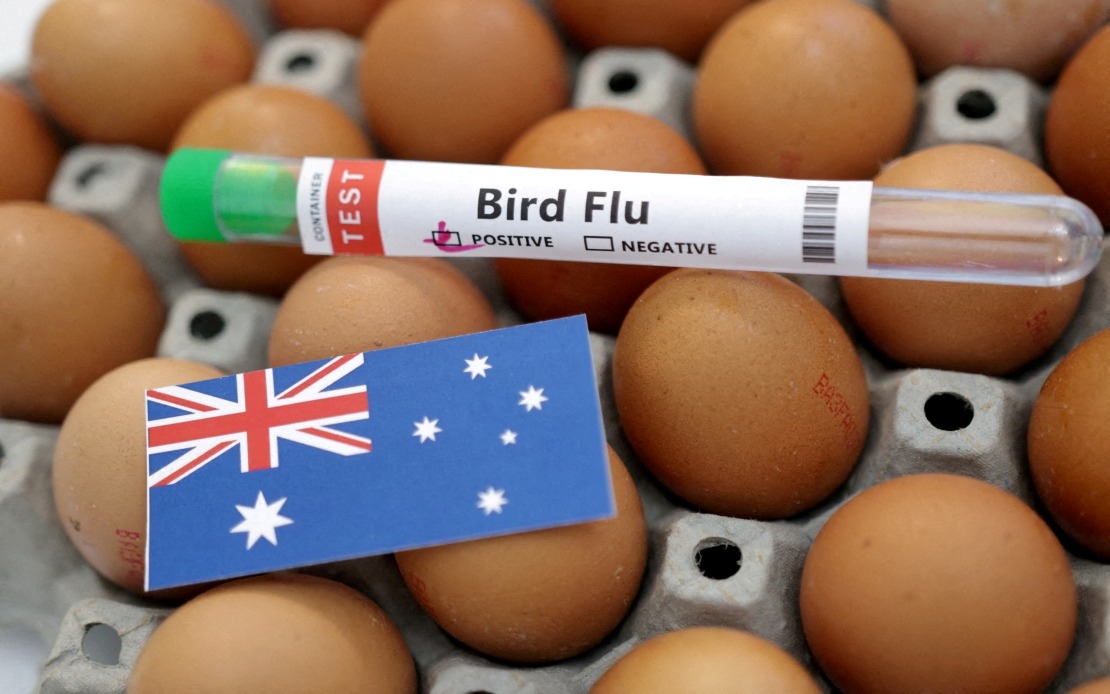
Australia's disease surveillance apparatus has identified a critical milestone in the country's ongoing battle against avian influenza: the first documented instance of H5N1 circulating within locally-breeding wildlife rather than imported by migratory species. On Friday, the nation's Minister for Agriculture Julie Collins disclosed that a greater crested tern discovered dead near Robe in South Australia tested positive for the highly pathogenic strain, fundamentally altering the epidemiological picture that authorities had maintained since the virus first reached the continent.
The implications of this discovery extend well beyond Australia's shores, particularly for Southeast Asian nations already grappling with persistent H5N1 circulation in both domestic poultry and wild bird populations. Malaysia and neighbouring countries have long experience with this pathogen's capacity to establish itself in local ecosystems, and Australia's emergence as a new region of concern underscores how avian flu continues to evolve its geographic footprint despite advanced biosecurity measures. The finding that a resident seabird—rather than a transient migrant—carried the virus suggests that transmission chains may now be establishing themselves in Australian wildlife, a development that fundamentally shifts the risk calculus for the broader Indo-Pacific region.
The greater crested tern that triggered this alert was a non-migratory species, distinguishing it sharply from previous Australian detections, which involved sub-Antarctic migratory birds. This distinction carries substantial weight for epidemiologists seeking to understand transmission pathways. Collins indicated that her department's scientists are actively investigating precisely how the Robe specimen contracted H5N1, recognising that understanding the infection source becomes critical when dealing with resident populations that cannot be dismissed as seasonal visitors.
The timing coincides with escalating detection efforts across Australia's mainland. Authorities in South Australia have now confirmed three H5N1 cases in total, whilst Western Australia has identified one additional case, bringing the confirmed count on the Australian mainland to twelve. This represents a dramatic increase from the situation merely weeks earlier, when the continent remained the only landmass without mainland H5N1 confirmation. The first detection in Western Australia occurred in June, and the subsequent cluster of cases arriving in July suggests either intensifying transmission, heightened surveillance capacity, or both operating simultaneously.
Collins characterised the development as concerning yet unsurprising, framing it within the context of Australia's layered biosecurity infrastructure. Her statement that this detection represents "another sign that our strong biosecurity system is working" reflects the Australian philosophy of viewing surveillance successes as validation of preventive systems rather than indicators of failure. This perspective aligns with how health authorities across the region, including Malaysia, typically communicate disease discoveries—as evidence of functional detection capacity rather than catastrophic breaches. However, the rhetorical framing masks a more complex reality: the appearance of H5N1 in local seabird populations indicates that prevention of establishment has already failed, and authorities are now managing containment and monitoring rather than exclusion.
The enhanced surveillance now underway in the area surrounding Robe reflects standard epidemiological protocols. Authorities aim to identify whether additional birds in the vicinity carry the virus, map any broader circulation patterns, and gather biological specimens for strain analysis. These investigations typically reveal whether the South Australian case represents an isolated spillover event or the surface manifestation of more extensive circulation within local wildlife. For Malaysian readers accustomed to similar investigations following poultry farm outbreaks, the methodical approach will be familiar, though the application to wild seabirds introduces distinct challenges around traceability and containment.
The pathway question—how the tern became infected—holds particular significance for understanding regional disease dynamics. Possibilities range from direct exposure to infected migrant birds during arrival or departure seasons, to consumption of infected prey species, to contact with contaminated water or sediments harbouring viral particles. Each scenario carries different implications for assessing the risk to other Australian wildlife species and, by extension, the potential for further spread to neighbouring regions. Given that maritime ecosystems connect Australia to Southeast Asia through migratory bird corridors and shared oceanic resources, the specifics of this transmission event warrant close regional attention.
The emergence of H5N1 in Australian resident seabirds also raises questions about the virus's adaptive capacity and evolutionary trajectory. The strain's ability to establish footholds in new geographic regions and new host species suggests ongoing genetic adaptation that public health systems must monitor continuously. Malaysia's poultry and wild bird monitoring programmes share relevant data and expertise with international networks, and Australia's situation will inevitably inform regional risk assessments and surveillance priorities.
From a broader biosecurity perspective, Australia's experience demonstrates that even geographically isolated nations with rigorous entry controls and surveillance systems cannot indefinitely prevent highly mobile pathogens from establishing themselves in local ecosystems. The continent's previous status as H5N1-free on the mainland represented an exceptional achievement, but one that always carried implicit fragility. The question now shifts from whether establishment would occur to how rapidly it will progress and what measures might constrain its spread among native wildlife populations.
For Australia's agricultural sector, the emergence of H5N1 in wild seabirds necessitates heightened vigilance around commercial poultry operations, particularly those in coastal regions where interactions with wild birds are more probable. Enhanced biosecurity protocols for farm workers, stricter controls on equipment movement, and potentially expanded culling protocols around affected areas may become necessary. These measures parallel responses seen throughout Southeast Asia when wild bird cases trigger concerns about transmission to commercial flocks.
The international dimension of this outbreak cannot be overlooked. Australia's situation will be monitored closely by animal health organisations across the Indo-Pacific, including regional bodies coordinating surveillance and response. The data gathered from investigating this case—including viral genome sequencing and epidemiological tracing—will be shared through networks that include Malaysian authorities, contributing to the collective understanding of H5N1's behaviour and evolution. This represents one of the mechanisms through which disease threats in one nation's wildlife directly shape response strategies across the region.
Looking ahead, Collins' commitment to continued scientific investigation suggests that authorities will pursue comprehensive strain characterisation, attempting to identify whether this Australian case relates to circulating H5N1 variants detected in East Asian wild bird populations or represents a distinct lineage. Such analysis, combined with ongoing surveillance efforts, will ultimately determine whether this represents a contained outbreak or the beginning of sustained H5N1 circulation in Australian wildlife—a distinction that carries profound implications not merely for Australia but for the entire region's disease management apparatus.

