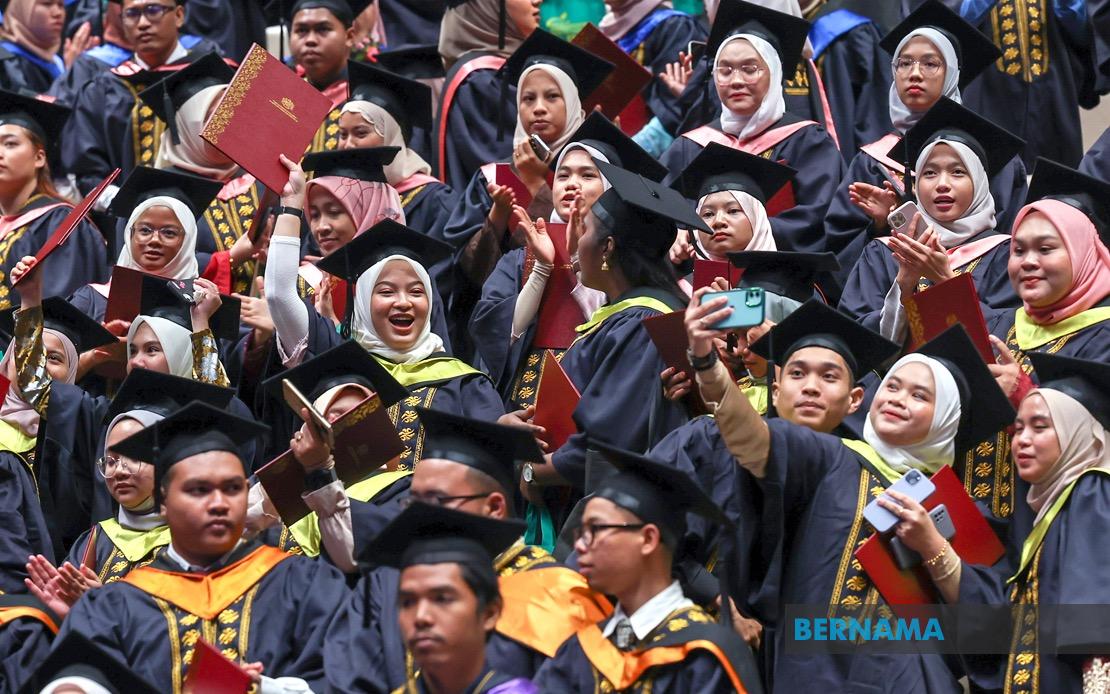
Prime Minister Datuk Seri Anwar Ibrahim's announcement that the government will abolish the Universities and University Colleges Act 1971 (AUKU) marks a watershed moment for Malaysian higher education, but academics and institutional leaders are urging caution. Rather than allowing the repeal to proceed without structure, they insist that the transition must be managed through a comprehensive legal overhaul that preserves institutional stability while genuinely expanding academic and student freedoms.
The breadth of AUKU's regulatory reach extends far beyond the commonly cited restrictions on student activism. Dr Anuar Ahmad, Deputy Director of the Malaysian Inclusive Development and Advancement Institute at Universiti Kebangsaan Malaysia, emphasises that the act constitutes the foundational legal architecture for university establishment, internal management, administration, and the delegation of powers to individual institutions. Dismantling it without providing alternative statutory provisions would create a governance vacuum with potentially serious consequences for institutional autonomy, financial management, and academic standards across the sector. This complexity demands that policymakers treat AUKU's replacement not as a simple legislative deletion but as an opportunity for structural reform.
The establishment of a high-level committee to examine and draft a replacement framework has become the consensus position among higher education leaders. Such a body would need to conduct systematic analysis of AUKU's existing provisions, distinguishing between those that genuinely restrict freedoms and require removal and those that provide essential governance mechanisms warranting retention or modernisation. This nuanced approach recognises that not all aspects of the current framework are problematic; rather, specific provisions—particularly those governing student political activity and academic expression—require urgent recalibration to align with contemporary democratic expectations.
The Prime Minister has positioned AUKU's abolition as a mechanism for strengthening academic freedom and expanding democratic discourse within universities. His vision encompasses creating space for academics to contribute publicly to national conversations based on rigorous research, data, and empirical evidence. Currently, many scholars reportedly exercise self-censorship, deterred by potential legal consequences or institutional sanctions under existing legislation. Removing those barriers could enrich public policy debates and position Malaysian universities as genuine intellectual contributors to national development rather than sheltered spaces divorced from pressing social issues.
However, expanded freedoms must be balanced against institutional stability and national cohesion. Dr Noor Nirwandy Mat Noordin, a security analyst at Universiti Teknologi Mara, cautions that opening space for student expression represents a transformative opportunity but one that requires careful anchoring within established constitutional and national frameworks. He argues that greater freedom must coexist with robust grounding in Malaysia's Federal Constitution and the Rukun Negara (National Principles). Without such anchors, expanded campus discourse could fragment along divisive lines, potentially creating polarisation that undermines the very national unity higher education should foster. This perspective reflects genuine concern that dismantling restrictions without simultaneously strengthening institutional commitment to nation-building values could paradoxically weaken social cohesion.
Universiti Malaya Vice-Chancellor Datuk Seri Professor Dr Noor Azuan Abu Osman advocates for a holistic reform approach that views the entire higher education ecosystem rather than focusing narrowly on student activity restrictions. His institutional perspective highlights that universities serve multiple constituencies—students, local communities, and the nation itself—and reforms must acknowledge these overlapping responsibilities. The new legal framework must therefore encompass provisions addressing not only student governance and academic expression but also the financial sustainability of institutions, quality assurance mechanisms, and the relationships between universities and government. Piecemeal reform that addresses only the most contested aspects of AUKU risks creating unintended gaps elsewhere in the regulatory architecture.
Student perspectives on the proposed abolition reflect optimism tempered by recognition of accompanying responsibilities. Syaiful Asyraff Kamarudin, former Universiti Malaya Student Representative Council President, views the development as an opportunity to transform universities from mere credential-granting institutions into genuine intellectual communities where rigorous debate flourishes. He notes that successive amendments to AUKU have gradually shifted the legislative intent away from state control toward university autonomy and student empowerment. This historical trajectory suggests that contemporary students will inherit a system designed with greater recognition of their roles in institutional governance, potentially including more substantive involvement in university decision-making through student representative structures.
Younger students currently on campuses express cautious enthusiasm for the changes ahead. Universiti Sains Malaysia students, including third-year Financial Economics student Nurul Husna Amanda Syukran and second-year Geology student Muhammad Irsyad Iman Muhammad Irwan, recognise that expanded freedom carries implications for campus culture and student responsibility. They understand that the ability to organise, debate, and engage with societal issues constitutes a significant expansion of campus freedoms, yet they implicitly acknowledge that such freedoms must be exercised with maturity and awareness of broader national contexts. This generational perspective suggests students themselves recognise that unrestricted expression divorced from ethical moorings would undermine rather than enhance democratic discourse.
The timeline for implementing these changes remains fluid. The Cabinet review scheduled for the following week following the Prime Minister's announcement represents the first formal hurdle, but the substantive work of drafting replacement legislation will likely consume months of consultation with university leaders, government agencies, student representatives, and civil society organisations. The Ministry of Higher Education will coordinate this engagement process, drawing on institutional expertise and stakeholder input to ensure that any new legal framework reflects not only the aspirations of contemporary reformers but also the practical operational needs of institutions serving hundreds of thousands of students annually.
Regional implications of Malaysia's AUKU reform deserve consideration as well. Other Southeast Asian nations, including Indonesia, Thailand, and the Philippines, grapple with comparable tensions between institutional autonomy and student freedoms. Malaysia's experience in managing the transition from restrictive to permissive legislation could provide valuable lessons for regional peers wrestling with similar challenges. Conversely, careful observation of how Malaysian universities navigate expanded freedoms may inform policy discussions elsewhere in the region.
The success of AUKU's abolition ultimately depends on the quality and comprehensiveness of its replacement framework. Experts across Malaysian academia largely support the reform's underlying objectives—expanding democratic space and academic freedom—but insist that these gains must be secured through thoughtful legal architecture rather than through wholesale deregulation. The emerging consensus suggests that the next phase of higher education reform will prove as important as the symbolic act of repeal itself. A well-designed legal framework could position Malaysian universities for genuine intellectual renaissance, while inadequate replacement provisions risk creating governance challenges that ultimately constrain rather than liberate campus discourse. The challenge facing policymakers is therefore not merely to dismantle old restrictions but to construct new institutional foundations capable of supporting responsible freedom and robust democratic discourse within Malaysian universities.

