Prime Minister Anwar Ibrahim's announcement on August 15 at the PKR National Congress in Ayer Keroh that the Universities and University Colleges Act 1971 will be abolished represents a watershed moment for Malaysian higher education. The pledge, to be taken to Cabinet the following Wednesday, arrives after years of advocacy from student activists and civil society. Yet those who fought longest for this change warn that legal repeal alone cannot address the deeper structural problems embedded within the public university system—problems that determine whether a qualified Malaysian student actually gains admission to tertiary education.
The commitment to repeal AUKU has appeared repeatedly in Pakatan Harapan election manifestos dating back to 2018 and reiterated through 2023, lending weight to Prime Minister Anwar's latest announcement. Student organisations and civil society groups have maintained steady pressure, with forty demonstrators from over thirty NGOs marching to Parliament in February this year demanding comprehensive reform. The government's Higher Education Ministry, however, had consistently maintained that the Act remained fit for purpose, creating a tension between political commitment and bureaucratic resistance that only a Cabinet decision could resolve.
The significance of this moment cannot be overstated for Malaysian university students, who have awaited official recognition that constitutional freedoms applicable to all citizens should extend equally to them. AUKU has functioned since 1971 as a legislative framework restricting student political activity and assembly rights in ways unparalleled elsewhere in Malaysian public institutions. Yet experience demonstrates that repealing a problematic provision represents only a preliminary step toward genuine systemic change. In 2011, the Court of Appeal struck down Section 15(5)(a), the specific provision under which student activists were prosecuted a year earlier. Parliament subsequently repealed that section in 2012, yet fundamental governance structures remained untouched.
The pattern of incremental amendments to AUKU—seven revisions since its inception—reveals that the Act was constructed on faulty foundational premises. Rather than continuing to patch a deeply flawed structure, legislators should embrace the opportunity to draft entirely new legislation grounded in principles of transparency, equity, and student rights. The real architecture of concern encompasses how public universities are constituted, who appoints their boards and vice-chancellors, how they generate revenue, and critically, on what basis they admit students. These mechanisms, not merely the question of student political freedoms, will determine whether the repeal translates into meaningful improvement for Malaysian families seeking higher education access.
Current Ministry data presents a sobering picture of how public universities allocate places. As of December 31, 2025, 634,706 students populated public universities, with international students comprising 56,565 or 8.9 percent overall. The disparity widens dramatically at research universities, where international students constitute 22 percent of enrolment—41,097 of 186,824 total, including 12,962 undergraduate admissions through open channels. The Ministry has claimed that the domestic quota system fills first and international entry operates separately, yet programme-level capacity data remain unpublished, preventing external verification of these assertions.
More troubling still is the parallel admission of Malaysian students through direct intake or open channels operating without merit considerations. One public university's published fee schedule explicitly states that open channel places carry no government subsidy, require full fee payment, and assess applicants against minimum entry requirements divorced from merit rankings. This creates an inequitable two-tier system where a qualified Malaysian ranked highly on merit can be denied a subsidised place at their first choice institution, then offered an identical programme through the commercial channel—provided their family possesses sufficient funds. This arrangement manifestly violates equal treatment principles and inflicts greatest hardship on families with fewest resources.
The financial underpinnings of this inequity trace directly to inadequate public funding. Budget 2026 allocates RM18.60 billion to the Higher Education Ministry against RM18.09 billion in 2025—merely a 2.76 percent increase in an environment requiring substantial expansion of capacity. Universities instructed to expand intake while operating grants stagnate inevitably resort to commercial channels and full-fee programmes to bridge funding gaps. Remedying this dysfunction demands genuine budget commitment and legislative limits on direct intake expansion, not merely expressions of reform intent.
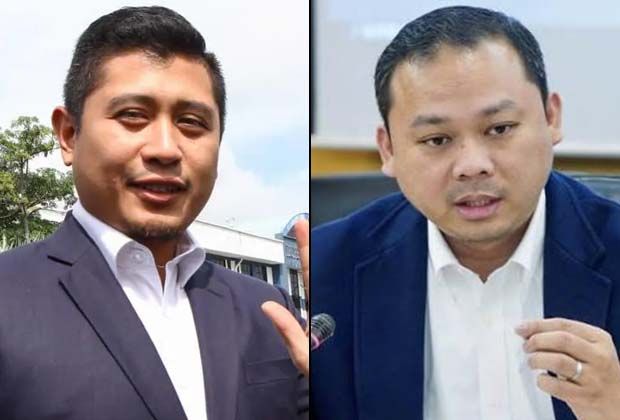
Those who fought the hardest battles against AUKU—including Muhammad Hilman Idham and Woon King Chai, prosecuted as Universiti Kebangsaan Malaysia students in 2010 for their presence at the Hulu Selangor by-election—have articulated four specific commitments they seek before legislation is tabled. Their 2011 Court of Appeal victory declaring Section 15(5)(a) unconstitutional established the legal precedent making current repeal possible, yet they emphasise that winning a sixteen-year struggle for student political freedoms cannot constitute victory if new legislation fails to address present inequities.
The fundamental challenge facing Malaysian policymakers is that AUKU repeal answers a question posed in 1971, but leaves unanswered the urgent question confronting families in 2026 whose children possess requisite grades yet cannot access university places. Legal reform on student freedoms, however important symbolically and practically, becomes hollow if new legislation perpetuates or deepens the systemic barriers preventing qualified Malaysians from higher education access based on family financial capacity. The government's true commitment will be measured not in the announcement itself but in the substantive legislative content that follows, the degree to which new statutes mandate equitable admission processes, the funding allocated to support expanded access, and the transparency mechanisms enabling public oversight of university decision-making.

