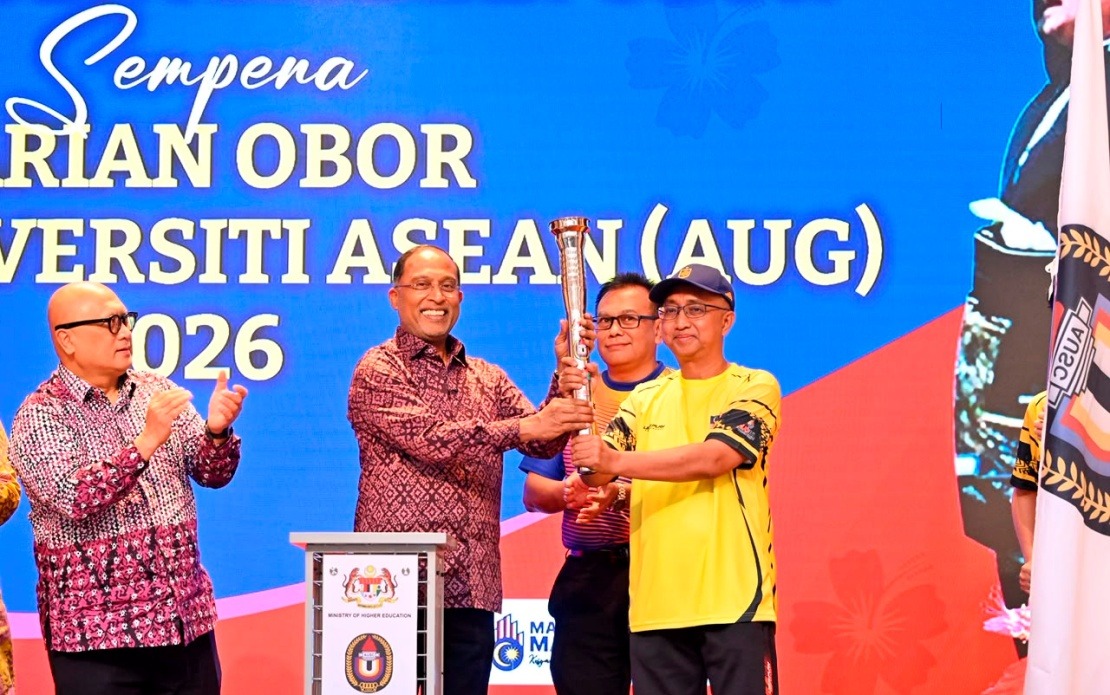
Malaysia has formally initiated the countdown to the ASEAN University Games 2026 with a symbolic torch run ceremony at the Ministry of Higher Education headquarters in Putrajaya, underscoring the nation's commitment to hosting one of the region's premier university sporting competitions. The ceremonial handover of the torch from Higher Education Minister Datuk Seri Dr Zambry Abd Kadir to Malaysian contingent chief Prof Dr Mohammad Ismail, who serves as Universiti Malaysia Kelantan's Deputy Vice-Chancellor for Student and Alumni Affairs, crystallised the official transition from planning to execution as Malaysia prepares for the December showpiece.
The torch run represents far more than a logistical formality or ceremonial gesture. For Malaysia's higher education sector and its student-athletes, the symbolic flame carries expectations of excellence and responsibility to defend national honour on a competitive regional platform where neighbouring countries will field their finest university sports talent. Dr Zambry's exhortation to athletes to "carry the Malaysian torch and the torch of victory" reflects the government's expectation that participating students will embody both athletic prowess and patriotic duty, transforming individual performances into collective national achievement. This framing places university sports within a broader narrative of Malaysian soft power and regional positioning.
The inaugural torch run journey commenced from the Ministry of Higher Education grounds before proceeding to the Ministry of Tourism, Arts and Culture, a routing that deliberately integrates multiple government agencies into the Games' preparation and emphasises the event's significance beyond athletics alone. The subsequent torch relay will extend across Malaysia's premier universities—Universiti Kebangsaan Malaysia, Universiti Putra Malaysia, Universiti Pertahanan Nasional Malaysia, Universiti Malaya, and Universiti Teknologi MARA—creating a nationwide activation of institutional pride and competitive spirit among the nation's leading higher education institutions.
Four elite national athletes accompanied the torch, each representing different sporting disciplines and academic institutions. Long jumper Andre Anura Anuar and shot putter Nani Sahirah Maryata, both competing for Universiti Putra Malaysia, karate athlete Thevendran Kaliana Sundram from Universiti Pertahanan Nasional Malaysia, and taekwondo athlete Lee Hui Yee representing Sultan Salahuddin Abdul Aziz Shah Polytechnic embodied the diversity of sports and institutions that will feature throughout the Games. Their participation in the torch run ceremony served both inspirational and practical purposes—signalling excellence in athletic achievement while previewing the calibre of competition upcoming in December.
The scope of AUG 2026 projects Malaysia as a serious regional sports destination capable of managing large-scale international competitions. Scheduled for December 10 to 19, the Games will convene approximately 4,669 participants spanning 11 countries, comprising 2,849 athletes and officials competing across 19 distinct sports disciplines. The competition will unfold across multiple venues in Shah Alam, Kuala Lumpur, Serdang, and Bangi, requiring sophisticated logistical coordination and infrastructure deployment that demonstrates Malaysia's organisational capacity and commitment to regional cooperation through sport.
The supporting ecosystem for AUG 2026 reflects substantial investment in human and material resources beyond the competing athletes themselves. Organisers will deploy 700 specialised referees and competition officials responsible for adjudicating fairness and maintaining competitive standards across 19 sports, ensuring that results reflect genuine athletic merit rather than administrative inconsistency. Additionally, 920 volunteers will staff various operational functions, transforming the Games into a comprehensive learning experience for young Malaysians engaged in event management and international sports administration. This volunteer contingent represents both a practical necessity and an opportunity for Malaysian youth to develop professional competencies through exposure to world-class sporting administration.
The thematic framework "HOLISTIC.EXCELLENCE" encapsulates Malaysia's philosophical approach to university sports beyond medal-counting metrics. The emphasis on holistic excellence suggests an integrative vision encompassing athletic achievement, educational development, character building, and regional community strengthening—reflecting contemporary understanding that university sports serve broader developmental objectives beyond pure competition. This thematic positioning distinguishes Malaysian hosting aspirations from purely performance-focused championships, appealing to educational institutions and national governments invested in comprehensive student development.
For Malaysia's higher education landscape, AUG 2026 represents a valuable opportunity to elevate institutional profiles through sporting success while creating opportunities for student-athletes to develop leadership capabilities within competitive frameworks. Universities selected to host torch relays—UKM, UPM, UPNM, UM, and UiTM—gain institutional visibility and institutional pride through association with this continental championship. The Games provide platforms for emerging athletic talent to establish regional credentials, potentially facilitating pathways toward international sporting careers while maintaining academic pursuits through university-based development systems.
The timing of the torch run in August, approximately four months before competition commencement, reflects strategic planning principles designed to maximise promotional visibility, allow adequate preparation periods for competing athletes and supporting institutions, and build public anticipation through progressive ceremonial milestones. The staggered torch relay across multiple campuses extends promotional reach beyond Putrajaya's administrative circles into university communities where student-athletes train, study, and compete daily, creating authentic grassroots engagement with the championship rather than relying solely on top-down government messaging.
From a regional perspective, AUG 2026 positions Malaysia within a broader ASEAN sports development narrative characterised by enhanced inter-university cooperation and knowledge exchange alongside competitive rivalry. Gathering 11 countries' university sports contingents creates opportunities for networking, institutional partnerships, and exposure to alternative sporting methodologies and training philosophies. For Malaysian universities, participating athletes gain invaluable experience competing against regional counterparts, potentially influencing future bilateral university exchanges and collaborative research initiatives extending beyond athletics into academic domains.
The Games also carry implications for Malaysian sports development infrastructure and coaching systems. As university athletes compete at championship levels against regional peers, their performances will highlight strengths and deficiencies within Malaysia's grassroots and tertiary sports development frameworks. Success or shortcomings in December will likely inform subsequent policy discussions regarding resource allocation, coaching recruitment, and institutional coordination mechanisms for university sports. In this sense, AUG 2026 functions simultaneously as a sporting championship and an diagnostic exercise revealing the competitive standing of Malaysia's higher education sports ecosystem relative to neighbouring countries navigating similar development challenges.

