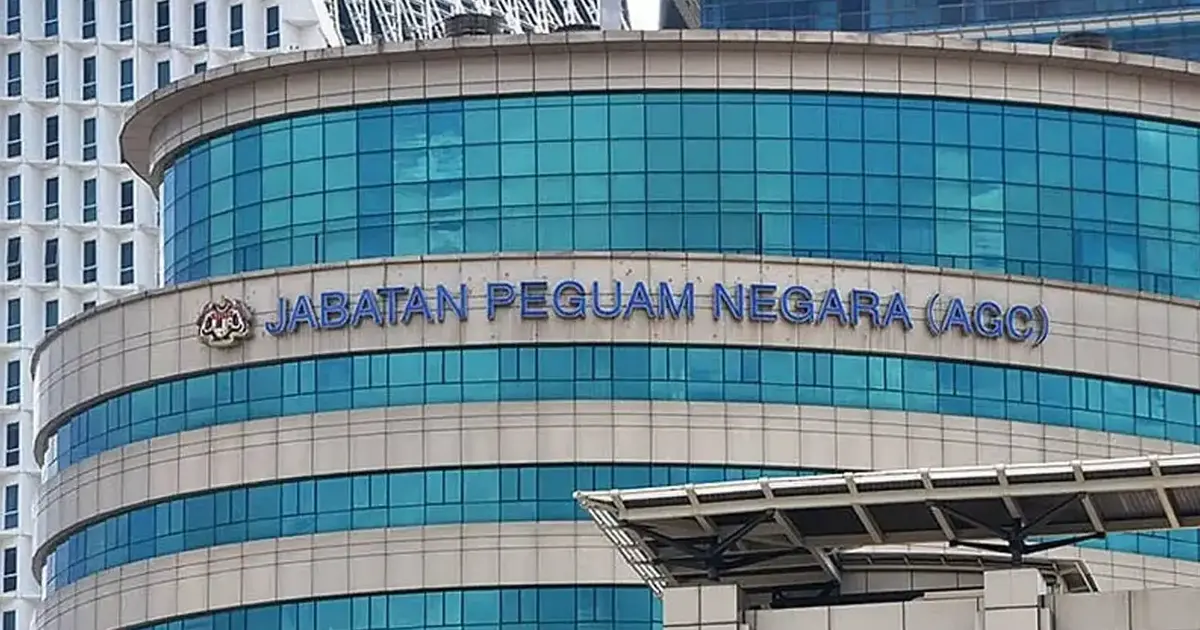
The Attorney General's Chambers continues its examination of investigation materials related to the Durian Tunggal matter, with no determination reached despite more than four weeks having elapsed since authorities resubmitted the case files for the fourth time. The prolonged timeline underscores the intricate legal considerations and procedural requirements that typically characterize high-profile investigations in Malaysia, where the AGC's role in determining prosecutorial merit requires exhaustive analysis of evidence and legal precedent.
Home Minister Rao Inderjit Singh has appealed to all stakeholders to demonstrate restraint and allow the established legal machinery to progress without external pressure or public interference. His statement reflects a measured approach intended to manage public expectations while the AGC conducts what appears to be a particularly thorough evaluation of the available evidence. The multiple resubmissions suggest either that initial submissions contained gaps or deficiencies, or that the investigating authorities have been gathering supplementary materials to strengthen their case presentation.
The Durian Tunggal investigation has become a fixture of Malaysian public discourse, attracting considerable media attention and political commentary. The repeated cycle of submission and review has stretched across weeks, testing the patience of observers who have monitored each development closely. Such delays are not uncommon in Malaysian legal proceedings, particularly when cases involve complex factual matrices or sensitive considerations that demand careful scrutiny by the prosecution authorities.
The fourth submission itself represents a significant checkpoint in the investigative process. Each resubmission typically indicates that the investigating agency, likely the police or a specialized law enforcement body, has either addressed concerns raised during previous reviews or furnished additional evidentiary materials that the AGC deemed necessary for a comprehensive assessment. This iterative process, while occasionally frustrating for those seeking swift resolution, often contributes to more robust prosecutorial decisions and helps insulate eventual charging decisions against subsequent legal challenge.
For Malaysian citizens and observers of the justice system, the extended timeline raises questions about resource allocation within the AGC and the complexity of the underlying allegations. The chambers operates under considerable caseload pressures, managing thousands of matters ranging from straightforward criminal cases to intricate white-collar investigations. The Durian Tunggal matter, given its apparent prominence in the public sphere, may warrant particularly meticulous attention to ensure that whatever decision emerges can withstand judicial scrutiny and public examination.
The home minister's call for patience carries implicit recognition that premature pressure or political interference could compromise the integrity of whatever determination the AGC eventually reaches. Malaysian law enforcement and prosecutorial institutions have faced periodic criticism regarding the impartiality of their decision-making in politically sensitive matters. By publicly urging restraint, the minister signals to the broader political ecosystem and media landscape that the investigation should be permitted to conclude according to established legal protocols rather than political timelines.
Regional observers note that Malaysia's legal system often mirrors challenges faced by other Southeast Asian democracies in balancing swift justice against procedural fairness. The extended review period, while potentially frustrating, represents a commitment to ensuring that charges, if filed, rest on solid legal and evidentiary foundations. This approach contrasts with some jurisdictions where prosecutorial decisions are rendered more rapidly but occasionally become subject to successful appellate reversal or judicial criticism regarding the sufficiency of evidence.
The repeated submissions also hint at the evolving nature of the investigation itself. Authorities may have discovered new evidence, or witnesses may have provided additional statements that required incorporation into the case file. Alternatively, the AGC may have sought clarification on specific aspects of the initial investigation, necessitating supplementary police work before a final determination could be responsibly made. Such back-and-forth exchanges between investigating agencies and the prosecution authority, while administratively cumbersome, generally serve to strengthen the ultimate case presentation.
Public commentary surrounding the investigation has occasionally touched on broader governance concerns. The visibility and prominence of the Durian Tunggal matter in Malaysian media and political discourse underscores growing public interest in accountability mechanisms and the functioning of the criminal justice system. How the AGC ultimately resolves this matter—whether through the laying of charges, a decision to discontinue, or some other prosecutorial outcome—may influence public perception of the institution's independence and competence.
The silence from the AGC itself, punctuated only by periodic administrative notices regarding resubmissions, reflects the chambers' typical practice of avoiding public commentary on ongoing cases. This institutional restraint, while sometimes perceived as opaque by outside observers, protects both the integrity of the investigation and the rights of any potential accused. Premature public statements could prejudice fair trial considerations or influence potential jurors, concerns that weigh heavily on prosecutorial institutions operating within common law frameworks like Malaysia's.
As the legal process continues its deliberate pace, observers across the region watch closely for signs of how Malaysia's justice system handles high-profile cases where public attention and political dimensions intersect. The outcome, whenever it arrives, will likely reverberate through Malaysia's broader legal and political landscape, potentially influencing public trust in institutional independence and the rule of law.

