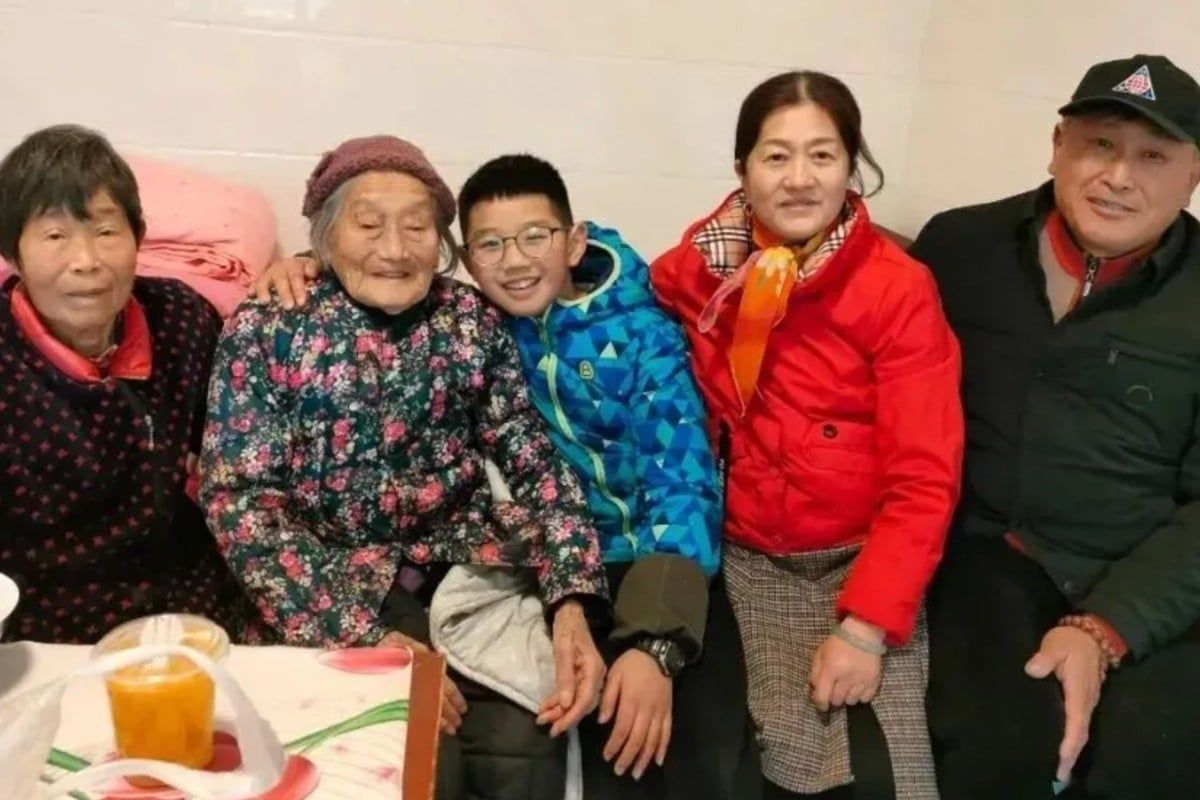
Wang Gaiying, who has lived to the remarkable age of 111, lives in Rugao in Jiangsu province in eastern China, a region that has earned recognition as one of the nation's premier longevity centres. Her story has resonated across social media platforms, with many people curious about what enables someone to reach such an advanced age while maintaining physical mobility and mental sharpness. What sets Wang apart is not any extraordinary medical intervention or secret supplement, but rather her embracement of mundane daily practices that many younger people might dismiss as routine tasks rather than health maintenance.
Rugao itself appears to offer a significant advantage for those seeking long lives. As of February this year, the district was home to 672 centenarians, an extraordinarily high concentration for any population centre. Researchers at the Chinese Academy of Sciences' Institute of Soil Science in Nanjing have investigated this phenomenon and identified a compelling explanation: the mineral-rich composition of the local soil. The agricultural products grown in this region contain elevated levels of trace elements that support human health, suggesting that diet alone may account for a substantial portion of the area's longevity advantage. This geological advantage, combined with lifestyle factors, creates an environment where reaching one hundred becomes far more common than elsewhere.
Wang resides in a multi-generational household alongside five generations of family members, including a grandson now in his sixties. This living arrangement reflects traditional values that remain prevalent in many parts of rural China, where extended families continue to share households and responsibilities. Even after crossing into her second century of life, Wang continues to contribute to household operations, though her work has necessarily become less demanding. She performs light domestic tasks such as wiping tables and folding clothes, activities that might seem inconsequential to outsiders but which she views as essential to maintaining her independence and physical capability.
What distinguishes Wang's approach to ageing is her reframing of household labour as a form of deliberate physical conditioning. Rather than viewing chores as burdensome obligations or considering herself too elderly to participate in household management, she explicitly recognizes these activities as exercise that keeps her limbs engaged and her circulation active. When family members suggest she rest, Wang responds by explaining the logic behind her continued activity: movement itself is the medicine. This philosophy contrasts sharply with more sedentary approaches to ageing that are common in developed nations, where retirement often means withdrawal from physical activity.
Even in her earlier hundreds, Wang worked directly in agricultural fields, harvesting peanuts and watermelons alongside family members. The transition to lighter indoor tasks represents a natural adaptation rather than a complete cessation of labour. Her insistence that she is not truly old, coupled with her ability to move about with relative ease, suggests that her continuous engagement with physical activity has preserved muscular function and bone density that typically deteriorate rapidly in elderly populations who become immobilized. This pattern aligns with emerging gerontological research suggesting that maintaining functional activity throughout life produces superior health outcomes compared to periods of enforced inactivity.
Nutrition forms the second pillar of Wang's longevity strategy. Her family deliberately rotates her meals to ensure dietary variety, alternating staples such as dumplings and steamed buns rather than settling into repetitive patterns. Fish holds particular importance in her diet—she favours it specifically because the tender flesh requires minimal chewing and digests easily, making it suitable for someone with age-related changes in digestive capacity. Beyond mere consumption, Wang demonstrates conscious restraint in portion sizes, believing that variety and quality matter more than quantity. This disciplined approach to eating, combined with the nutritional advantages provided by Rugao's mineral-rich soil, creates a foundation of sound nutrition that extends far beyond what standardized diets might provide.
Social media influencer Yaoqing Ge, who documented Wang's life during a December visit, revealed that the centenarian once enjoyed a traditional practice of consuming rice soaked in baijiu, a potent Chinese spirit. This habit, maintained for many years, was discontinued approximately five years ago when her family grew concerned about the risks of intoxication and potential falls—a prudent decision that demonstrates how even long-established personal rituals can be modified when health considerations warrant adjustment. The cessation of this practice illustrates that longevity is not about rigid adherence to unchanging habits but rather the capacity to adapt practices as circumstances change.
Beyond the physical dimensions of her life, Wang credits her psychological approach to daily existence with contributing to her longevity. She maintains a personal discipline of performing at least one small act of kindness each day, whether offering sincere compliments to family members or sending greetings to elderly friends. This daily practice of intentional goodness reflects a philosophical commitment to living with purpose and connection. Equally important is her approach to emotional regulation: she consciously refuses to carry frustrations to bed, instead sleeping them off and frequently discovering upon waking that the source of her irritation appeared far less significant than she initially believed. Her calm demeanour and refusal to ruminate on problems represent a form of emotional discipline that many stress-management experts now recognize as crucial to healthy ageing.
Wang's sleep schedule demonstrates the same consistency evident throughout her life. She maintains a disciplined routine of sleeping from seven in the evening until seven in the morning, supplemented by one or two daytime naps. This regular sleep pattern, totalling approximately nine to ten hours daily, provides the restorative benefits that sleep research consistently demonstrates are essential to longevity. The stability of her schedule, rather than varying sleep times, likely contributes to optimal circadian rhythm function, a factor increasingly recognized as important to overall health.
The response to Wang's story on social media reveals how her experience resonates across broader populations. Observers have noted that her longevity appears to result from multiple reinforcing factors: the genetic predisposition of her population, the advantageous environmental conditions of her region, the supportive structure of her extended family household, and crucially, her own deliberate choices regarding movement, nutrition, kindness, and emotional management. For Malaysian readers and others throughout Southeast Asia facing population ageing challenges, Wang's example suggests that longevity does not require sophisticated medical technology but rather a combination of active engagement with daily life, mindful eating practices, and psychological resilience. Her story provides a compelling counternarrative to contemporary assumptions that long life depends primarily on medical intervention rather than lifestyle choices accessible to ordinary people.

