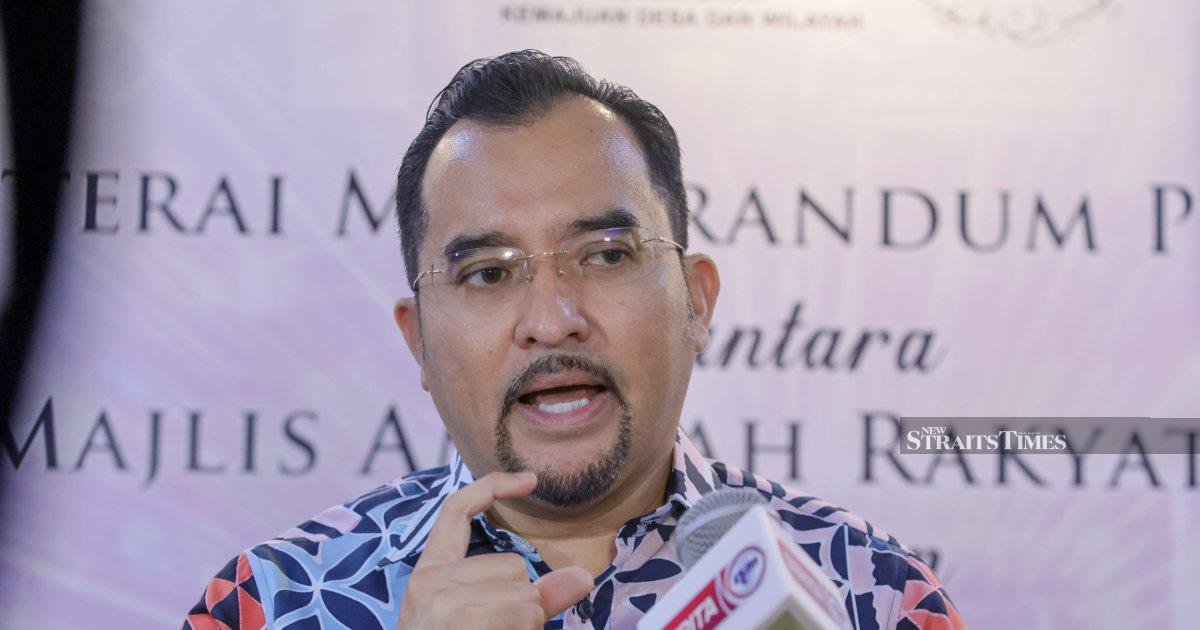
Umno secretary-general Datuk Dr Asyraf Wajdi Dusuki has dismissed suggestions that he exercised any form of authority or participated in decisions affecting Tabung Haji during his service as deputy minister in the Prime Minister's Department. The statement comes amid ongoing scrutiny regarding the pilgrim fund's financial dealings and governance structures, a matter that has drawn considerable public and parliamentary attention in recent months.
Tabung Haji, the Islamic pilgrim fund manager responsible for facilitating hajj savings and investments for Malaysian Muslims, has faced multiple controversies centring on its investment decisions and asset management practices. The institution manages billions of ringgit in funds belonging to millions of Malaysian savers who deposit money expressly for pilgrimage to Mecca. Questions surrounding the fund's governance and fiscal prudence have intensified pressure on government officials and board members for greater transparency and accountability.
Ashyraf's denial carries significance given the interconnected nature of government oversight bodies and statutory organisations in Malaysia's administrative hierarchy. The Prime Minister's Department traditionally maintains supervisory functions across numerous agencies, though the precise division of responsibilities between ministers, deputy ministers, and respective agency boards remains an area of frequent dispute when controversies emerge. By explicitly stating he held no authority in Tabung Haji matters, Asyraf appears to be establishing clear boundaries around his administrative remit during the period in question.
The Al-Rawda transaction referenced in the controversy represents one of several high-profile investments or financial arrangements that have come under scrutiny. Without access to full details of the specific deal, observers familiar with Tabung Haji's recent history point to numerous property acquisitions and equity investments that have generated debate about whether returns justified the risks undertaken. The fund has previously been criticised for aggressive expansion strategies and real estate ventures that observers argue exposed pensioner savings to excessive volatility.
Malaysian political circles have grown increasingly attentive to issues surrounding governance at major state-linked organisations, particularly those managing public funds or serving specific demographic constituencies. Hajj pilgrimage holds profound spiritual and cultural significance for Malaysian Muslims, making Tabung Haji's stewardship a matter touching both financial and religious dimensions of national life. Any perception that political figures inappropriately influenced fund decisions can undermine public confidence in both the institution and the broader financial ecosystem serving Muslim communities.
Ashyraf's previous portfolio as deputy minister positioned him at a juncture where awareness of major departmental initiatives would be expected, though day-to-day operational decisions typically rest with agency boards and professional management teams. His clarification may reflect an effort to distinguish between general oversight functions and specific transactional authority. In Malaysia's administrative culture, such distinctions frequently become crucial when accountability questions arise, as responsibility can hinge on whether an official possessed direct decision-making power versus indirect supervisory awareness.
The timing of this denial suggests that pressure has mounted sufficiently to warrant a public statement, indicating that questions about his potential involvement have circulated beyond closed governmental channels. Media reporting or parliamentary queries likely prompted the explicit rebuttal, reflecting standard practice where officials preemptively address allegations rather than permit speculation to establish false narratives. Such proactive communication serves both personal reputation management and broader institutional interests.
For Malaysian investors and pilgrims relying on Tabung Haji, assurances about governance accountability matter enormously. The fund's performance directly affects retirement security for millions and the accessibility of hajj pilgrimage for millions more. Controversies eroding confidence in management competence or integrity carry real consequences for savings behaviour and future fund viability. Public discourse clarifying who held authority over disputed decisions therefore extends beyond political accountability to encompass practical financial protection.
The broader context involves Malaysia's ongoing efforts to strengthen governance standards across statutory bodies following earlier scandals affecting both government-linked companies and financial institutions. Enhanced scrutiny reflects democratic accountability mechanisms functioning as intended, even when such examinations create discomfort for incumbent officials. Asyraf's statement, whether vindicating or merely deflecting, occurs within this environment of intensified institutional oversight that characterises contemporary Malaysian governance discourse.

