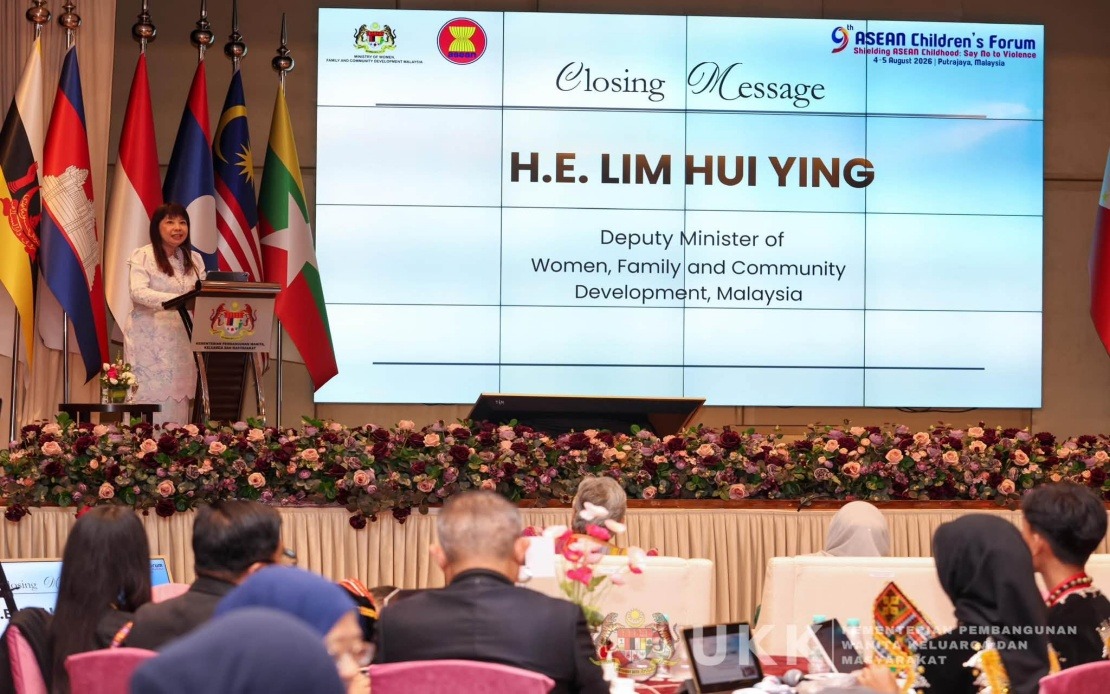
Regional policymakers should prioritise child safety across ASEAN following a fresh mandate from young people themselves at the 9th ASEAN Children's Forum held in Putrajaya. Deputy Women, Family and Community Development Minister Lim Hui Ying has called on governments and regional bodies to treat the forum's recommendations seriously, emphasising that the proposals emerge directly from children's real experiences rather than adult assumptions about their needs.
The forum brought together young participants from across the ten ASEAN member states to examine the multifaceted challenge of violence against children. Rather than confining discussions to physical harm, participants explored the full spectrum of abuse—encompassing emotional trauma, psychological damage, and sexual violence—reflecting a comprehensive understanding of how children suffer in various contexts. This holistic approach signals a maturation in how the region thinks about child welfare, moving beyond narrow definitions of violence to capture the complexity of modern threats to childhood safety and development.
The recommendations emerging from the forum cluster around four critical environments where children spend their time and encounter vulnerability. The home remains a primary concern, as many instances of violence against children occur within family settings where traditional notions of parental authority can mask abuse. Schools present another battleground, where peer violence and institutional failures create hostile learning environments. The online sphere has emerged as a new frontier for exploitation and harassment, requiring urgent policy attention as digital access expands throughout Southeast Asia. Community spaces round out the picture, acknowledging that neighbourhoods, public areas, and institutional settings beyond home and school also shape child safety outcomes.
Central to the forum's recommendations is the need for substantially strengthened legal frameworks. Many ASEAN jurisdictions operate under outdated or fragmented child protection legislation that fails to address contemporary threats. By enhancing statutory protections, governments can establish clear accountability mechanisms, define offences precisely, and create deterrents through meaningful penalties. For Malaysian policymakers, this reflects an opportunity to examine whether current child protection laws adequately address evolving forms of harm, particularly those enabled by technology and social media platforms that earlier generations of legislation never contemplated.
Reporting mechanisms stand out as a critical implementation priority. Children frequently fail to disclose abuse due to fear, shame, or lack of knowledge about how to seek help. The forum's emphasis on child-friendly reporting channels acknowledges these barriers and proposes solutions that empower young people to come forward. Such channels must be accessible, trustworthy, and staffed by trained professionals who understand child psychology. Malaysia's existing reporting infrastructure could benefit from child-centric redesign, ensuring that young victims encounter responsive systems rather than bureaucratic obstacles when they gather courage to speak out.
Anti-bullying policies represent another dimension highlighted by forum participants, signalling growing recognition that peer violence shapes childhood experiences profoundly. Bullying in schools—whether physical, verbal, or cyber-based—damages educational outcomes, mental health, and social development. Comprehensive anti-bullying frameworks require clear definitions, consistent enforcement, restorative justice components, and preventive education that builds empathy among students. The regional emphasis on this issue reflects both the prevalence of bullying across ASEAN and the recognition that addressing it requires coordinated school-based interventions rather than isolated punishment.
Psychosocial support emerged as a key recommendation, acknowledging that many children experiencing or witnessing violence require professional mental health services. This reflects a trauma-informed approach that recognises how violence impacts neurological development and emotional wellbeing. ASEAN nations should examine whether they have adequate capacity in school counsellors, child psychologists, and mental health services accessible to vulnerable populations. For Malaysia, expanding these services into rural and lower-income areas remains an ongoing challenge that regional coordination could help address through knowledge-sharing and resource mobilisation.
The forum explicitly recognised that protecting children cannot be a government responsibility alone. Parents, teachers, private sector actors, civil society organisations, media outlets, and peer networks all shape whether children live safely. This ecosystem approach moves beyond siloed interventions to acknowledge that child protection requires alignment across multiple stakeholders. Parents need education about recognising warning signs and responding appropriately. Teachers require training in identifying abuse and supporting affected students. Private companies operating digital platforms must design systems that protect minors. Civil society can monitor implementation and advocate for vulnerable groups. Media can shift narratives that normalise violence or exploit children. This distributed responsibility framework, while challenging to coordinate, reflects the reality that comprehensive protection demands broad engagement.
The regional dimension adds particular significance to these recommendations. ASEAN membership spans vastly different economic capacities, legal traditions, and governance structures. Yet all member states share commitment to the ASEAN Charter's principles regarding human rights and social development. The forum's recommendations provide a common platform from which each nation can develop contextually appropriate solutions. Malaysia, as a middle-income ASEAN economy with established legal and institutional infrastructure, can serve as a model for implementation while learning from innovative approaches in other member states. Cross-border issues—such as child trafficking and online exploitation—particularly benefit from regional coordination and standard-setting.
Lim Hui Ying's statement that recommendations should receive "due consideration" by policymakers acknowledges the political reality that translating youth voice into policy requires navigating complex legislative, budgetary, and bureaucratic processes. The language of encouragement rather than mandate reflects ASEAN's consensus-based decision-making traditions, yet also creates implementation risks. Without concrete timelines, resource allocation, and accountability mechanisms, recommendations risk becoming symbolic gestures that children's voices were heard but ultimately ignored. Malaysia's response to these recommendations will signal whether the nation is genuinely committed to child protection as a priority or merely performing commitment through regional forum participation.
The forum participants further pledged mutual support and commitment to fostering care and respect among their peers. This peer-to-peer dimension transforms the conversation from adults legislating protection to children themselves becoming agents of change in their communities. Such peer leadership models have proven effective in combating bullying, supporting trauma survivors, and building inclusive cultures. Supporting youth-led initiatives on child protection could yield dividends beyond formal policy implementation by creating grassroots movements that sustain cultural shifts toward valuing childhood safety.

