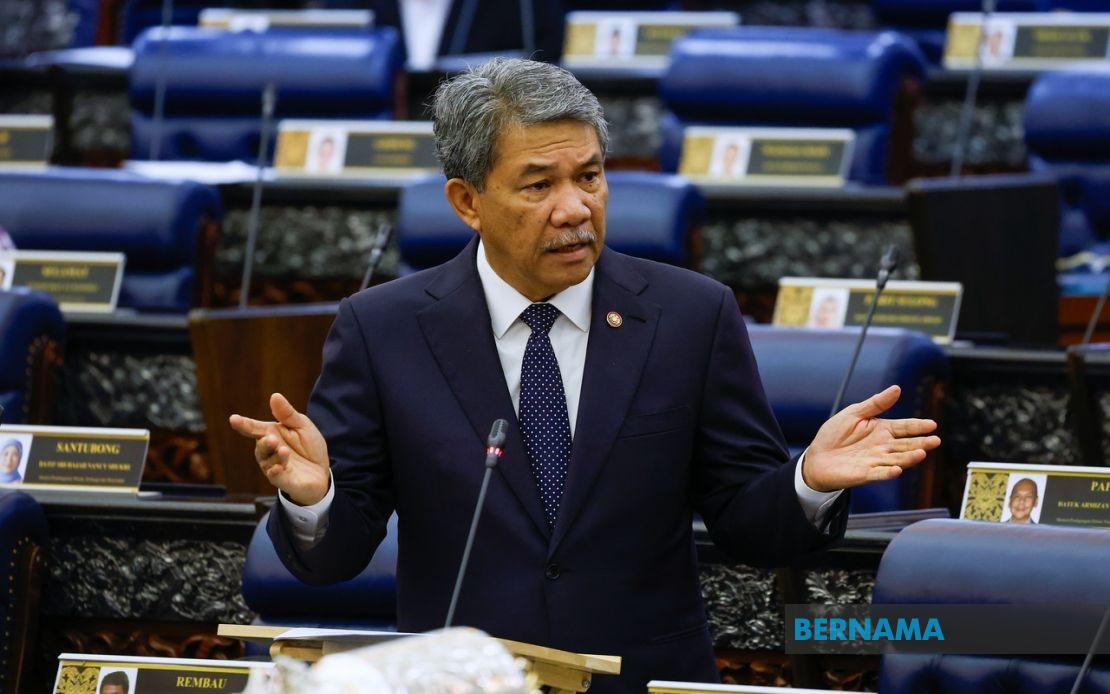
Regional efforts to resolve Myanmar's deepening political crisis are entering a critical recalibration phase. Foreign Minister Datuk Seri Mohamad Hasan has revealed that ASEAN is actively reassessing its approach to implementing the Five-Point Consensus, the diplomatic architecture that underpins all multilateral attempts to restore stability and democratic progress in the country. The acknowledgment reflects growing frustration within the bloc that despite nearly three years of diplomatic engagement since the February 2021 military coup, Myanmar has not delivered the substantive breakthroughs that regional leaders expected when they first endorsed the framework.
The Five-Point Consensus, hammered out at an emergency ASEAN Summit in April 2021, established five key pillars for resolving Myanmar's crisis: an immediate cessation of violence, constructive dialogue and reconciliation, humanitarian assistance delivery, a fact-finding mission, and ASEAN's role in mediation. Yet on nearly every measure, Myanmar's military leadership has resisted meaningful compliance. Rather than concede that the framework has failed, however, ASEAN leadership has opted for strategic flexibility. At the 48th ASEAN Summit held in Cebu, Philippines on May 8, regional heads of state tasked their foreign ministers with informal consultations to evaluate what has and has not worked, and to craft revised implementation pathways that might prove more effective.
This shift carries significant implications for how Southeast Asia engages with Myanmar going forward. The decision to move from formal, top-level negotiations to lower-profile foreign minister engagement signals ASEAN's desire to maintain diplomatic channels without the public spectacle of repeated summit failures. Foreign ministers can operate with greater discretion, testing ideas and building consensus before escalating proposals to heads of state. Critically, Mohamad stressed that any modifications to the Five-Point Consensus framework itself would require approval from all ASEAN leaders, preserving the consensus-based decision-making that defines the bloc, even as tactical adjustments occur at ministerial level.
Malaysia's specific contributions to this recalibration merit close attention. The country has proposed extending Myanmar's existing six-month ceasefire, originally slated to expire at the end of July, into a second phase anchored in more comprehensive peace mechanisms. This two-stage approach acknowledges that the initial ceasefire, while imperfect, at least created a temporary reduction in armed clashes and provided minimal space for dialogue. By extending this breathing room, Malaysia hopes to create conditions for the broader peace architecture to function. Simultaneously, Malaysia has advocated that Myanmar's military government submit a detailed roadmap spelling out concrete steps toward inclusive national dialogue involving all major stakeholders—a direct response to the military's tendency to stall without providing clear timelines or benchmarks for progress.
The involvement of multiple armed actors complicates ASEAN's mediation mission and underscores why a one-size-fits-all approach has proven insufficient. Myanmar's civil war now involves the Tatmadaw military regime, the National Unity Government (the shadow administration formed by ousted civilian leaders), the People's Defence Force (armed resistance fighters opposed to military rule), and numerous ethnic armed organisations controlling territory along Myanmar's borderlands. Each actor has distinct grievances and war aims; persuading them to accept a unified peace process requires extensive shuttle diplomacy and carefully calibrated incentive structures. ASEAN's traditional preference for non-interference and quiet diplomacy, while respectful of national sovereignty, has sometimes limited its ability to exert meaningful leverage on any party.
Geopolitical considerations have sharpened the urgency of ASEAN's efforts. Mohamad explicitly noted that allowing Myanmar to drift without a credible peace process creates a vacuum that external powers with strategic interests will inevitably fill. This concern reflects real anxieties about great power competition in Southeast Asia. China has maintained pragmatic engagement with Myanmar's military government and is deeply invested in the China-Myanmar Economic Corridor and major infrastructure projects. India has strategic security interests along its northeastern border. Thailand and Laos border Myanmar and absorb refugee outflows. For ASEAN as a collective, the prospect of Myanmar becoming a proxy battleground or a failed state hosting transnational criminal networks and insurgent groups threatens regional stability and undermines ASEAN's standing as the architecture guaranteeing Southeast Asian peace.
Malaysia's commitment to engage systematically with all parties in Myanmar reflects a broader diplomatic strategy. By maintaining channels with the military government, the civilian opposition National Unity Government, armed resistance forces, and ethnic armed organisations simultaneously, Malaysia positions itself as a bridge-builder willing to speak all languages and understand all perspectives. This approach carries risks—Malaysia faces accusations of legitimising military rule through engagement—but it also preserves Malaysia's credibility as an honest broker. Several ASEAN nations have taken more openly critical stances toward Myanmar's military, particularly after the execution of four political prisoners in July 2022 shocked regional sensibilities. Malaysia's balanced approach offers a counterweight, ensuring that diplomatic doors remain open even when other countries express revulsion at military actions.
The broader challenge confronting ASEAN is structural. The bloc's founding principle of non-interference in members' internal affairs and its consensus-based decision-making have served it well in maintaining unity among diverse nations. Yet these principles become constraining when one member collapses into civil war. ASEAN cannot force Myanmar to comply with the Five-Point Consensus without violating its own founding logic. The bloc therefore must operate within a narrow corridor: maintaining Myanmar's membership and engagement while applying sufficient diplomatic pressure to incentivise better behaviour, without crossing the threshold into coercive measures that would trigger claims of interference and cause Myanmar to withdraw or ignore ASEAN entirely. Crafting incentive structures that work within these parameters requires considerable creativity and patience.
The extended ceasefire proposal and the push for a detailed roadmap represent attempts to create what scholars call "managed escalation"—graduated mechanisms that reward compliance and incrementally raise costs for non-compliance. If Myanmar extends the ceasefire and submits a roadmap, ASEAN might reciprocate with recognition and support that enhances the junta's international legitimacy. Conversely, continued obstruction would isolate Myanmar and potentially open space for ASEAN to consider alternative approaches, including possible coordination with extra-regional actors. This sequencing approach offers both sides something: Myanmar gains a pathway toward international rehabilitation, whilst ASEAN avoids the reputational damage of completely abandoning its peace framework or surrendering Myanmar to external powers.
Implementing these new approaches will test ASEAN's diplomatic capacity. Foreign ministers must balance competing national interests—countries like Thailand with direct border concerns differ from distant members like Brunei. They must maintain credibility with Myanmar by not appearing to be merely transmitting external pressure, whilst simultaneously representing ASEAN's collective interests. They must engage the National Unity Government and armed groups despite their extra-legal status from the perspective of international law. And they must do all this whilst managing expectations among ASEAN publics increasingly frustrated by Myanmar's failure to reform and the humanitarian catastrophe unfolding there.
The stakes extend beyond Myanmar itself. How ASEAN navigates this crisis will shape the bloc's future relevance. If it can midwife a transition toward more inclusive governance, it strengthens ASEAN's role as a stabilising force. If Myanmar remains locked in conflict whilst ASEAN appears powerless, the bloc's prestige suffers and external powers gain opening to shape outcomes. For Malaysia and other ASEAN members, continued investment in dialogue, even when results remain elusive, represents a bet that sustained engagement proves preferable to isolation or abdication of responsibility. Whether this gamble ultimately succeeds depends on Myanmar's military leadership showing willingness to move beyond rhetoric toward genuine political transformation—a test that has so far gone unmet.

