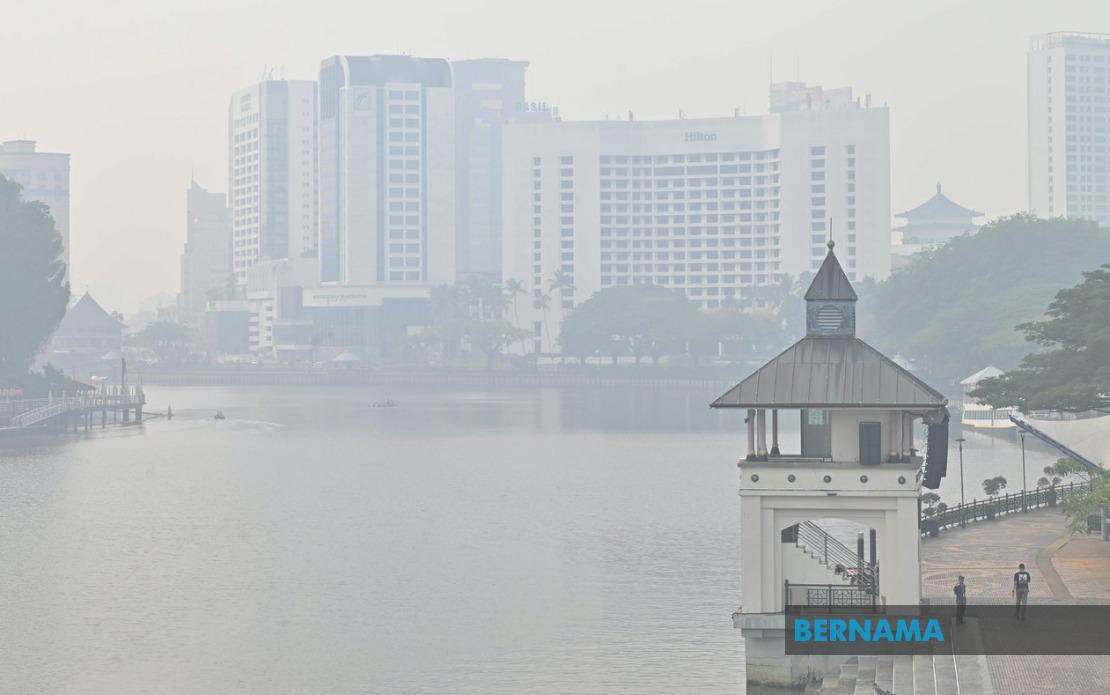
The decades-old ASEAN Agreement on Transboundary Haze Pollution requires urgent high-level review and replacement with a binding regional action plan that actually delivers results, according to prominent social activist Tan Sri Lee Lam Thye. Writing amid growing frustration over the region's cyclical smoke crisis, Lee argues that the pact signed in Kuala Lumpur on June 10, 2002 and implemented from 2003 onwards has fundamentally failed its core mission: protecting Southeast Asia's citizens from cross-border air pollution. More than twenty years on, the agreement's limitations have become undeniable, with recurring fires, persistent transboundary haze and deteriorating air quality afflicting multiple countries year after year.
The activist's intervention signals mounting concern that ASEAN's institutional response to transboundary haze has become calcified and ineffective. Rather than treating annual haze episodes as unavoidable seasonal inconveniences that must be endured, Lee contends that member states must acknowledge the crisis as fundamentally preventable through determined regional action. His distinction cuts to the heart of the matter: haze is not primarily a meteorological problem but a compound crisis spanning governance, environmental stewardship, public health and interstate responsibility. This reframing challenges ASEAN governments to abandon passive acceptance and instead demonstrate that regional cooperation can yield tangible protection for hundreds of millions of people across Southeast Asia.
Lee's advocacy arrives as meteorologists forecast deteriorating conditions ahead. The ASEAN Specialised Meteorological Centre has warned of strengthening El Niño patterns, below-normal rainfall and wind patterns that substantially increase wildfire and transboundary smoke risk across southern ASEAN territories. Yet Lee cautions against allowing climate phenomena to become convenient explanations that excuse institutional inaction. While El Niño is a natural recurring pattern beyond regional control, the transformation of dry conditions into a regional humanitarian crisis reflects deliberate human choices: forest clearing, peatland drainage and deliberate open burning that neither prevention nor enforcement adequately constrain.
The activist proposed sweeping reforms to the existing framework's core mechanisms. Foremost among these is a commitment to establishing specific, measurable targets for preventing fires, reducing identified hotspots and eliminating persistent sources of transboundary pollution. This demands moving beyond aspirational language to concrete benchmarks with defined timelines and accountability. Equally critical is establishing robust enforcement mechanisms targeting companies and individuals engaged in open burning and illegal land clearing, coupled with formal procedures for cross-border investigation, evidence preservation and prosecution when fires generate transboundary damage.
Lee outlined the essential architecture for a strengthened regional response: permanent coordination mechanisms featuring real-time satellite monitoring, instantaneous hotspot data sharing across member states, consolidated firefighting capabilities and unambiguous responsibility assignment during major haze episodes. Such infrastructure would transform ASEAN's current reactive posture into proactive prevention and rapid containment. Real-time information flows would enable faster suppression of emerging fires before smoke crosses borders, while coordinated firefighting resources could concentrate on critical threats.
Prevention systems must also operate on longer timeframes. Lee advocated establishing joint early-warning mechanisms activated before the onset of each dry season, reflecting that anticipation and preparation prove far more effective than crisis management. Enhanced cooperation on peatland protection and forest management directly addresses root causes by securing carbon-rich ecosystems most prone to catastrophic fires. Meanwhile, substantially improved transparency regarding hotspot locations, fire origins and enforcement actions would enhance both accountability and public confidence that governments take the problem seriously.
Critically, Lee emphasised that addressing transboundary haze requires diplomatic courage at the highest ASEAN levels. Malaysia and other significantly affected nations must be willing to raise the issue prominently, framing it not as blame or interference but as collective self-interest in regional health and wellbeing. This diplomatic repositioning matters: it rejects the false choice between respecting sovereignty and protecting people from cross-border pollution. Effective regional action respects national authority while insisting that no state possesses the right to harm its neighbours' populations through uncontrolled burning.
The stakes underlying Lee's intervention extend well beyond air quality measurements or respiratory statistics, though these dimensions are serious. Transboundary haze undermines economic productivity as businesses and transportation systems suffer disruption, suppresses tourism revenues across the region and concentrates health impacts disproportionately on vulnerable populations lacking means to purchase air filtration or relocate during episodes. Schools close, hospitals overflow, and millions experience respiratory distress that may cause lasting damage, particularly among children and elderly persons.
For Malaysia specifically, Lee's call carries particular weight. As a country that experiences devastating haze episodes originating from plantation burning in neighbouring jurisdictions, Malaysia possesses both standing and leverage to champion regional reform. The nation's own enforcement of anti-burning regulations, while imperfect, demonstrates that prevention remains achievable where political will exists. Presenting Malaysia as willing to support similarly strict measures across ASEAN, while offering technical and financial assistance for compliance, could reposition the country as a constructive force for genuine regional cooperation rather than merely a victim seeking compensation.
The fundamental tension Lee identifies reflects ASEAN's broader governance challenge: the organisation's consensus-based decision-making and respect for sovereignty, while promoting harmony, can inadvertently shield members from accountability for actions harming others. Transboundary haze exemplifies this dynamic perfectly. The existing 2002 agreement represents the region's attempt to balance these principles, yet two decades of experience demonstrates the balance tilted too heavily toward national discretion at the expense of collective protection. Meaningful reform requires recalibrating this equilibrium, accepting that legitimate regional interests in health and environmental protection sometimes override preferences for minimal external scrutiny of domestic land management.
Lee's specific proposals, if adopted, would fundamentally transform ASEAN's haze governance architecture from a voluntary coordination framework into a binding enforcement regime. Such transition faces predictable resistance from member states concerned about sovereignty implications, yet the activist's framing of enforcement as mutual protection rather than foreign imposition offers diplomatic language for navigating these sensitivities. The question confronting ASEAN leaders is whether the status quo—recurring crises, billions in economic losses, millions suffering health impacts—remains acceptable, or whether the time has arrived to demonstrate that regional cooperation can actually protect the people it purports to serve.

