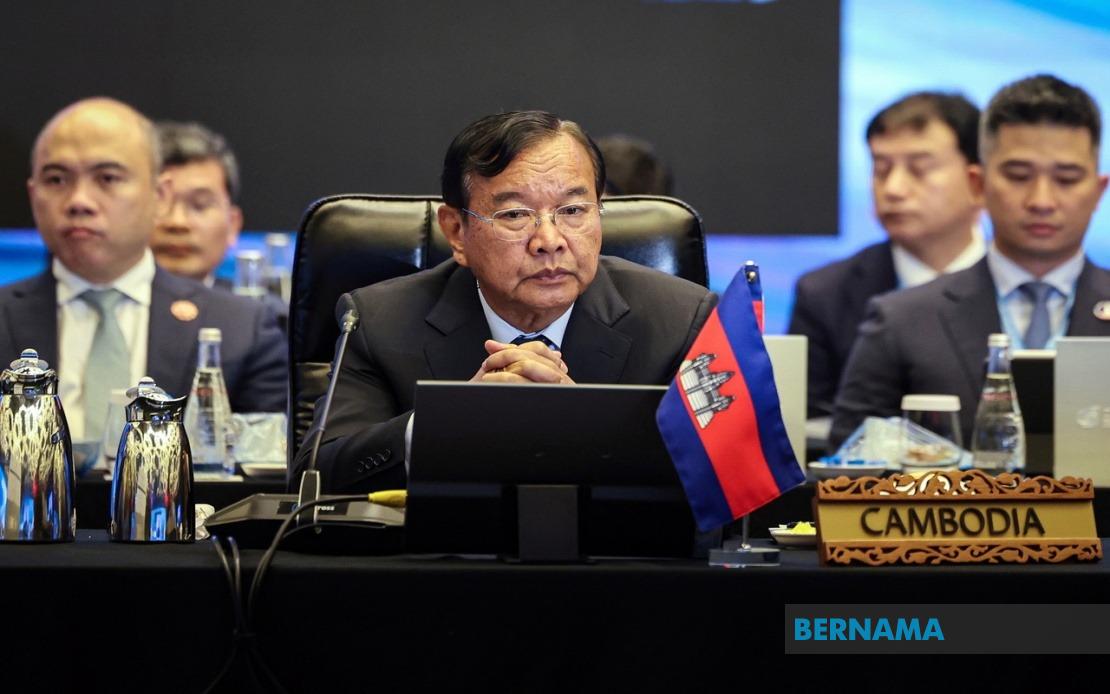
Cambodian Foreign Affairs and International Cooperation Minister Prak Sokhonn has reinforced ASEAN's importance as the foundational mechanism for preserving peace and stability across Southeast Asia, even as the region confronts an increasingly turbulent international landscape. Speaking in an official message on Friday marking the bloc's 59th anniversary, Sokhonn stressed that ASEAN's Charter and the Treaty of Amity and Cooperation remain the bedrock principles guiding the organisation's work, particularly at a moment when global tensions threaten regional cohesion.
Over the nearly six decades since its establishment on August 8, 1967, ASEAN has accomplished a remarkable transformation of the Southeast Asian political landscape. The minister highlighted how the ten founding nations and subsequent members have collectively steered the region away from the division and unpredictability that once characterised it, instead cultivating an environment increasingly centred on dialogue, mutual cooperation, and the pursuit of shared economic advancement. This evolution represents one of the region's most significant diplomatic achievements, fundamentally reshaping how ten distinct nations with competing interests coexist and collaborate.
Yet the geopolitical context in which ASEAN operates has shifted dramatically in recent years, creating fresh challenges to the stability the bloc has worked to establish. Sokhonn acknowledged that Southeast Asia now faces a significantly more volatile global environment, marked by the resurgence of armed conflicts in various parts of the world, escalating tensions between major powers competing for regional influence, and a broader erosion of the international rules-based order that underpins multilateral cooperation. These external pressures have profound implications for ASEAN member states, which must balance their individual national interests with their collective commitment to regional harmony.
The Cambodian minister's remarks carry particular significance given the current geopolitical dynamics in the Indo-Pacific region. Major power competition, particularly between established and rising powers, increasingly intersects with ASEAN's strategic space. The bloc's ability to maintain consensus, navigate competing external pressures, and preserve its institutional integrity has become more difficult as member states face divergent pulls from larger players seeking regional alignment. Sokhonn's emphasis on ASEAN's unity reflects widespread concern among regional leaders that fragmentation could undermine the organisation's effectiveness.
Crucially, Sokhonn argued that ASEAN cannot adopt a passive stance in response to these mounting pressures. Rather than simply reacting to external developments and adjusting policies reactively, he contended that the bloc must assume a more assertive role in actively shaping the trajectory of regional and, increasingly, global affairs. This framing suggests that ASEAN should leverage its collective voice and strategic position to influence outcomes rather than merely absorb the consequences of decisions made elsewhere. For a grouping of smaller to medium-sized nations, this represents a strategic ambition that requires unprecedented coordination and cohesion.
The minister emphasised that ASEAN's centrality and unity are essential prerequisites for successfully navigating the current geopolitical environment. The concept of ASEAN centrality—the idea that the bloc should remain the primary driver of regional architecture and dialogue—has been a defining principle of the organisation's strategy, particularly enshrined in frameworks such as the ASEAN Regional Forum and the East Asia Summit. However, maintaining this centrality amid competing strategic interests requires constant reinforcement and demonstrated added value.
Sokhonn, who also holds the rank of deputy prime minister, reaffirmed Cambodia's particular commitment to strengthening the association's institutional robustness and its relevance on the global stage. Cambodia's perspective on ASEAN unity carries weight, given that the kingdom joined the bloc in 1999, initially as a transitional member before achieving full membership. Since then, Cambodia has participated in the organisation's evolution and faced its own diplomatic challenges in balancing relationships with various powers. The country's advocacy for ASEAN cohesion reflects broader Southeast Asian concerns about maintaining autonomy in an increasingly multipolar world.
The minister explicitly committed Cambodia to upholding both the ASEAN Charter and the Treaty of Amity and Cooperation not merely as formal obligations but as living principles guiding practical policy. The TAC, signed in 1976, established fundamental norms of mutual respect for sovereignty, non-interference in internal affairs, peaceful settlement of disputes, and regional cooperation—principles that remain contested in contemporary geopolitical practice. Sokhonn's emphasis on strict adherence underscores concern that these foundational commitments are being tested by external pressures and occasional member state behaviour.
ASEAN's composition has expanded since its 1967 founding to encompass eleven member states, including Brunei, Cambodia, Indonesia, Laos, Malaysia, Myanmar, the Philippines, Singapore, Thailand, Vietnam, and Timor-Leste. This diverse membership encompasses widely varying political systems, economic development levels, and strategic orientations, making consensus-building inherently challenging. The bloc's decision-making framework, which emphasises consultation and consensus rather than majority voting, reflects the priority placed on maintaining unity despite these differences.
The challenge facing ASEAN in the coming years involves sustaining the delicate balance that has enabled regional cooperation while responding to external pressures that test member states' commitment to collective principles. Myanmar's domestic political upheaval, ongoing tensions in the South China Sea, and broader strategic competition have already strained ASEAN's consensus mechanisms. Sokhonn's message reflects recognition that the organisation's continued relevance depends on demonstrating that it can address contemporary challenges while remaining true to its founding principles of non-alignment and equidistance from major power competition.
For Malaysia and other Southeast Asian nations, ASEAN's institutional health directly affects their strategic options and security calculus. A strong, unified ASEAN provides a framework through which smaller nations can exercise influence disproportionate to their individual size, while a fragmented organisation leaves member states vulnerable to bilateral pressure and great power rivalry. The Cambodian minister's emphasis on proactive rather than passive engagement suggests that ASEAN members recognise the necessity of renewed institutional commitment even as external circumstances grow more challenging.
As ASEAN marks its 59th anniversary, Sokhonn's remarks signal that the bloc's leadership remains committed to its foundational mission of preserving regional peace and facilitating cooperation. However, the gap between these stated aspirations and the practical capacity to deliver consensus on contentious issues continues to widen. The coming period will test whether ASEAN can reinvigorate its mechanisms and demonstrate sufficient unity to shape regional outcomes or whether it will increasingly become a forum where external powers contest their interests rather than a platform through which Southeast Asia projects collective agency.

