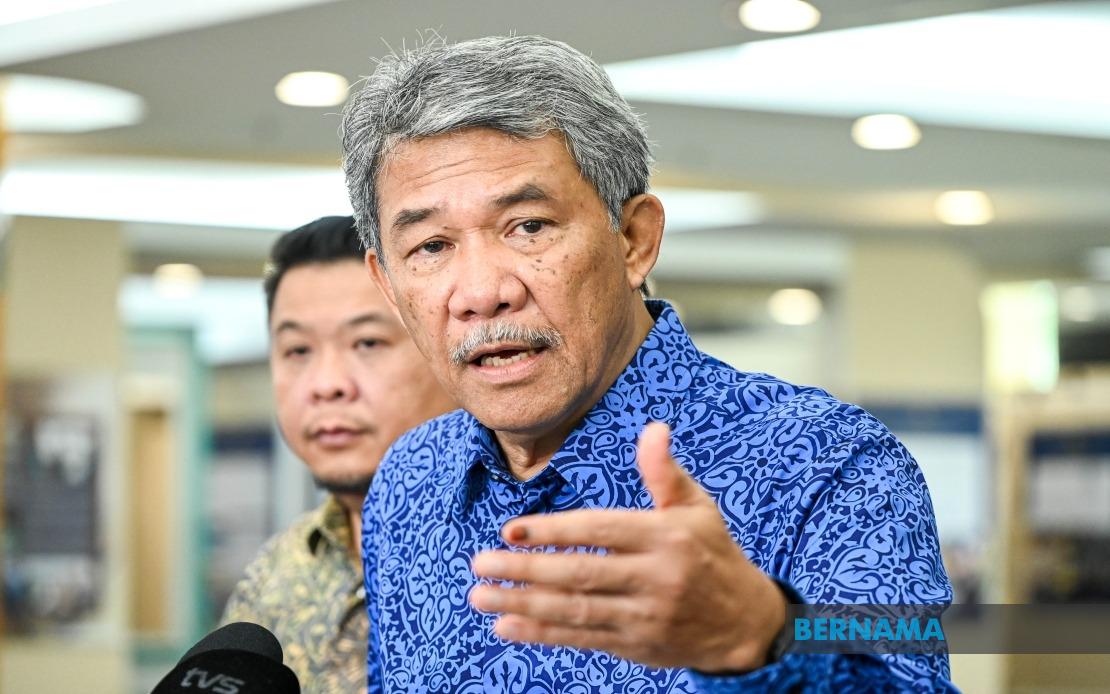
The ASEAN region faces a critical juncture in its economic development, with senior officials now emphasizing that the 10-nation bloc cannot unlock its full potential as a major global economic power unless member states substantially increase their mutual trade relationships. Foreign Minister Datuk Seri Mohamad Hasan articulated this challenge during remarks at the 59th ASEAN Day commemoration in Putrajaya on Monday, signalling that the association has fundamentally shifted its strategic priorities away from purely political considerations toward cementing its position as a heavyweight economic actor on the world stage.
The mathematics underlying ASEAN's economic ambitions are straightforward yet daunting. With intra-ASEAN trade currently representing less than 25 percent of the bloc's overall commercial activity, there exists substantial headroom for growth that remains largely untapped. This relatively low intra-regional trade dependency suggests that member countries continue to rely disproportionately on external markets for their prosperity, leaving the association fragmented and vulnerable to external economic shocks. The aspirational target of achieving fourth-largest economy status globally by 2030 depends fundamentally on tightening economic linkages among the ten member states, a transition that requires sustained commitment and coordinated policy implementation across the region.
Mohamad's remarks underscore a strategic reorientation within ASEAN's institutional thinking, reflecting recognition that political stability and diplomatic coordination alone cannot sustain the association's long-term influence and prosperity. The regional bloc has historically prioritized conflict avoidance and political consensus-building through mechanisms like the ASEAN Regional Forum and the East Asia Summit. However, the contemporary agenda increasingly emphasizes how member nations can leverage their combined economic weight through deeper integration, recognizing that economic interdependence creates powerful incentives for maintaining peace and cooperation while generating tangible benefits for their populations.
The mechanisms already established within the ASEAN framework provide a foundation upon which expanded trade can be constructed. The free movement of goods among member states represents a cornerstone policy designed specifically to reduce tariff barriers, simplify customs procedures, and eliminate non-tariff obstacles that historically impeded seamless commercial exchange. Yet the persistence of intra-regional trade below the 25 percent threshold suggests these frameworks, while valuable, have not yet catalyzed the transformation needed to fundamentally reorient production networks and supply chains within Southeast Asia toward greater regional orientation.
Malaysia's tenure as ASEAN chair during the previous year generated several important initiatives and resolutions that established the architecture for advancing this economic agenda. The Kuala Lumpur Declaration emerged as a particularly significant outcome, embodying commitments that transcended Malaysia's chairmanship and created obligations for successor administrations to maintain momentum. This year, the Philippines has assumed the chairmanship and inherited responsibility for advancing these proposals, demonstrating how ASEAN's rotating leadership structure can either reinforce or undermine the continuity necessary for implementing long-term regional strategies.
The Philippines' commitment to carrying forward Malaysia's economic proposals reflects an important principle within ASEAN governance: that member states recognize the collective interest in pursuing regional economic integration despite the fact that individual nations might benefit from alternative arrangements. This demonstrates institutional maturity, as ASEAN chair states might theoretically prioritize bilateral relationships or pursue narrower national advantages rather than maintaining fidelity to regional commitments established by predecessors. The willingness to sustain these initiatives across different leaderships suggests genuine conviction regarding the transformative potential of deeper intra-ASEAN economic integration.
Malaysia's designation as the Permanent Shepherd or Permanent Auditor of the ASEAN Community 2045 framework represents a concrete institutional mechanism for maintaining focus on long-term economic objectives. This role carries particular significance as it creates ongoing responsibility for monitoring progress toward the ambitious targets embedded within the 2045 vision, ensuring that the fundamental objective of strengthening intra-ASEAN trade remains central to the association's work across multiple administrative cycles. The Permanent Shepherd concept provides an institutional anchor preventing the drift that might otherwise occur as attention shifts toward immediate diplomatic crises or short-term political cycles.
For Malaysian readers and policymakers, this regional agenda carries substantial implications for domestic economic strategy. Malaysia's position as a relatively developed ASEAN economy provides opportunities to serve as a catalyst for deeper integration, whether through facilitating regional supply chains, hosting intra-ASEAN investment, or championing regulatory harmonization that reduces friction in internal commerce. The success of the broader regional agenda depends significantly on whether advanced ASEAN economies like Malaysia demonstrate tangible commitment to integrating more deeply with less-developed neighbors, potentially requiring some sacrifice of short-term competitive advantages for longer-term systemic benefits.
The challenge of expanding intra-ASEAN trade beyond 25 percent reflects structural realities that transcend simple policy intervention. Member states possess varying levels of development, complementary industries remain underdeveloped in certain sectors, and historical patterns of trade orientation toward extraregional partners remain deeply embedded in corporate structures and supply chain relationships. Transforming these patterns requires not merely removing tariffs but rather fostering the business networks, transportation infrastructure, financial mechanisms, and regulatory harmonization necessary to make internal trade genuinely competitive relative to external alternatives.
The timing of this emphasis on economic integration aligns with growing geopolitical competition for Southeast Asian influence and economic access. As major powers vie for position within the region, ASEAN's capacity to present itself as an integrated economic bloc with internal dynamics that generate mutual prosperity provides leverage in broader negotiations. A more economically cohesive ASEAN becomes more valuable to external partners and less susceptible to bilateral pressure that might exploit divisions among member states pursuing divergent economic relationships with extraregional powers.
Moving forward, the association faces a demanding agenda requiring both macro-level commitment from political leadership and micro-level implementation by government agencies and private sector actors. The gap between ambitious rhetorical targets and on-the-ground reality remains substantial, with persistent barriers to cross-border investment, labor mobility restrictions, and regulatory divergence continuing to limit the effectiveness of formal trade agreements. Closing this gap demands sustained political will across administrations and genuine resource commitment to facilitating the transformation required for intra-ASEAN trade to reach the levels necessary for realizing the region's economic potential.

