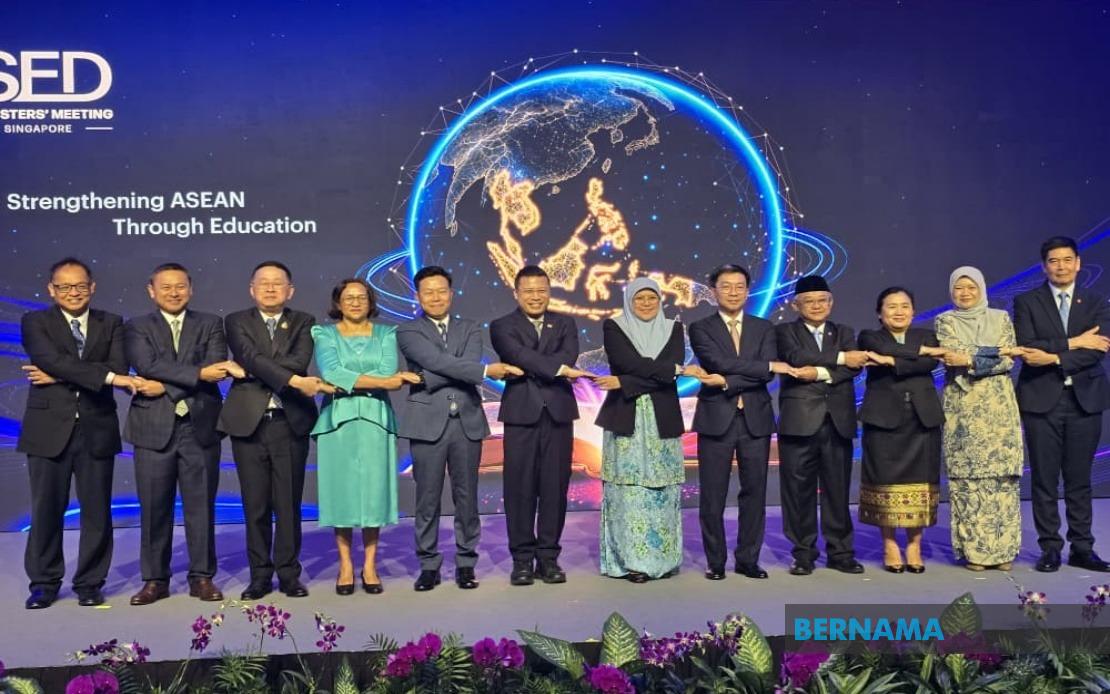
The Association of Southeast Asian Nations has formally adopted an ambitious education roadmap spanning 2026 to 2030, establishing unified regional priorities aimed at transforming how member states approach teaching and learning. Unveiled during the 14th ASEAN Education Ministers Meeting in Singapore on Wednesday, the framework commits all ten member nations to developing education systems that are simultaneously inclusive, comprehensive and capable of driving meaningful social and economic change across the region.
The strategic blueprint represents a critical juncture for ASEAN education policy. Rather than allowing individual nations to pursue isolated reform agendas, the plan establishes collective objectives centred on cultivating individuals who possess both intellectual depth and practical resilience, while simultaneously building a workforce equipped with advanced technical capabilities to compete in global markets. This dual emphasis reflects recognition within ASEAN leadership that educational outcomes must serve both human development and economic imperatives, particularly as regional economies undergo rapid technological transformation.
Singapore's Education Minister Desmond Lee emphasised that the work plan constitutes a practical response to accelerating global and technological change. He highlighted that ASEAN education systems must evolve proactively rather than reactively, ensuring they remain aligned with emerging labour market demands and societal needs. The framework also incorporates recognition that education serves a deeper purpose in strengthening ASEAN identity and fostering shared values among the region's young people, positioning education as instrumental to deepening regional cohesion and mutual understanding.
Three priority areas have been identified as the pillars around which member states will structure their implementation efforts. Artificial intelligence in education represents the first focus, reflecting widespread acknowledgement across ASEAN that AI literacy and integration will fundamentally reshape pedagogy, assessment, and educational administration within the coming decade. Rather than viewing AI as a threat to traditional education, ASEAN ministers have positioned thoughtful AI adoption as essential to ensuring their students develop capabilities necessary for future employment and innovation.
Science, Technology, Engineering and Mathematics education constitutes the second pillar. This emphasis responds to persistent skills gaps across ASEAN economies, where demand for STEM professionals substantially outpaces supply in many sectors. By elevating STEM as a regional priority, ASEAN governments signal commitment to addressing talent shortages that currently constrain technological advancement and economic competitiveness, particularly in emerging fields such as renewable energy, biotechnology, and advanced manufacturing.
Holistic development of students represents the third strategic focus area. This component acknowledges that education encompasses far more than academic knowledge transmission, encompassing character formation, citizenship development, mental health, and social-emotional learning. The inclusion of this dimension reflects understanding within ASEAN that educational success must be measured by graduates' overall preparedness for meaningful life participation, not merely their mastery of content knowledge.
The work plan explicitly prioritises ensuring equitable access to quality education across all ASEAN member states. This commitment carries particular significance given substantial variation in educational infrastructure, resources, and outcomes within the region. For Malaysia and other developing ASEAN economies, equity considerations address ongoing challenges in providing comparable educational opportunities across urban and rural communities, among different socioeconomic groups, and for marginalised populations including persons with disabilities.
Student well-being has been established as a cross-cutting priority throughout the framework's implementation. This reflects growing regional recognition of mental health challenges, academic stress, and social pressures affecting ASEAN youth. By explicitly foregrounding well-being within the five-year plan, member states commit to creating learning environments that support holistic student flourishing rather than narrow academic achievement at psychological cost.
Under Singapore's 2026-2027 chairmanship of the ASEAN Education Sector, the Singapore Centre for Character and Citizenship Education will establish a regional research network dedicated to advancing shared approaches to values education. This initiative provides concrete institutional mechanism for translating abstract commitments into practical collaborative work. The network will enable ASEAN member states to systematically examine how values education is conceptualised, designed, and embedded within national curricula, identifying commonalities and generating evidence-based insights that can inform implementation improvements across the region.
The meeting's attendance by Malaysian Education Minister Fadhlina Sidek alongside deputy leadership from the ASEAN Secretariat's socio-cultural division underscores Malaysia's stake in shaping and implementing the emerging framework. As a significant ASEAN economy with substantial educational infrastructure and expertise, Malaysia's participation is critical both to ensuring the work plan reflects diverse member state contexts and to facilitating practical implementation across the region's varied educational landscapes.
Implementing this comprehensive agenda will require substantial coordination across ASEAN's education systems, which operate under different governance structures, funding models, and policy frameworks. The five-year timeline allows sufficient duration for meaningful progress while maintaining urgency around technological change and workforce demands. Success will depend partly on whether ASEAN governments allocate adequate resources to priority areas, particularly STEM and AI integration, which typically require significant investment in teacher training, curriculum development, and infrastructure.
The work plan also carries implications for regional higher education and skills development systems. By establishing unified educational priorities, ASEAN member states create framework conditions facilitating student and academic mobility, curriculum alignment, and cross-border collaboration in educational research and innovation. These developments could gradually strengthen ASEAN's capacity for knowledge-driven economic integration and human capital development.
For Malaysian policymakers and educators, the framework provides both opportunities and expectations. Alignment with ASEAN priorities in AI education, STEM, and holistic development offers potential access to shared research networks, best practice documentation, and collaborative initiatives. Simultaneously, the commitments embodied in the work plan establish benchmarks against which Malaysia's education system performance will be evaluated within regional contexts, creating incentives for continued reform and investment in educational quality and innovation.

