As Argentina prepares to face England in a high-stakes World Cup semi-final on Wednesday in Atlanta, the country's war veterans have stepped forward with an unusual plea: keep the politics of territorial dispute separate from the passion of international football. The April 2 War Veterans Federation, representing those who fought in the 1982 conflict over the South Atlantic islands, issued a statement Monday urging fans and the broader public to celebrate their team without weaponizing the match as a platform for sovereignty claims over what Argentines call the Malvinas and the British know as the Falklands.
The 1982 war between Argentina and Britain over these remote islands left deep scars on both nations. The conflict claimed 649 Argentine lives and 255 British combatants, making it a defining moment in recent Argentine history. For decades, the dispute has remained unresolved, with Britain maintaining military control and Argentina continuing to press its claim through diplomatic channels and international bodies, particularly the United Nations. The territorial question remains constitutionally enshrined in Argentina's national framework, representing a long-standing point of national identity and pride.
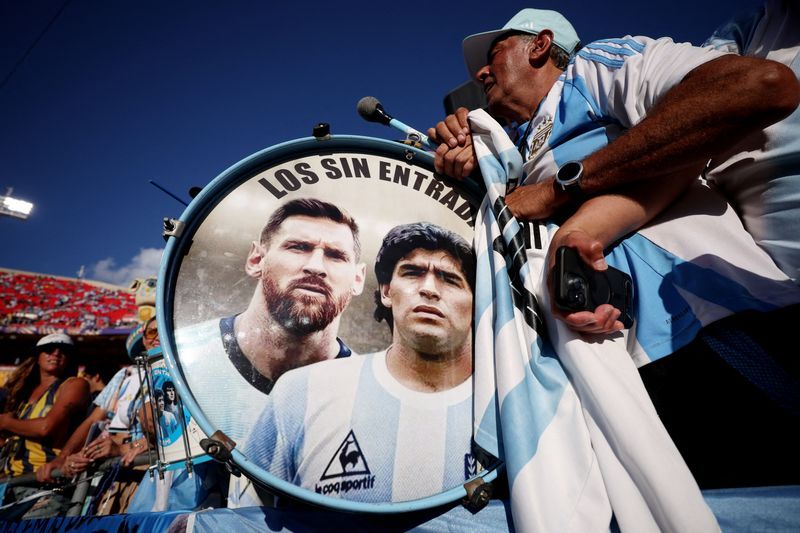
Yet the veterans' federation recognizes a fundamental tension: sporting contests, especially at the World Cup level, can easily become vessels for nationalist sentiment and historical grievance. During this tournament, Argentine supporters and players have incorporated chants referencing both the islands and football legends Diego Maradona and Lionel Messi's quest for a second World Cup title before retirement. The federation's message carries particular weight because these veterans represent the human cost of conflict and understand intimately how patriotic fervor can escalate beyond rational bounds.
In their statement, the federation articulated a careful distinction between national pride and sporting rivalry. "Sovereignty is defended in international forums through diplomacy, historical truth and the peaceful, non-negotiable claim enshrined in our national constitution," they declared, emphasizing that the football pitch is neither the appropriate venue nor the effective mechanism for advancing territorial claims. They urged supporters to "draw a clear and unwavering line between sporting passion and the national cause," recognizing that emotion and competition, while legitimate in football, should not overshadow the memory of those lost to war.
The veterans' appeal reflects growing international concern about the politicization of sports. In an era when global conflicts frequently intersect with popular culture and entertainment, sporting events serve as flashpoints where national resentments can crystallize. The Argentina-England rivalry carries particular historical weight given their World Cup encounters, most famously the 1986 quarter-final when Diego Maradona scored the controversial "Hand of God" goal. That match exists in collective memory as both sporting drama and political statement, a template for how football can become entangled with national trauma.
Both playing squads have worked to de-escalate tensions surrounding the match. Argentina's manager Lionel Scaloni has repeatedly stated that only football will determine the outcome on Wednesday, with nothing beyond sporting glory at stake. England goalkeeper Jordan Pickford reinforced this position Monday, telling reporters that the semi-final was "just a game of football" between "two proud nations" where "the football will do its talking." These statements represent a deliberate effort by both teams to contain the match within its proper context, preventing diplomatic wounds from reopening through the prism of sport.
For Southeast Asian readers, this dynamic offers instructive parallels to regional tensions that occasionally surface in sporting contexts. Many nations across Asia navigate complex historical grievances and territorial disputes while simultaneously competing in regional football tournaments and other international sporting events. The Argentina-England case demonstrates how mature nations can pursue legitimate political claims through proper channels—diplomacy, international law, constitutional processes—while maintaining civilized sporting competition.
The veterans' emphasis on diplomatic channels and international forums as the appropriate venues for sovereignty disputes underscores a principle increasingly important in global affairs: separating the emotional release of sport from the serious business of statecraft. Argentina's claim to the Malvinas remains valid in its own terms and continues through the United Nations and other diplomatic mechanisms. Simultaneously, Argentine fans can support their team without requiring that match to serve as a proxy battlefield for unresolved historical disputes.
This Wednesday's encounter will be decided by talent, tactics, and determination on the pitch—the legitimate currency of international football. The veterans' federation's appeal essentially asks supporters to trust that their national pride, their historical memory, and their territorial aspirations are robust enough to survive a sporting contest decided on footballing merits alone. In doing so, they model a form of patriotism that distinguishes between justifiable national causes and the appropriate venues for their pursuit, suggesting that some of football's greatest power lies precisely in its ability to unite rather than divide along historical fault lines.

