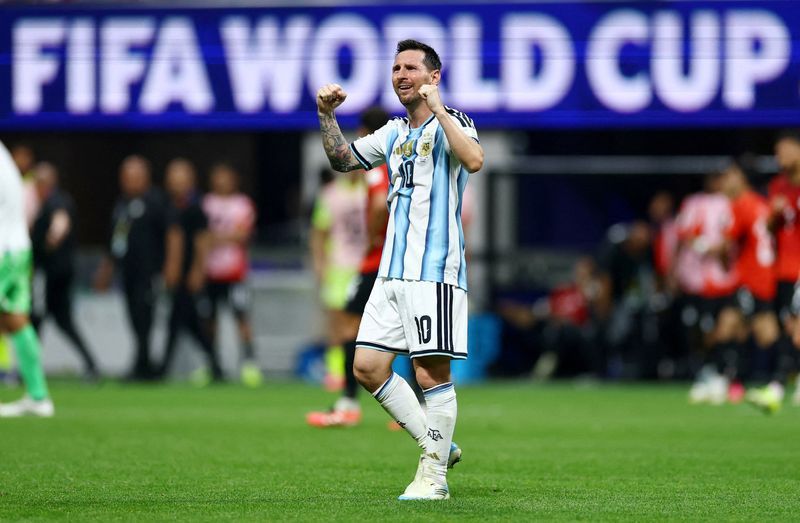
Argentina's journey through the knockout rounds has unfolded in starkly different fashion from their commanding group-stage performance, yet the defending champions remain in contention for successive tournament titles. After advancing from their opening matches with near-flawless execution and minimal resistance, Lionel Scaloni's squad has been forced to demonstrate an entirely different set of qualities—resilience, determination, and an unwillingness to surrender when circumstances turn unfavourable. The path to Saturday's quarter-final clash with Switzerland in Kansas City has been anything but smooth, but the mental fortitude displayed in crucial moments may ultimately prove more valuable than any perfect record.
The most striking example of Argentina's newfound grit came during Tuesday's encounter with Egypt in Atlanta, when the defending champions found themselves trailing 2-0 with just eleven minutes of regular time remaining. What could have become a humiliating early exit instead transformed into a stunning demonstration of character. Lionel Messi orchestrated a remarkable turnaround, pulling his team level and then forcing the match into extra time, where Argentina secured a 3-2 victory that keeps their title defence alive. The improbability of the situation—that the tournament favourites would require such dramatic intervention against opponents they were expected to dispatch comfortably—underscores just how demanding knockout football has proven for the South American representatives.
The contrast with their group-stage dominance cannot be overstated. Argentina swept through their initial matches against Algeria, Austria, and Jordan with the kind of clinical efficiency expected of tournament contenders, establishing themselves as formidable favourites. Yet the knockout format has exposed gaps in their defensive organisation and consistency that were masked during those comfortable victories. Against Cape Verde, they required extra time to prevail, suggesting that the transition from group play to single-elimination football has presented unforeseen tactical challenges. Even Scaloni's decision to rotate his starting lineup against Jordan, resting key personnel, meant that Argentina's vaunted defence conceded fewer goals in three group matches than they have in two knockout encounters.
Carlos Tevez, the former striker who achieved tremendous success during Argentina's golden era, provided astute analysis in the immediate aftermath of the Egypt victory. Rather than dwelling on the defensive vulnerabilities that allowed such a precarious position to develop, Tevez highlighted the emotional strength and psychological resilience that enabled the comeback. He pointed to the collective determination and refusal to accept defeat as the true measure of this squad's character. Such intangible qualities often prove decisive in tournament football, where momentum and belief can shift dramatically in moments. In this regard, Argentina's players have repeatedly voiced their commitment to fighting until the final whistle, regardless of circumstances.
Messi himself encapsulated this mentality in his post-match remarks, noting that the World Cup inevitably presents gruelling tests in successive rounds and that his team's unwavering commitment distinguished them from opponents who might have capitulated. His statement carried particular weight given his experience across multiple tournaments and his role as the emotional fulcrum of the Argentine squad. Midfielder Leandro Paredes reinforced this message, emphasising that despite conceding two goals, the players never experienced a sense of hopelessness or resignation. The psychological investment in maintaining hope and continuing to create chances separated Argentina from a potential exit. Such collective mindset, when translated into actual performance during crucial moments, can prove more influential than technical superiority.
Scaloni's tactical assessment of the Egypt match revealed nuance in how he evaluated his team's overall display. While acknowledging the profound difficulties Argentina faced, the coach noted that his team actually generated numerous opportunities in the opening half, including a penalty that Messi ultimately missed. This perspective suggests that Argentina's problems stemmed less from fundamental tactical inadequacy and more from execution and perhaps individual concentration lapses at crucial moments. The missed penalty particularly stands out as a moment where fortune did not favour the defending champions, yet they recovered to capitalise on subsequent opportunities. This capacity to overcome adverse moments—missing penalties, conceding early goals—represents the experience and composure expected of tournament contenders.
The vulnerability exposed across the two knockout matches demands consideration as Argentina prepare for their quarter-final encounter. Four goals conceded in two games represents a dramatic deterioration from their defensive record during the group stage, suggesting that either individual positioning lapses or systemic organisational issues require address. Whether Scaloni makes tactical adjustments to tighten his defensive structure, or whether the difficulties emerge from the intensity and precision demanded by knockout football rather than any fundamental flaw, remains to be seen. Teams that advance deepest in tournament competitions often refine their approaches through adversity, learning lessons that prove invaluable in subsequent rounds.
Switzerland presents a fundamentally different challenge from the opponents Argentina has encountered thus far. The European nation brings tournament pedigree, extensive experience in knockout competitions, and players accustomed to functioning under maximum pressure. Scaloni explicitly acknowledged these strengths, describing Switzerland as possessing outstanding technical quality and an incredible tradition in World Cup football. The match will represent a genuine test of whether Argentina can synthesise the attacking prowess that won them group-stage matches with the defensive solidity required to withstand sustained pressure from an organised, professional opponent. Switzerland's defensive structure and discipline historically present difficulties for teams relying heavily on individual brilliance and attacking flair.
Argentina's training schedule in Kansas City on Wednesday evening will provide Scaloni with an opportunity to address both physical fatigue and tactical concerns ahead of Saturday's encounter. The intensity of knockout football, particularly matches requiring extra time, leaves players physically drained and mentally exhausted. However, the psychological lift from an extraordinary comeback victory may provide compensatory benefits, as confidence and momentum represent genuine advantages in tournament competition. Whether Argentina can maintain their current trajectory or whether the physical and emotional toll of recent matches begins to manifest as deteriorating performance remains an open question that will only be answered on the pitch.
The broader narrative surrounding Argentina's tournament has fundamentally shifted from inevitable champions to resilient underdogs who refuse to accept elimination despite facing legitimate threats. This transformation, while perhaps concerning for Argentine fans accustomed to their team's dominance, may ultimately prove beneficial if it hardens the squad mentally and forces tactical refinement. Tournament history frequently demonstrates that teams that endure early struggles, overcome adversity, and demonstrate collective resolve often peak precisely when it matters most. Argentina's path to a potential second successive title, should they achieve it, will carry far greater credibility than had they simply overwhelmed each opponent in succession.

