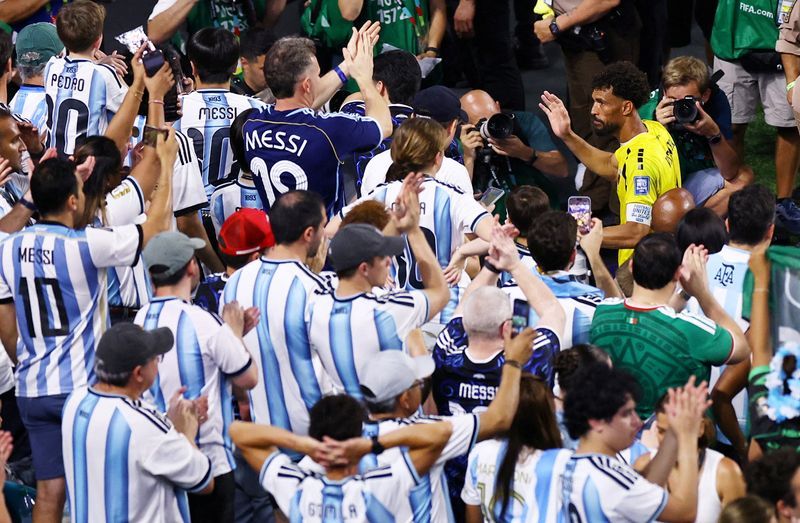
Argentina's passage to the World Cup knockout stages came at a higher cost than their group-stage dominance suggested it would, as the South American powerhouse required extra time to overcome Cape Verde in Kansas City. The 3-2 scoreline represents a significant reality check for the tournament's defending champions, who had swept through their opening matches with seemingly effortless superiority before being dragged into an unexpectedly competitive battle against tournament newcomers.
The narrative of the contest itself—where Cape Verde staged two comebacks before Cristian Romero's header finally broke the deadlock—underscores a troubling pattern that extends beyond this single match. Argentina's group-stage campaign, though productive in terms of results, featured opponents whose competitive standing was substantially below what the regional powerhouse would typically expect to face at this level. Victories over Algeria, Austria, and Jordan, whilst convincing in scoreline, offered limited opportunity for the team to test its systems against genuinely pressing challenges, a gap that became immediately apparent when facing an opponent willing to press aggressively and expose organisational weaknesses.
Coach Lionel Scaloni had publicly predicted that Cape Verde would prove troublesome, citing their earlier draws with Spain and Uruguay in group play, yet this prescience failed to translate into tactical preparation sufficient to prevent the struggles that unfolded. The warning signals had existed, yet the team seemed unprepared for the specific demands of facing an opponent that refused to be overwhelmed by reputation alone. This disconnect between expectation and execution has become the defining concern heading into Tuesday's round-of-16 encounter against Egypt in Atlanta.
The underlying defensive fragility exposed during the Cape Verde match has broader implications for Argentine prospects in the tournament. Their inability to press effectively in midfield, compounded by tactical spacing that left channels vulnerable, suggests vulnerabilities that more established opponents will identify and exploit. Messi himself acknowledged the physical and tactical toll, describing how Argentina's lines became too dispersed and permitted Cape Verde excessive possession. For Southeast Asian observers, this represents a cautionary narrative about the dangers of complacency and the importance of maintaining intensity regardless of apparent competitive imbalance—lessons relevant across all competitive contexts in regional football.
The contributions from defenders recovering from serious injury—Lisandro Martinez following an anterior cruciate ligament injury and Cristian Romero emerging from knee concerns—carried symbolic weight in Argentina's eventual progression. Martinez's goal, his return to the field after significant rehabilitation, represented more than statistical contribution; it embodied the resilience and determination that ultimately carried the team through. These recoveries within the tournament itself speak to medical staff capabilities and player mentality, factors that could prove decisive in later stages where fatigue and cumulative injury become increasingly relevant.
Romero's involvement in the match-winning moment, where his header was deflected past Cape Verde goalkeeper Diney Borges, underscored how sometimes tournament advancement relies upon fortune as much as footballing quality. The manner of the winning goal—requiring a fortunate deflection—crystallised the narrow margins separating progression from elimination at this competition level. For teams throughout Southeast Asia monitoring World Cup dynamics, this serves as evidence that even elite performers experience uncertain moments and cannot rely solely on technical superiority.
Marcelo Gallardo, a former World Cup player himself from 1998 and 2002, framed the Cape Verde encounter as potentially beneficial for Argentina's tournament trajectory. His assertion that the match would serve as a necessary warning—a moment prompting introspection and adjustment—reflects experienced perspective on how elite teams absorb difficult passages. The notion that adversity can catalyse improvement, though clichéd in sports discourse, carries particular weight when delivered by someone who navigated multiple World Cups at the highest level.
Scaloni's post-match commentary acknowledged room for improvement while emphasising his team's capacity to respond during difficult moments. The manager's refusal to dismiss the performance entirely, despite its unconvincing elements, reflects awareness that tournament football frequently demands pragmatism over aesthetic perfection. This philosophical approach—valuing progression and resilience over pristine displays—represents the mentality through which successful World Cup campaigns typically advance beyond group stages.
Messi's personal achievement in scoring his record 20th World Cup goal added individual accomplishment to the match narrative, though his subsequent tiredness and difficulty regaining possession high in the pitch suggested that even elite performers operate within physical constraints. For a 39-year-old captain, maintaining effectiveness across multiple matches demands careful management, a consideration that becomes increasingly pressing as the tournament deepens and opponents provide less opportunity for rest.
Argentina's preparation for the Egypt fixture will take place in Miami from Saturday onwards, providing limited recovery time between consecutive knockout matches. The transition from the intensity of Cape Verde's resistance to facing an opponent with fundamentally different characteristics and tactical approach requires swift analytical adjustment and renewed concentration. Egypt's contrasting style will present entirely different challenges from Cape Verde's pressing aggression, potentially allowing Argentina to reassert control through possession-based football where their technical superiority becomes more evident.
The broader context for regional observers involves recognising that even tournament favourites experience vulnerability and require defensive solidity regardless of opposition quality. Argentina's narrow escape should challenge assumptions about inevitable progression based on historical standing, reinforcing that World Cup football operates according to occasionally unpredictable logic. For Southeast Asian teams harbouring World Cup aspirations, whether immediate or longer-term, the lesson centres on consistency, focus, and the dangers of underestimating any opponent regardless of administrative status within world football.
Looking forward, Argentina must consolidate the lessons from their Cape Verde encounter while maintaining confidence derived from their group-stage dominance. The round of 16 against Egypt represents an opportunity to demonstrate that the previous performance constituted a momentary lapse rather than indicative of systematic weakness. How Argentina responds to adversity and whether they implement meaningful tactical adjustments will determine whether the Cape Verde match becomes merely a difficult passage overcome or, conversely, a warning signal of deeper vulnerabilities that stronger opponents can systematically expose.

