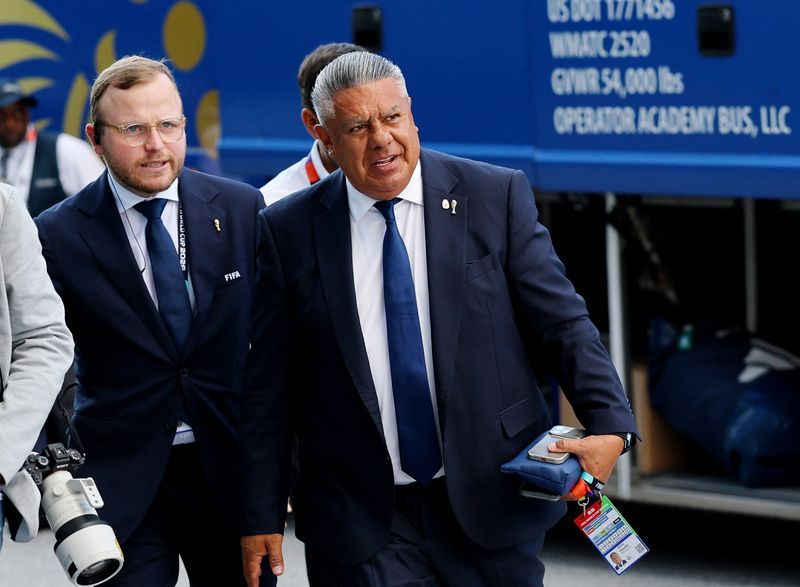
Argentina's football association moved swiftly to quash mounting speculation surrounding its leadership on Wednesday, issuing a categorical statement that its president Claudio Tapia and treasurer Pablo Toviggino have not been ordered to testify before American courts or had their electronic devices confiscated. The denial came amid a flurry of local media reports suggesting the pair had been detained by federal agents at New York's JFK Airport during the Argentina squad's departure following the World Cup final.
The circumstances surrounding the airport encounter remain murky. According to eyewitness accounts, federal agents questioned both Tapia and Toviggino for approximately half an hour aboard a bus positioned on the tarmac as the Argentine team prepared to depart. The questioning's content and purpose have not been disclosed by authorities on either side of the Atlantic. What is clear, however, is that the AFA's public stance—insisting neither official faced any legal obligation or property seizure—creates a widening gap between official statements and journalistic reporting that demands careful examination.
While categorically denying claims against its top officials, the football association acknowledged that a third party, whose identity it declined to reveal, has been summoned to appear before a United States grand jury. This person may be required to provide testimony regarding several individuals, including officials from the AFA itself. The distinction is significant: the association argues that any investigation into its affairs focuses on unnamed persons rather than the president or treasurer, despite their apparent involvement in discussions with American federal agents at the airport.
The investigation's scope extends considerably beyond the airport incident. According to the investigative outlet Infobae, United States authorities are examining commercial contracts linked to the AFA worth more than $300 million. This inquiry sits within a broader pattern of scrutiny directed at Argentine football's financial structures, intensified following raids conducted in December as part of a separate money-laundering investigation. The confluence of these inquiries suggests that American law enforcement and judicial authorities view Argentine football administration as warranting serious financial and possibly criminal attention.
The December raids represent a critical inflection point in this unfolding situation. Argentine authorities conducted those operations as part of their own money-laundering probe, indicating that concerns about the financial integrity of the country's football system are not exclusively foreign concerns. Domestic institutions have equally raised alarms about how money flows through football's administrative structures. This domestic dimension adds weight to the American investigation, suggesting potential international dimensions to alleged financial impropriety.
For Malaysian and broader Southeast Asian observers, this episode illuminates vulnerabilities in sports governance that extend across continents. Sports organisations worldwide, from football associations to Olympic committees, manage vast sums derived from broadcasting rights, sponsorships, and commercial partnerships. The scale of the sums under investigation—exceeding $300 million—demonstrates how sports administration can become a vector for financial crime if oversight mechanisms prove inadequate. Southeast Asian football administrators and sports ministry officials would be wise to examine whether similar risks exist within their own institutional frameworks.
The AFA's defensive posture also raises questions about transparency in international sports governance. When a major football federation finds itself under investigation by multiple jurisdictions simultaneously, the instinctive response to issue blanket denials while acknowledging minimal involvement of unnamed third parties risks eroding public confidence. Stakeholders including players, fans, sponsors, and partner organisations reasonably expect candour about investigations that could affect institutional legitimacy and financial stability.
Tapia's position as AFA president becomes increasingly precarious as these investigations advance. Even if he personally escapes legal consequences, the organisation's credibility suffers under the weight of simultaneous inquiries in Argentina and the United States. How Argentine football's commercial relationships, particularly those worth hundreds of millions of dollars, came to warrant grand jury examination reflects poorly on internal controls and oversight. For a nation with football's deep cultural significance in Argentina, institutional integrity matters enormously.
The American investigation's focus on commercial contracts opens important questions about how international sports agreements are structured and monitored. If contracts worth $300 million connected to the AFA have attracted federal scrutiny, concerns likely centre on whether these arrangements represented genuine value for money, whether competitive bidding occurred, or whether funds were misappropriated or improperly diverted. These questions have direct parallels in Southeast Asian sports administration, where similar large commercial agreements sometimes proceed with limited public scrutiny.
Looking forward, the trajectory of these investigations will significantly influence Argentine football's international standing. FIFA, which oversees global football governance, maintains policies regarding member associations under investigation for financial impropriety. Extended American and Argentine inquiries could eventually trigger FIFA intervention, potentially affecting Argentina's participation in international competitions or the ability of AFA officials to hold office. Such consequences would be unprecedented for a nation that has hosted successful World Cups and produced some of the sport's greatest players.
The cat-and-mouse dynamic between the AFA's public statements and media reporting suggests this situation remains far from resolution. Whether additional information emerges from American grand jury proceedings, Argentine authorities, or investigative journalism will determine whether Tapia and Toviggino face further questioning or legal consequences. For now, the association's denial of direct culpability for its president and treasurer rings increasingly hollow against the backdrop of a third-party subpoena and documented federal agent interactions at an international airport.

