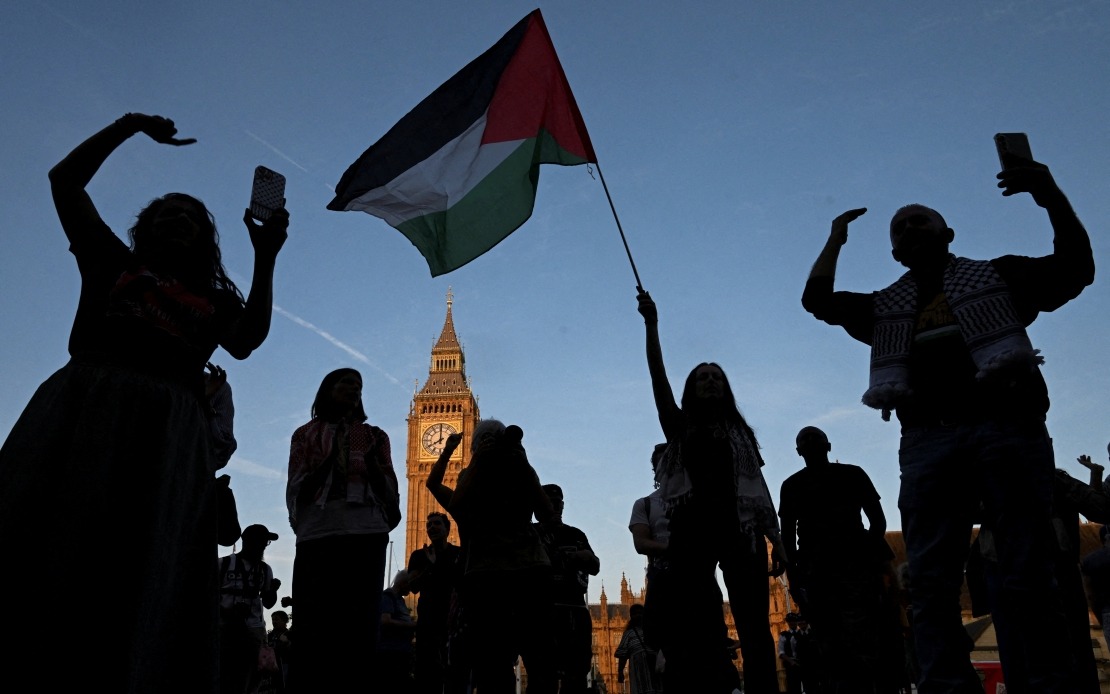
At his inaugural press conference as head of the Arab League, Secretary-General Nabil Fahmy placed the Palestinian question squarely at the centre of the organisation's mission, signalling that the 22-member bloc will maintain unwavering focus on what it regards as a foundational regional concern. Speaking at the General Secretariat headquarters in Cairo on Monday, Fahmy outlined a vision for Arab collective action that pivots on advancing Palestinian rights and confronting what he characterised as systemic violations across the occupied territories and beyond.
The new Arab League chief framed the Palestinian struggle not merely as a bilateral dispute but as a matter of civilisational identity and historical responsibility for the Arab world. He pledged sustained engagement in defending what the Arab League describes as the legitimate entitlements of the Palestinian people, whilst simultaneously working to bring an end to Israeli occupation. This framing reflects the traditional consensus within Arab capitals, even as diplomatic and security relationships across the region have undergone significant transformation over the past decade.
Fahmy placed particular emphasis on Jerusalem, describing the city as a flashpoint that demands constant vigilance against what he termed attempts to alter its status or diminish its Arab character. The emphasis on Jerusalem carries symbolic weight across the Arab world and resonates with longstanding positions adopted by Arab governments, though interpretations of how to defend these interests have increasingly diverged among member states. For regional observers, the choice to foreground Jerusalem in his opening remarks signals that the Arab League intends to maintain a traditional diplomatic posture on this historically contested issue.
The Arab League chief levelled severe accusations against Israel, characterising military operations in Gaza and the West Bank as constituting genocide—a legal and political designation with significant implications. Fahmy argued that such acts demand not only Arab solidarity but also concrete action proportionate to what he described as the historical weight of Arab responsibility. This language goes beyond routine criticism, reflecting rhetorical escalation that some Arab states have adopted whilst others have pursued more cautious diplomatic channels.
Crucially, Fahmy extended the Arab League's critique beyond the Palestinian territories, drawing attention to what he characterised as Israeli military aggression directed against Lebanon. He specifically cited ongoing attacks and incursions in Beirut and southern Lebanon as violations of Lebanese sovereignty and breaches of international law. This broader framing situates the Palestinian question within a wider context of regional security concerns and suggests the Arab League views Israeli actions as part of a pattern affecting multiple member states.
On the question of accountability, Fahmy invoked the principle that genocide carries no statute of limitations, implying that those responsible for such acts today will ultimately face justice. This statement reflects evolving Arab League positions on international legal mechanisms and the International Criminal Court, though the practical pathways for pursuing such accountability remain contested among member states and the broader international community. The position also suggests the Arab League may increasingly look toward legal and institutional remedies alongside traditional diplomatic channels.
Fahmy also reaffirmed Arab League opposition to Israeli control of the Golan Heights, which Syria has sought to recover since their capture in the 1967 war. He rejected any settlement imposed through military force, underscoring the Arab League's commitment to what it regards as internationally legitimate resolutions calling for Syrian sovereignty over the territory. This issue, whilst less prominent in recent media coverage than Palestinian concerns, remains a foundational Arab League position with particular significance for Syria's regional standing.
The Arab League secretary-general stressed that addressing the region's challenges requires action rooted in purely Arab decision-making and collective will. This emphasis on Arab autonomy carries implications for how the organisation might interact with external powers and reflects debates within the Arab world about the degree to which regional states should coordinate independently rather than through bilateral arrangements with international actors. Fahmy's language suggests an effort to revitalise the notion of Arab collective action at a time when some Arab states have pursued separate diplomatic and security relationships.
Fahmy characterised the current period as critically important for the Arab region, requiring vigilant and proactive engagement that safeguards Arab interests and regional capacities. This framing acknowledges the complexity of contemporary Middle Eastern geopolitics whilst attempting to galvanise member states around shared priorities. For Southeast Asian observers, particularly Malaysia with its significant Muslim population and active Arab League engagement, these statements underscore how the Palestinian question continues to mobilise Arab bloc politics and shape the organisation's strategic orientation.
The Arab League secretary-general's remarks suggest an effort to reinvigorate the organisation around core issues whilst navigating significant internal differences among member states regarding how best to pursue Arab interests. Some Arab governments have moved toward normalisation with Israel whilst maintaining rhetorical support for Palestinian rights, creating diplomatic complexity that the Arab League must manage. Fahmy's forceful language may reflect an attempt to project organisational unity on foundational questions even as practical implementation of Arab collective action remains constrained by divergent national interests and strategic calculations among member states.

