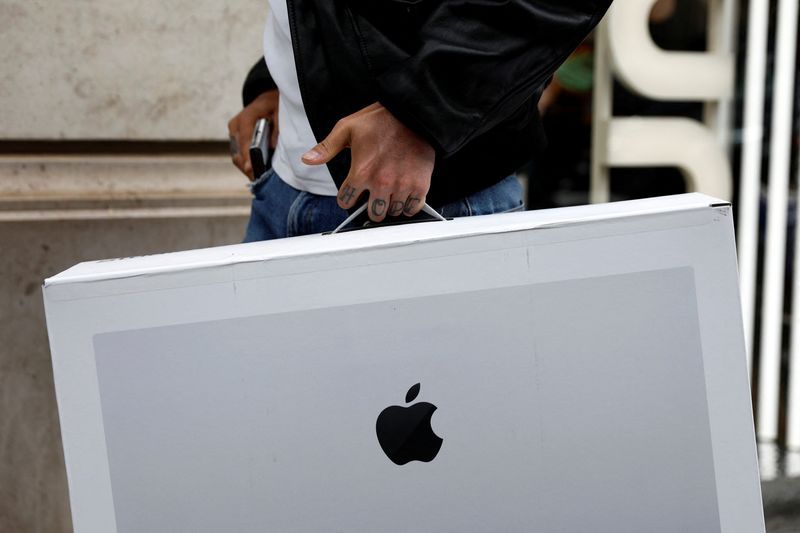
Apple has reclaimed the position of world's most valuable company on July 17, overtaking Nvidia with a market valuation of $4.88 trillion as global investors fundamentally reassess their artificial intelligence investment thesis. The shift represents more than a simple corporate ranking shuffle; it signals a maturing recognition that the benefits from the generative AI boom will flow beyond the semiconductor manufacturers that initially captured investor enthusiasm. Nvidia, which had commanded the top position for nearly a year and briefly became the first company to reach a $5 trillion valuation in October 2024, has slipped to second place with a valuation around $4.86 trillion following a 3.5 percent share price decline. For Apple, the achievement marks a return to supremacy absent since April of the previous year, a meaningful milestone that comes as the company undergoes significant leadership transition.
The competitive dynamics between these two technology titans reflect divergent strategies for capturing value from artificial intelligence expansion. Analysts at BRI Wealth Management observe that Apple's repositioning from perceived laggard to market leader demonstrates how investor perceptions have evolved regarding the optimal path to profiting from AI advancement. Rather than pursuing the capital-intensive development of proprietary large language models, Apple has positioned itself to extract monetary value through its established services ecosystem, the hardware upgrade cycle, and the inherent lock-in effects of its integrated product environment. This contrasts sharply with Nvidia's foundational exposure to capital expenditure intensity, whereby the company's fortunes remain tightly coupled to the ongoing infrastructure spending of hyperscale technology firms developing and deploying artificial intelligence systems.
Tim Cook, steering the company through what some observers consider a transitional phase ahead of his September departure, has overseen strategic moves intended to strengthen Apple's competitive positioning within artificial intelligence. The recent overhaul of Siri, delayed significantly from earlier announcements, represents the company's wager that meaningfully upgrading its virtual assistant could narrow the apparent gap separating Apple from competitors ranging from established technology giants to emerging artificial intelligence startups. The initiative underscores recognition within Cupertino that the assistant technology category has become strategically important for maintaining consumer relevance in an AI-augmented computing environment. Incoming leader John Ternus, whose background encompasses hardware engineering and manufacturing excellence, brings technical credentials potentially well-suited to navigating the intersection of artificial intelligence capabilities and physical device design.
Beyond the public-facing assistant, Apple potentially possesses structural advantages that remain largely unrealised. The personal data continuously generated across the global installed base of iPhones represents an extraordinarily valuable resource for enhancing artificial intelligence applications, particularly for personalised assistant functions. This information could meaningfully improve Siri's contextual understanding and recommendation capabilities, enabling the assistant to deliver responses and suggestions calibrated to individual user behaviour, preferences, and circumstances. However, Apple faces a genuine philosophical and commercial tension: the company has constructed its brand reputation substantially around privacy commitments and explicit resistance to invasive data exploitation practices. Extracting value from on-device personal data while maintaining the privacy narrative that differentiates Apple in the marketplace requires sophisticated technical architecture and transparent communication with consumers regarding data utilisation boundaries.
Nvidia's strategic position, despite the temporary loss of top ranking, retains substantial underpinnings that could support future dominance. The company's graphics processing units continue powering the infrastructure upon which the generative artificial intelligence ecosystem depends, from model training through inference operations at scale. Chipmakers occupy an economically privileged position within the artificial intelligence value chain; whether competitor companies succeed or fail in monetising artificial intelligence applications, infrastructure providers capturing the essential semiconductor components necessary for computational advancement will likely remain economically significant. Nvidia could potentially reclaim market leadership if investor sentiment shifts again, particularly if technology companies announce accelerated spending on large language model development and deployment infrastructure.
Apple's current elevated valuation also reflects certain vulnerabilities requiring acknowledgement. The company has responded to cost pressures through selective price increases across its product portfolio, a strategy that necessarily creates demand elasticity risks. Consumer purchasing behaviour for premium-priced electronics exhibits sensitivity to pricing levels, particularly during periods of macroeconomic uncertainty or when competitor alternatives offer meaningfully lower entry points. Any sustained decline in iPhone upgrade activity or weakness in services revenue growth could rapidly undermine Apple's valuation premium, potentially returning Nvidia to the leadership position.
The broader semiconductor industry landscape has also undergone meaningful transformation over the evaluation period. Memory chip manufacturers have emerged as unexpected beneficiaries of artificial intelligence infrastructure expansion, with Micron crossing the $1 trillion market capitalisation threshold in May as investors recognised the critical importance of memory architecture for supporting artificial intelligence computational requirements. South Korea's SK Hynix, listing on the Nasdaq earlier in July, added another significant competitor into the scramble for investor capital and attention. These emerging participants have the potential to fragment investor focus beyond the traditional concentration on the Magnificent Seven technology stocks that previously dominated portfolio positioning and sentiment analysis.
The semiconductor sector more broadly encountered headwinds during July as investor enthusiasm for the artificial intelligence trade entered a reassessment phase. The Philadelphia Semiconductor Exchange index experienced a sharp 19 percent decline from its all-time highs as participants questioned whether the current pace and sustainability of artificial intelligence capital deployment could justify existing valuation levels. Despite this substantial pullback, the broader semiconductor index maintains positive year-to-date performance, underscoring the structural support that artificial intelligence investments continue providing to the sector.
Benjamin Hall, representing alpha research perspectives at Segal Marco Advisors, emphasises that leadership rotations between Apple and Nvidia may not indicate fundamental changes in the long-term competitive positioning of either company. Nvidia will likely remain a major participant in whatever artificial intelligence infrastructure paradigm emerges, given the essential nature of the computational resources it provides. Similarly, the broader technology ecosystem will probably benefit from continued Apple participation, notwithstanding competitive pressures from alternative platforms. The leadership reshuffling instead reflects the maturation and diversification of artificial intelligence investment strategy across the global investment community, moving away from concentrated positions in obvious beneficiary companies toward more nuanced recognition of multiple pathways through which artificial intelligence generates economic value across the technology sector.

