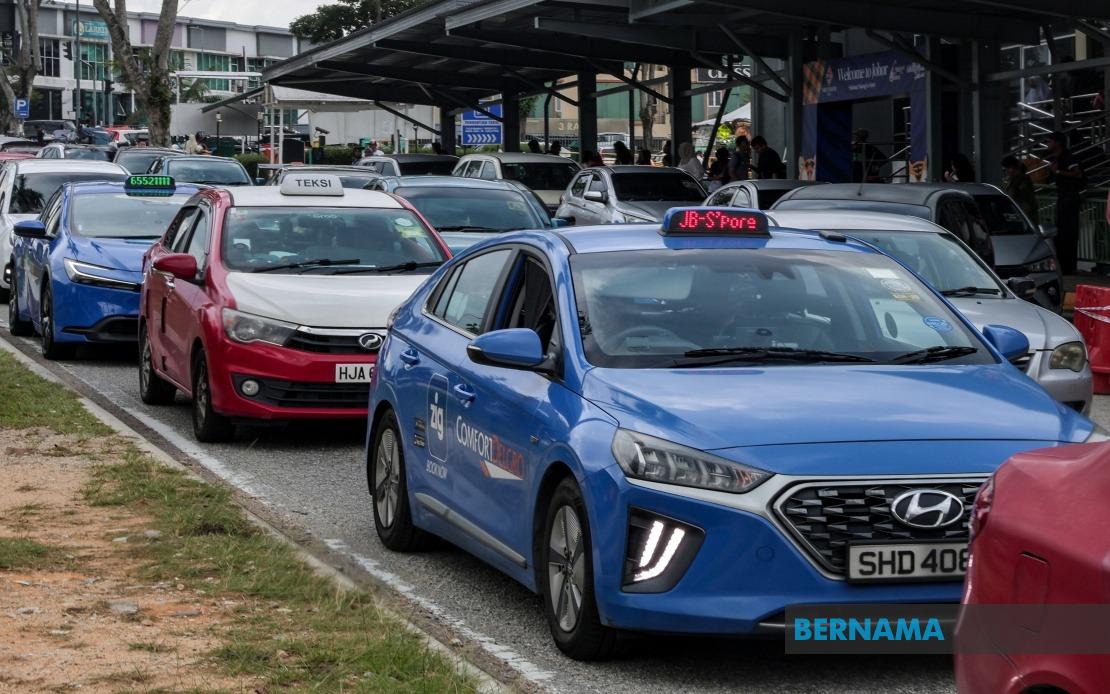
The Land Public Transport Agency (APAD) has announced a significant relaxation of vehicle requirements under the National MADANI Taxi Renewal Programme, permitting taxi operators to register or replace their vehicles with models other than the Proton S70 sedan. The decision represents a pragmatic adjustment to the government's flagship taxi modernisation initiative, which was launched by Prime Minister Datuk Seri Anwar Ibrahim on July 3 with the objective of transforming the nation's taxi industry by allowing drivers to own their vehicles outright rather than operating under traditional leasing arrangements.
The flexibility introduced by APAD addresses a critical gap in the programme's original framework. While the Transport Ministry's official policy, announced on April 23, specified that new taxi applications under the MADANI scheme would be voluntary with a preference for the Proton S70 package, the agency recognised that a one-model-fits-all approach created barriers for certain applicants. Specifically, the exemption was designed to accommodate two categories of participants: those who already possess operational taxi vehicles and wish to formalise their participation in the modernisation initiative, and those who encountered difficulties securing hire-purchase financing for the designated Proton S70 model.
The Proton S70 was selected as the official taxi model for the MADANI programme due to its modern design aesthetic, enhanced safety features, and positioning as a distinctly professional vehicle. The sedan represents a departure from Malaysia's traditional taxi visual identity, dispensing with the characteristic rooftop identification signs that have defined the sector for decades. Additionally, vehicles registered under the MADANI scheme utilise a distinctive registration series prefixed with the letters "GET", creating a visual distinction in the market and signalling participation in the government's modernisation efforts.
Access to financing has emerged as a significant bottleneck for taxi drivers seeking to transition into vehicle ownership. The hire-purchase financing requirements under the MADANI programme, while designed to facilitate affordability, have proven restrictive for applicants with limited credit histories, insufficient collateral, or existing debt obligations. By permitting alternative vehicle models, APAD has effectively lowered the entry barrier for participation, allowing drivers to utilise vehicles they can more readily finance through traditional lending channels or through personal arrangements. This represents a practical acknowledgment that not all eligible applicants possess identical financial circumstances.
The decision also reflects the realities facing operators who have already invested in relatively newer vehicles outside the MADANI framework. Rather than requiring owners to dispose of functioning vehicles and incur additional expenses, the revised approach allows existing vehicle owners to continue operating while transitioning into the formal MADANI ownership model if they choose. This flexibility reduces the financial burden of programme participation and may actually encourage broader uptake by lowering the total cost of entry.
Under the revised framework, taxi vehicles not replaced through the MADANI programme remain fully operational until they reach the specified vehicle age limit set by regulatory authorities. This provision ensures continuity of service delivery across Malaysia's taxi fleet and prevents disruption to operators who cannot immediately transition to the new ownership model. The phased approach recognises that taxi replacement cycles require lead time and that maintaining service availability during the transition period is essential for commuters and the broader transportation ecosystem.
The government's commitment to the MADANI initiative has been underscored through substantial financial investment. Prime Minister Anwar announced an additional RM10 million allocation for the Old Vehicle Replacement Matching Grant Programme, specifically earmarked to benefit taxi drivers. This supplementary funding follows the original RM10 million allocation provided under Budget 2026 for MADANI implementation and reflects the government's recognition of the programme's potential impact on the livelihoods of tens of thousands of taxi operators nationwide.
The MADANI Taxi Renewal Programme fundamentally restructures the relationship between drivers and vehicle ownership within Malaysia's taxi sector. Traditionally, drivers have operated under leasing arrangements with taxi companies, limiting their equity accumulation and restricting their autonomy. By enabling ownership, the programme aims to enhance driver incomes, improve working conditions, and incentivise better vehicle maintenance since operators now have direct financial interest in their assets. The scheme includes various incentives designed to attract participation, ranging from financing facilitation to regulatory support.
For Malaysian taxi operators and the broader transportation sector, the APAD decision signals a pragmatic approach to policy implementation that prioritises inclusivity over uniformity. Rather than rigidly enforcing adoption of a single vehicle model, policymakers have recognised that successful transformation requires flexibility to accommodate diverse circumstances. This approach may ultimately prove more effective in achieving the MADANI programme's underlying objectives of modernising Malaysia's taxi fleet and improving driver welfare, even if individual vehicles vary in manufacture and design. The decision demonstrates the government's willingness to adapt implementation strategies based on ground-level feedback from stakeholders.

