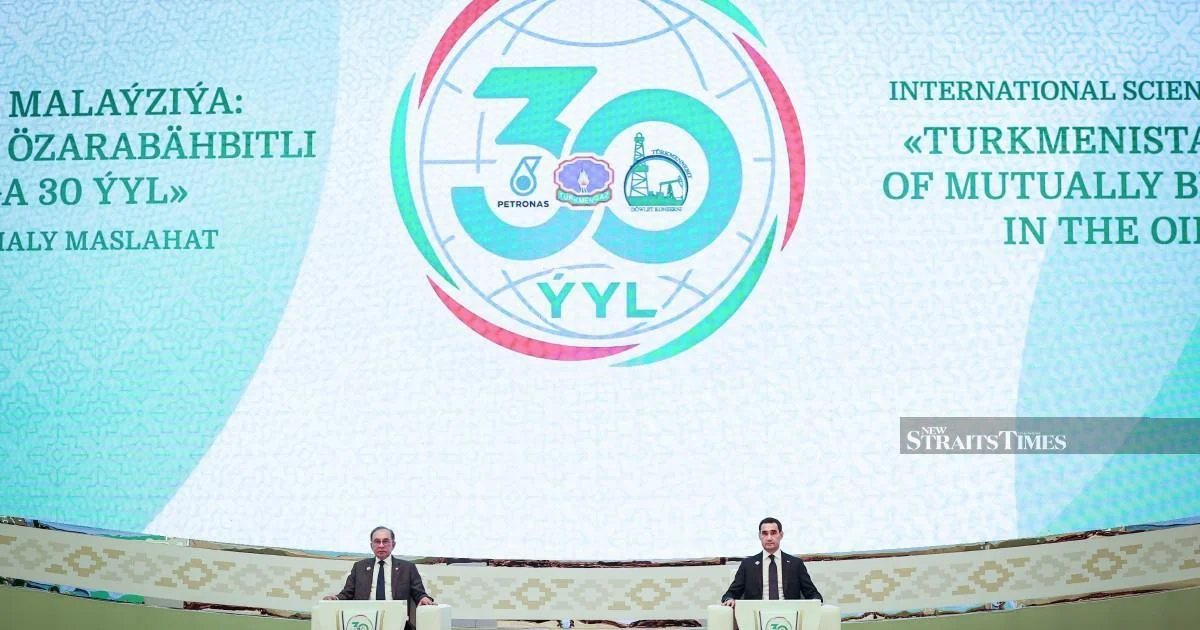
Prime Minister Datuk Seri Anwar Ibrahim's recent diplomatic tour through Russia and Turkmenistan has delivered tangible outcomes for Malaysia's energy security framework, marking a significant recalibration of the country's hydrocarbon procurement strategy at a time when regional and global energy markets remain volatile and unpredictable.
The visit, conducted amid broader geopolitical repositioning in Asia and Europe, demonstrates Malaysia's pragmatic approach to securing reliable energy supplies through diversified partnerships. Rather than relying on traditional Western suppliers or established Southeast Asian networks, the government has pursued direct engagement with energy-rich nations capable of meeting Malaysia's growing demand for oil and natural gas. This geographical expansion of energy diplomacy reflects a recognition that Malaysia's domestic reserves, while still productive, are declining and cannot satisfy the nation's industrial and residential energy needs without supplementary imports.
Russia, despite facing international sanctions over its actions in Ukraine, remains one of the world's largest producers of crude oil and natural gas. For Malaysia, establishing or deepening commercial relationships with Russian energy suppliers provides access to competitively-priced hydrocarbons at a time when energy costs have become a critical factor in maintaining the competitiveness of Malaysian manufacturing and petrochemical sectors. The specific agreements forged during Anwar's visit—whether involving long-term supply contracts, joint venture frameworks, or technology partnerships—add stability to Malaysia's energy portfolio and reduce the country's vulnerability to supply disruptions from any single source.
Turkmenistan's significance lies in its vast natural gas reserves, which rank among the world's top ten. The nation serves as a crucial bridge between Central Asian energy resources and global markets, and bilateral engagement creates potential avenues for Malaysia to secure liquefied natural gas (LNG) supplies or to participate in projects that transport Central Asian gas to Asian consumption centres. For a country like Malaysia with established LNG regasification infrastructure and downstream demand from petrochemicals and power generation, Turkmenistan partnerships could prove economically advantageous in the medium to long term.
The timing of these diplomatic missions carries strategic importance. Energy prices have remained elevated and volatile since Russia's invasion of Ukraine in 2022, creating both challenges and opportunities for energy-importing nations. Malaysia, which depends on petroleum products for transportation, electricity generation, and industrial processes, faces ongoing pressure to secure stable supplies at reasonable costs. By engaging directly with major producers, Anwar's administration signals to international markets that Malaysia is capable of independent energy diplomacy and is not confined to conventional trading corridors. This positioning strengthens Malaysia's negotiating leverage with existing suppliers and demonstrates governmental competence in addressing one of the economy's most critical dependencies.
From a Southeast Asian perspective, Malaysia's energy diplomacy initiatives also carry broader implications. As the region's largest economy and a major industrial hub, Malaysia's success in securing diverse energy partnerships can influence the calculus of other ASEAN nations facing similar energy security challenges. Singapore, Thailand, Indonesia, and Vietnam all compete for access to global energy supplies, and Malaysian breakthroughs may establish templates or reveal negotiating pathways that neighbouring economies can subsequently pursue. Additionally, Malaysia's willingness to engage with Russia and Turkmenistan positions the country as a pragmatic player in the region's geopolitical landscape, neither wholly aligned with Western-led energy initiatives nor dependent on Chinese intermediation for hydrocarbon access.
The investment implications of these agreements warrant attention from Malaysian and regional business communities. Energy security directly correlates with manufacturing competitiveness, industrial expansion potential, and investor confidence in long-term economic stability. Companies in Malaysia's petrochemical sector, power generation utilities, and export-oriented manufacturers all benefit from assured, diversified energy supplies. If the agreements include provisions for technology transfer or joint development projects, Malaysian firms and research institutions may gain access to technical expertise in resource exploration, processing, or infrastructure development that could enhance domestic capabilities.
However, the sustainability and transparency of these partnerships merit scrutiny. Agreements involving authoritarian regimes or politically sensitive nations require careful structuring to ensure compliance with international sanctions regimes, particularly where American or allied enforcement mechanisms could create operational complications. Malaysian companies and government entities must navigate complex regulatory environments where violations could result in secondary sanctions or international financing restrictions. The specific terms—payment mechanisms, currency arrangements, dispute resolution frameworks, and geopolitical escape clauses—will determine whether these partnerships prove robust through shifting international circumstances.
Looking ahead, the success of Anwar's energy diplomacy will ultimately be measured not in the signing of agreements but in their actual implementation and the tangible supply flows they generate. Malaysia's energy sector requires not just political commitments but verifiable, consistent deliveries of oil and gas meeting specified quality standards and delivery schedules. The government must also ensure that any energy deals struck do not compromise Malaysia's broader foreign policy objectives, relationships with traditional partners, or standing within international legal and commercial frameworks.
The breakthrough visits to Russia and Turkmenistan represent a calculated expansion of Malaysia's energy diplomacy toolkit at a moment when such diversification genuinely serves the nation's interests. Whether these initiatives deliver lasting strategic advantage will depend on how effectively they are translated into operational reality and how deftly the government manages the geopolitical complexities inherent in energy commerce with contested international actors.