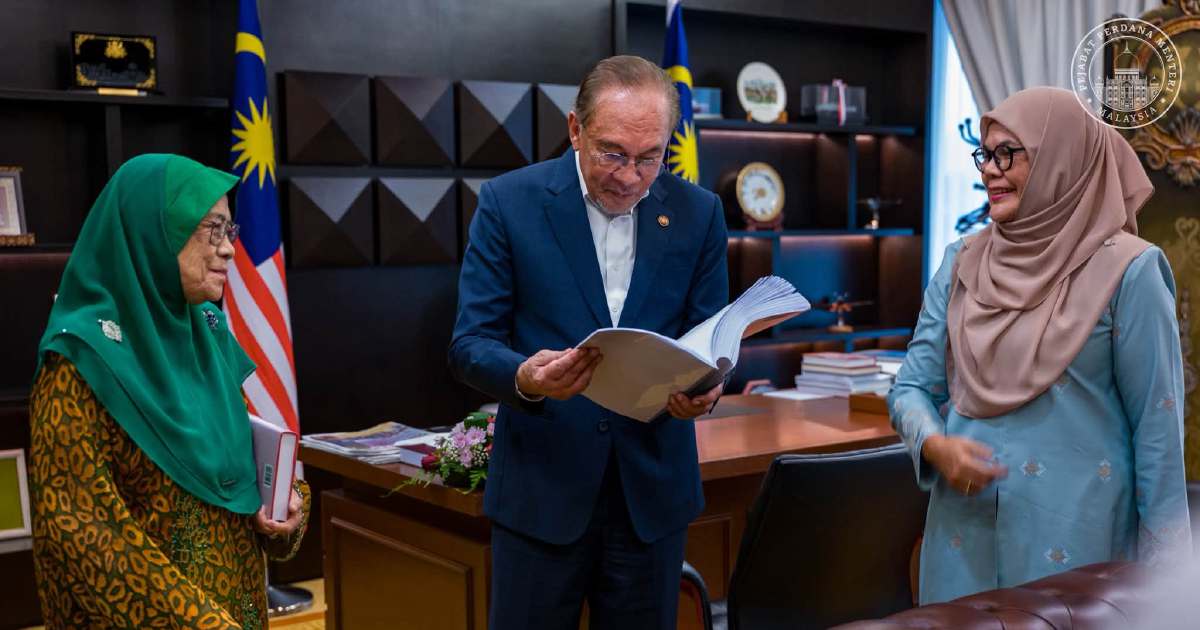
Prime Minister Datuk Seri Anwar Ibrahim has unveiled a significant literary work intended to crystallize his political and philosophical vision for Malaysia. The volume, titled Gagasan Anwar Ibrahim Dalam Peradaban Budaya Bangsa, represents an ambitious effort to distil decades of political thought, personal experience, and ideological development into a single reference document. By making his ideas accessible in written form, the Prime Minister appears to be creating an institutional memory of his approach to governance that extends beyond the current political cycle and his own tenure in office.
The book's central ambition speaks to a broader Malaysian preoccupation with political legacy and continuity. In a country where leadership transitions have frequently disrupted policy direction and undermined long-term development initiatives, Anwar's decision to systematize and publish his thinking represents an attempt to establish a philosophical foundation that persists independent of electoral outcomes or factional shifts within government. By framing this work as a reference point for future generations, particularly those tasked with nation-building responsibilities, the Prime Minister is essentially constructing a textual anchor for his vision of Malaysia's trajectory.
The emphasis on character development within the book's scope reflects a significant dimension of Anwar's political approach. Throughout his career, spanning from his early years as an Islamic activist through his tenure in various ministerial positions and his eventual ascent to the Prime Minister's office, Anwar has consistently woven moral and ethical considerations into his public discourse. This book appears to formalize that integration, positioning character formation as inseparable from effective governance. For Malaysian readers and future policymakers, this suggests a deliberate counterweight to purely technocratic or economically-focused approaches to administration, emphasizing instead the human and ethical dimensions of public service.
The cultural positioning inherent in the book's title—with its explicit reference to bangsa, or nation—indicates that Anwar envisions his ideas as contributions to national discourse on identity and cultural continuity. Malaysia's ongoing negotiation with its multicultural character, its Islamic identity, and its diverse historical inheritances means that any serious attempt to articulate a coherent vision of nationhood carries significant weight. By documenting his perspectives on these matters in permanent form, Anwar is staking a position in Malaysia's evolving conversation about what it means to be Malaysian and how the state should navigate between competing cultural and religious values.
From a practical standpoint, the book's intended audience of future generations suggests recognition that institutional memory in Malaysian politics requires deliberate preservation. Unlike countries with deeply embedded constitutional traditions or long histories of uninterrupted democratic governance, Malaysia's political institutions have evolved relatively rapidly, sometimes lurching between different ideological orientations. A documented framework of ideas provides continuity and allows subsequent leaders to either build upon established principles or consciously deviate from them with full awareness of what they are rejecting. This transparency of choice strengthens rather than weakens democratic discourse.
The inclusion of Anwar's personal experiences within the compilation is particularly significant for Southeast Asian readers accustomed to leadership styles that maintain distance between private experience and public pronouncement. By explicitly incorporating his life journey into his political philosophy, Anwar is modeling an approach where personal integrity and lived experience inform public principle. This resonates especially powerfully in Malaysian contexts where questions of leader accountability and the relationship between personal conduct and governing capacity have remained persistently contested.
The book's role as a teaching instrument for future nation-builders merits particular attention. In an era when Malaysian universities and research institutions increasingly grapple with how to develop the next generation of national leaders, having a systematic articulation of one former and current leader's approach to governance challenges provides substantive material for pedagogical purposes. Students of public administration, political science, and Islamic thought in Malaysia and the broader Southeast Asian region will find in this work a contemporary case study of how one influential figure integrates religious principle, democratic commitment, multicultural sensitivity, and practical governance.
The timing of this publication is worth considering within Malaysia's current political context. With competing visions of Malaysia's future advanced by various political coalitions and ideological movements, Anwar's decision to systematize and publish his thinking represents a form of intellectual assertiveness. It establishes his framework as a documented alternative to other models of governance circulating within Malaysian political discourse, whether those emphasizing ethnic nationalism, religious orthodoxy, economic liberalism, or other orientations. The book becomes a permanent record against which future observers can evaluate the gap between Anwar's articulated principles and his actual governance record.
For regional observers and practitioners across Southeast Asia, the book's availability may also serve as a resource for understanding how contemporary Malaysian leadership approaches enduring challenges of multicultural governance, economic development amid social equity concerns, and the integration of religious and secular governance frameworks. The region's own diversity means that solutions developed in the Malaysian context, even if not directly transferable, offer valuable comparative material for leaders wrestling with similar tensions.
The decision to commit his ideas to a comprehensive written work reflects confidence that these ideas possess durability and applicability beyond Anwar's personal political career. Whether addressing specific policy domains or broader questions about the foundations of statecraft and national identity, the Prime Minister is essentially arguing that his approach transcends momentary political advantage and contributes to enduring national conversation. The test of this claim will lie in whether subsequent generations of Malaysian leaders, policymakers, educators, and engaged citizens actually engage with the work substantively rather than treating it as a ceremonial artifact of a particular administration.

