The MADANI Government led by Datuk Seri Anwar Ibrahim is drawing recognition from multiple quarters for its track record in attracting investment, managing the economy, and stabilising the Malaysian ringgit, according to Datuk Azman Abidin, the Prime Minister's political secretary. Speaking in Kuala Lumpur on August 19, Azman highlighted these achievements as evidence of Anwar's leadership credentials and suggested they furnish a compelling rationale for voters to extend his mandate for a second parliamentary term.
Azman's remarks reflect an emerging political narrative centred on economic stewardship as the government prepares for the next general election. By emphasising gains in three interconnected areas—foreign and domestic investment flows, broader economic indicators, and currency performance—the administration is positioning itself as a competent custodian of Malaysia's macroeconomic health. This framing matters considerably in a region where middle-class voters increasingly weigh financial stability and growth prospects when evaluating political leadership. The ringgit's strength, in particular, carries symbolic weight; a stronger currency signals investor confidence and can translate into lower import costs and increased purchasing power for ordinary Malaysians.
The political secretary's confidence in public judgment also warrants scrutiny. Azman expressed faith that citizens would evaluate the government's record objectively before voting, a statement that underscores the administration's belief that economic gains will resonate sufficiently with voters to overcome any other political headwinds. However, this assumption rests on the distribution of benefits across society. Even strong macroeconomic performance can mask uneven prosperity if gains concentrate among urban, educated, or business-connected populations while rural and lower-income communities experience limited improvement.
Azman indicated that the government intends to amplify its narrative around these achievements through a series of announcements timed strategically before National Day and Malaysia Day celebrations, as well as during the tabling of Budget 2027. Such announcements—potentially including new development projects, subsidies, or initiatives targeting specific constituencies—are standard pre-election practice in Malaysian politics. The budget presentation in particular offers an opportunity to showcase fiscal priorities and redistribute resources in ways calculated to bolster political support, especially among swing voters in key marginal seats.
Beyond the immediate political context, Azman's comments illuminate how the MADANI Government frames its identity and mission. The administration came to office on a reform platform emphasising institutional integrity, anti-corruption efforts, and inclusive economic development. By highlighting investment and currency stability rather than, say, anti-corruption convictions or institutional reforms, Azman signals that the government believes voters prioritise material prosperity over abstract governance improvements. This tactical choice may reflect genuine public sentiment, or it may underestimate voter sophistication regarding the link between governance quality and long-term economic resilience.
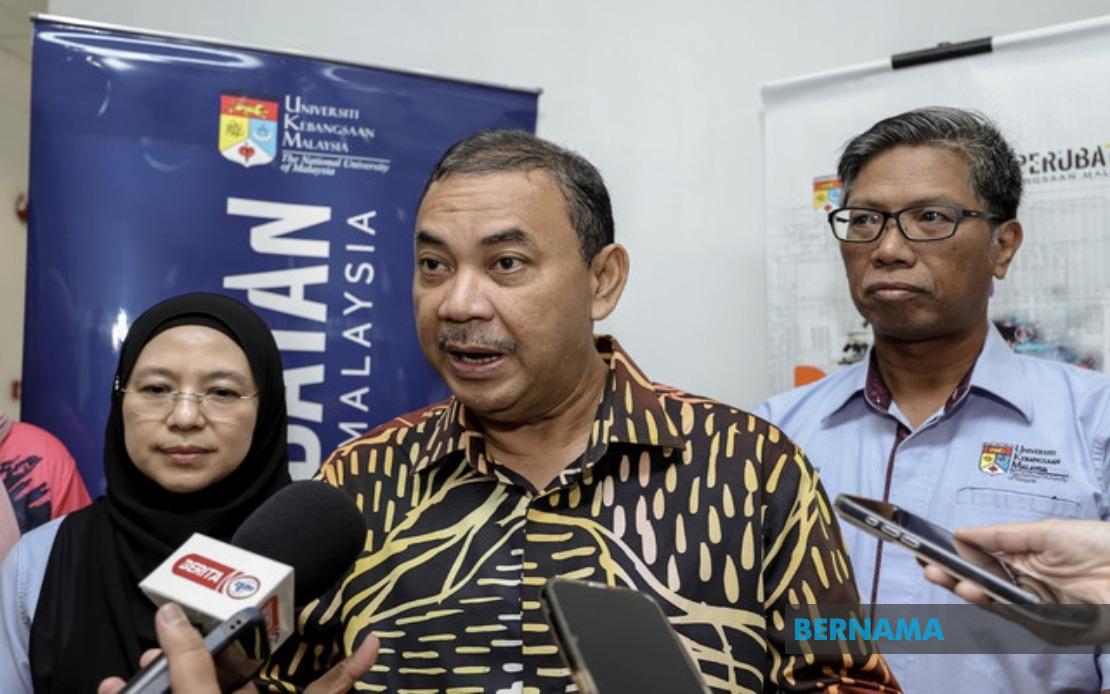
The Prime Minister's political secretary also used the occasion to advocate for expanded science, technology, engineering, and mathematics (STEM) education in Malaysia. Speaking at the STEM Exploration 2.0 programme at Universiti Kebangsaan Malaysia, Azman called for STEM subjects to move from optional to foundational status in the national curriculum, arguing such a shift is essential for Malaysia to compete in an increasingly technology-driven global economy. This push reflects both genuine policy conviction and astute political positioning: investing in youth education, particularly in high-value fields, appeals to parents, educators, and future-oriented voters across the political spectrum.
The second iteration of the STEM Exploration initiative involved 200 Form Three students from Kuala Lumpur, Selangor, and Negeri Sembilan, with Azman advocating for nationwide expansion. The programme exposed participants to practical scientific work including microbiology experiments, human biological systems, and medical technology applications such as 3D printing. Such hands-on exposure can crystallise academic interest into genuine vocational direction, particularly for students in their early secondary years when educational paths begin diverging. Malaysia's historical emphasis on humanities and social sciences in secondary schools has contributed to periodic talent shortages in engineering and technical fields; reversing this pattern requires sustained commitment to STEM pedagogy and infrastructure.
Azman's framing of scientific excellence as a foundational national capacity rather than a niche pursuit reflects shifting global priorities. Rising economies throughout Asia are competing fiercely for technical talent and innovation capacity; Malaysia risks falling behind if it does not systematically cultivate scientific interest early and provide credible pathways toward rewarding STEM careers. The government's endorsement of such initiatives, then, simultaneously serves electoral purposes and responds to genuine competitive pressures shaping Malaysia's long-term economic trajectory.
The political context surrounding these remarks deserves emphasis. Malaysia's electoral cycle and constitutional requirements mean that a general election must occur within the next two years, and possibly sooner depending on political calculations and parliamentary arithmetic. The timing of Azman's comments, the emphasis on economic achievements, and the coordinated messaging around upcoming announcements all suggest the administration is entering campaign mode, however informally. Voters should expect a sustained effort to highlight government accomplishments and contrast them with opposition platforms in the months ahead.
What remains unclear, however, is whether economic metrics alone will determine voter behaviour in the next election. Malaysian politics has historically involved considerations of ethnicity, religion, regional identity, and personal connections alongside rational economic assessment. Voters in Sabah and Sarawak may weigh development promises and resource-sharing negotiations differently from those in Peninsula Malaysia. Urban professionals may prioritise economic stability while rural voters prioritise subsidies and agricultural support. The MADANI Government's ability to craft a coalition large enough to govern will depend not only on macro-level economic performance but on how effectively it addresses these varied, sometimes competing, voter priorities while maintaining the reform credentials that helped bring it to office.

