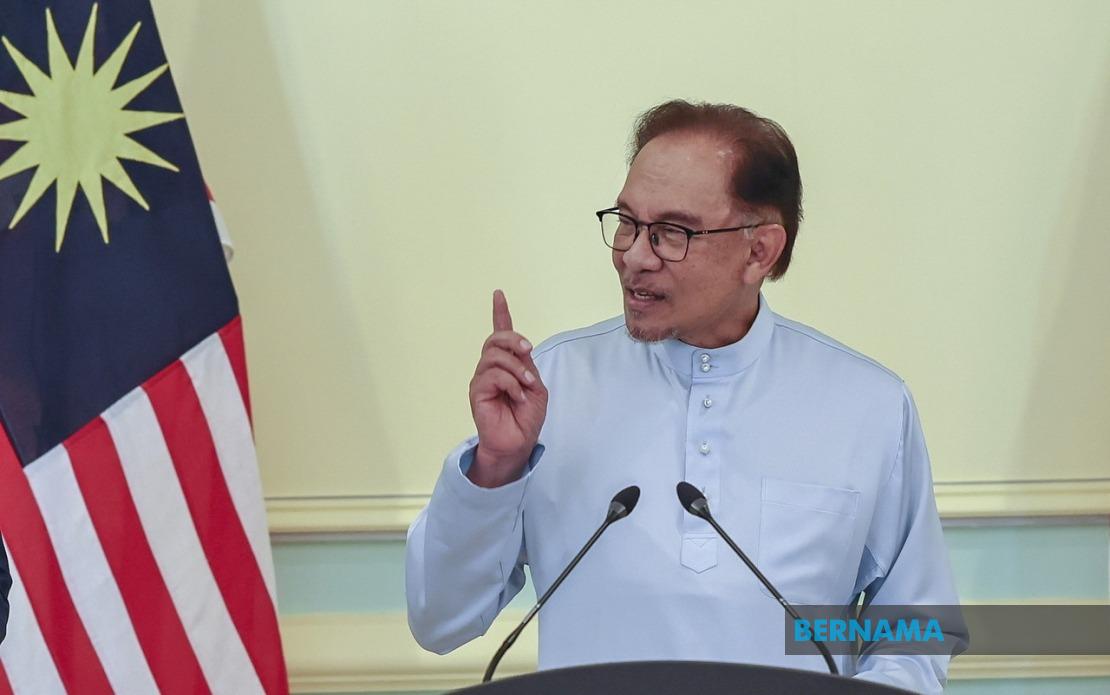
Prime Minister Datuk Seri Anwar Ibrahim's handling of the Gaza crisis represents a coherent strategy that weaves together moral conviction, international legal frameworks and practical humanitarian engagement, according to analysis from Universiti Pertahanan Nasional Malaysia's Honorary Professor Dr Mizan Aslam. Rather than confining Malaysia's response to symbolic gestures or political rhetoric, the approach demonstrates how a middle-power nation can leverage multiple diplomatic instruments simultaneously—from courtroom advocacy to multilateral forums—to advance accountability and civilian protection in one of the world's most intractable conflicts.
The humanitarian toll from nearly three years of warfare paints a stark picture of the scale at which the Prime Minister is intervening. Official data shows 73,066 deaths, with children comprising roughly 30 per cent of fatalities; simultaneously, more than 173,000 people have been injured and nearly 60,000 children have been left orphaned. The physical destruction has been equally catastrophic, with approximately 81 per cent of structures in Gaza damaged or demolished and 90 per cent of the territory's infrastructure destroyed. Water and sanitation systems have suffered near-total collapse, leaving 91 per cent of households experiencing acute water shortages. These metrics illustrate why Gaza has transcended traditional framing as a localised Israeli-Palestinian dispute and instead represents a systemic breakdown in international mechanisms designed to protect civilians and enforce humanitarian law.
One significant pillar of Malaysia's diplomatic engagement involves supporting South Africa's case at the International Court of Justice, where the nation has brought charges of genocide under the 1948 Genocide Convention. This move carries particular symbolic weight because it positions Malaysia not merely as a verbal critic but as an active participant in international legal accountability processes. By aligning with this litigation, Malaysia signals that it views the situation through the lens of international criminal responsibility rather than limiting debate to UN resolutions or political statements. For a Southeast Asian nation with historical experience navigating great-power politics, this legal strategy allows Malaysia to contribute meaningfully to an international reckoning without direct military or enforcement capacity.
Anwar has also mobilised traditional diplomatic channels through venues such as the Arab-Islamic Extraordinary Summit, leveraging collective voice to amplify Malaysia's advocacy for ceasefire efforts, renewed support for the United Nations Relief and Works Agency for Palestine Refugees in the Near East (UNRWA), and coordinated international pressure on weapons suppliers. The scholar notes that this multilateral approach transforms Malaysia's influence from bilateral significance into a component of broader consensus-building. By speaking within established Islamic and Arab forums rather than positioning Malaysia as a lone critic, the government frames its positions as expressions of legitimate regional and civilisational interests rather than isolated polemics.
Substantial financial commitment underscores the diplomatic messaging. Malaysia's initial allocation of RM100 million for humanitarian assistance addresses immediate crises: 1.97 million people in Gaza face acute food insecurity, including 641,000 experiencing famine-level deprivation. Malnutrition has emerged as a secondary public health catastrophe, with 17,800 documented cases among children under five in 2025 and nearly 69,000 cases of severe malnutrition recorded by May 2026. The deaths of 466 people attributed directly to malnutrition reveal how the conflict's consequences extend beyond combat into preventable civilian deaths caused by systemic collapse. This financial commitment transforms rhetoric into tangible resource flows, demonstrating that Malaysia's solidarity operates across multiple registers simultaneously.
The degradation of Gaza's healthcare infrastructure represents another dimension through which the crisis manifests. Official records document 825 separate attacks on health facilities, including strikes on 40 hospitals and 158 primary healthcare centres. These attacks have killed 1,723 healthcare workers and resulted in the detention of another 362, effectively decapitating the territory's ability to provide basic medical services. This systematic targeting of healthcare capacity means that surviving the initial violence offers limited protection from secondary mortality through untreated infections, complications of injuries, and preventable disease outbreaks. Malaysia's diplomatic positioning acknowledges that the humanitarian emergency encompasses not just immediate warfare but the creation of conditions for cascading public health collapse.
Anwar's diplomatic framework extends beyond demanding ceasefires to advocating explicitly for Palestinian statehood as a comprehensive political solution. This distinction matters because ceasefire rhetoric, while necessary, can inadvertently suggest acceptance of a frozen conflict without resolution of underlying political grievances. By consistently framing the endgame as requiring a sovereign and viable Palestinian state, Malaysia positions itself within a broader international consensus on final-status arrangements rather than accepting conflict management as sufficient. This emphasis reflects a principled approach that distinguishes between temporary pauses in hostilities and genuine political settlement.
The analytical framework employed here references "active non-alignment," Malaysia's distinctive foreign policy doctrine that permits nations to adopt positions based on principles, values and national interest rather than bloc allegiance. This concept proves particularly relevant in Gaza contexts because it allows Malaysia to defend civilian protection, pursue humanitarian access, demand legal accountability and champion Palestinian self-determination without framing these positions as ideological posturing or geopolitical bloc competition. The doctrine legitimises Malaysia's engagement across multiple institutional channels—courts, summits, bilateral negotiations, UN forums—as expressions of consistent principle rather than scattered activism.
Critically, the scholar emphasises that Malaysia's capacity remains circumscribed; the nation cannot unilaterally end the conflict or impose solutions. Nevertheless, the diplomatic architecture deployed by Anwar ensures that the Gaza situation circulates continuously through international institutions, legal proceedings, diplomatic channels and the conscience of the global community. This perpetual elevation prevents the conflict from achieving the quiet obscurity that might otherwise descend as international attention shifted to competing crises. By maintaining Gaza's salience across multiple registers simultaneously, Malaysia contributes to sustaining international pressure even without direct enforcement mechanisms.
The coherence of Anwar's approach lies in its refusal to separate solidarity from accountability. Rather than treating humanitarian aid, legal support and diplomatic pressure as alternative options among which to choose, Malaysia's strategy treats them as complementary elements of a single framework. This integration distinguishes principled diplomatic positioning from performative activism; the former translates commitment into action backed by institutional mechanisms and resource allocation, while the latter confines itself to rhetoric. For Southeast Asian readers observing Malaysia's posture, the analytical takeaway concerns not merely whether Malaysia has adopted the "correct" position on Gaza, but rather how a middle-power nation can translate moral conviction into sustained institutional engagement across multiple diplomatic, legal and humanitarian channels simultaneously.

