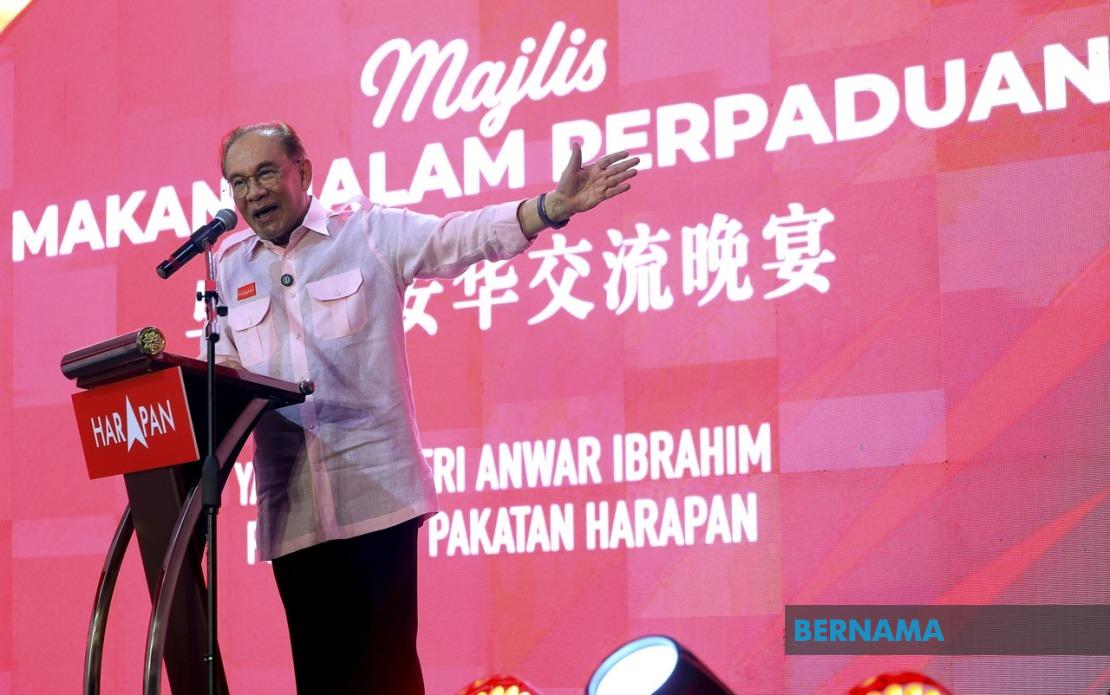
Prime Minister and Pakatan Harapan chairman Datuk Seri Anwar Ibrahim has turned his focus to factional tensions within the opposition camp, questioning the apparent rush by rival parties to stake claims on the menteri besar's post in Negeri Sembilan as the state prepares for elections on August 1. Speaking at a campaign dinner in Sikamat on July 22, Anwar highlighted what he characterised as internal squabbling among opponents even before voting takes place, framing the contrast as a choice between established competence and unresolved disputes over power.
The prime minister's critique underscores a familiar campaign narrative: that opposition disunity and competition for leadership positions undermine their ability to serve the public effectively. Anwar argued that voters should instead prioritise electing representatives with a demonstrable commitment to state administration, ethical governance, and the protection of all citizens' interests regardless of background. His remarks come as Negeri Sembilan enters the final stretch of campaigning, with early voting scheduled for July 28.
Anwar's emphasis on the opposition's apparent infighting reflects broader concerns within the Unity Government coalition about whether fractured opposition parties can present a coherent alternative vision. The timing of his comments, delivered amid a PH campaign event featuring prominent state figures, suggested a deliberate strategy to exploit any visible cracks in the rival camp. By drawing attention to multiple candidates vying for the menteri besar role on the opposition side, Anwar sought to characterise their candidacy as driven by personal ambition rather than public service.
Present at the Taman Sri Penaga event were Negeri Sembilan Menteri Besar Datuk Seri Aminuddin Harun, who is defending his position as the PH candidate for Linggi, alongside PH candidates Nor Azman Mohamad for Sikamat and Datuk Muhammad Nazri Kassim for Ampangan. Their attendance underscored PH's attempt to project continuity and stability in the state's administration, with Anwar specifically endorsing Aminuddin's track record of leading the state without corruption or abuse of power.
Beyond leadership dynamics, Anwar also directed criticism at what he described as racial narratives being weaponised by certain quarters during the campaign. He positioned the Unity Government as committed to inclusive governance that transcends communal lines, emphasising initiatives benefiting all communities through enhanced socio-economic development, housing programmes, and civil service salary improvements. This framing appears designed to counter suggestions that the coalition's diverse membership might result in favouritism or neglect of any particular group.
The composition of Pakatan Harapan's candidate slate reflects its multi-party structure and careful seat distribution. PKR is fielding 16 candidates across the 36 contested state seats, while the Democratic Action Party (DAP) is contesting 11 seats and Amanah nine. This allocation represents both the coalition's attempt to balance representation and acknowledge the different strengths and support bases of its constituent parties in various constituencies. The distribution also signals how individual parties within PH maintain distinct identities while operating under a unified banner.
For Malaysian voters, particularly those in Negeri Sembilan, the election represents a referendum on the Unity Government's performance and promises since taking power. The state's significance extends beyond its modest size: it serves as a barometer for voter sentiment in the peninsula's central region and offers insights into how coalitional governance is perceived by ordinary citizens. The outcome could influence political calculations ahead of the next general election and shape how the Unity Government refines its messaging on governance and inclusivity.
The August 1 election date itself carries strategic importance. Held during school holidays, it potentially affects voter turnout patterns and family-based campaign activities. The concurrent schedule of early voting on July 28 provides flexibility for certain demographics, including civil servants and those unable to vote on polling day. These procedural details, while seemingly technical, can substantially influence final results in a closely contested state.
For the broader Southeast Asian context, Malaysia's continued experiment with multiparty coalitions and inclusive governance frameworks remains noteworthy. The Unity Government's ability to maintain cohesion while managing diverse ideological positions and voter bases offers lessons—both positive and cautionary—for other democracies in the region navigating similar challenges of political pluralism and power-sharing arrangements.
Anwar's campaign strategy in Negeri Sembilan appears calibrated to emphasise competent administration and unity over divisive identity politics. By attacking the opposition's apparent internal fractures and highlighting PH's track record under Aminuddin's leadership, the prime minister is attempting to shift the election narrative away from broad ideological debates toward concrete governance performance. Whether this approach resonates with Negeri Sembilan voters will become clear when polling concludes on August 1, with results potentially reshaping political calculations across the peninsula in subsequent months.

