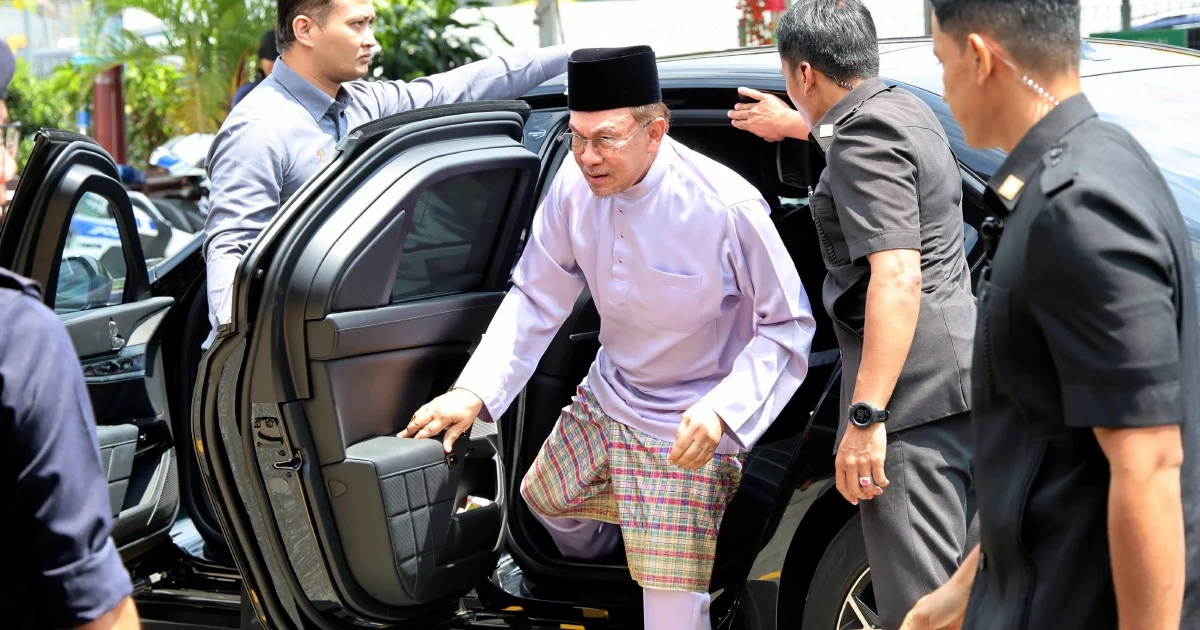
Prime Minister Datuk Seri Anwar Ibrahim has issued a pointed reminder to every political party participating in the Johor state election, urging them to maintain respectful conduct throughout their campaign activities. Speaking in Dengkil, the premier stressed the importance of preserving high ethical standards and explicitly cautioned contestants against displays of arrogance that might undermine the integrity of the electoral process. His remarks come as the competitive race intensifies across the state, with multiple parties mobilizing supporters and accelerating their ground operations.
The call for measured campaigning reflects broader concerns about the tenor of Malaysian electoral contests, which have historically attracted criticism for heated rhetoric and personal attacks between rival camps. By intervening publicly at this stage, Anwar positioned himself as an arbiter of campaign conduct, signalling that the federal government expects all participants to subscribe to a common code of political behaviour. This approach attempts to set boundaries on what would be considered acceptable campaign practice without directly targeting specific parties or individuals.
Elections in Johor carry particular significance within Malaysia's political landscape, as the state has long been a stronghold with demonstrated influence over national coalitions. The demographic and geographic diversity of Johor constituencies means campaigns here often serve as testing grounds for messaging strategies that parties later deploy elsewhere. Anwar's intervention suggests he recognizes how the conduct of this particular election might set precedent for subsequent contests and influence public perception of democratic norms across the country.
Respectful electioneering has become an increasingly important theme in Malaysian political discourse, particularly following elections that saw polarization rise significantly. Voters increasingly report fatigue with divisive messaging and personal attacks, creating electoral incentives for parties to differentiate themselves through principled campaigning. By publicly endorsing this approach, Anwar may be attempting to position his coalition as the custodian of democratic values while implicitly challenging opposition parties to meet the same standard.
The emphasis on avoiding arrogance carries particular weight in Malaysian political culture, where displays of unchecked confidence or superiority have historically triggered backlash among voters. Parties that appear dismissive of electoral competition or contemptuous of opponents risk alienating swing voters and energizing opposing coalitions. Anwar's warning essentially reminds candidates and party operatives that electoral victory depends partly on how gracefully they conduct themselves during the campaign itself, not merely on organizational machinery or campaign messaging.
Johor's strategic importance extends beyond immediate electoral calculations to the broader question of coalition stability. The state's parliamentary seats hold significance for federal government composition, and how the election unfolds could influence dynamics within both ruling and opposition coalitions. A campaign characterized by low-standard tactics could deepen existing fractures within these groupings or create lasting resentment that complicates post-election cooperation and governance arrangements.
For Malaysian voters, particularly those in Johor making electoral decisions, the quality of campaign discourse directly affects their ability to make informed choices. When political competition devolves into personal attacks or arrogant displays of power, substantive policy differences become obscured and voters lose opportunity to evaluate parties on their actual governing platforms. Anwar's appeal to maintain campaign standards thus has implications for electoral quality and democratic accountability across the entire state.
The timing of these remarks also reflects sensitivity about the election's regional implications. Southeast Asia has watched Malaysian electoral processes closely, particularly as the region grapples with its own democratic transitions and challenges. An election in Johor conducted according to high standards of respectful competition would demonstrate Malaysia's democratic maturity and reinforce the country's reputation as a functioning democratic system within a region experiencing varied political trajectories.
Parties responding to Anwar's call face practical decisions about how strictly to adhere to his guidance. Those already mobilized for aggressive campaigns may find it difficult to pivot toward more temperate approaches without appearing weak to their base supporters. Conversely, parties that embrace restraint risk being outcompeted by opponents who disregard the premier's appeal. This creates an implicit coordination problem, where individual rational behaviour by each party may collectively produce the divisive environment Anwar explicitly warned against.
The challenge facing Malaysian policymakers and political leaders involves creating institutional mechanisms and cultural norms that incentivize respectful campaigning without requiring constant reminders from the prime minister. Long-term solutions might include clearer code of conduct guidelines, media engagement strategies that reward substantive debate, and grassroots political education emphasizing the connection between campaign quality and democratic health. Until such mechanisms develop, senior political figures will likely need to continue appealing directly to parties to maintain standards.
Moving forward, how Johor's political parties respond to Anwar's exhortation will reveal whether Malaysian politics is gradually shifting toward more principled electoral competition or whether campaign norms remain driven primarily by situational advantage calculations. The outcome will carry implications not just for Johor, but for the tenor and quality of Malaysian electoral politics more broadly and the types of democratic practices that successive generations of voters come to expect and demand.

